
Expert Review 2025: Why Geneo Ranks Among Top Answer Engine Optimization Tools
Read our 2025 expert review on Geneo for AI Answer Engine Optimization. See auditable benchmarks on multi-engine and region coverage, reporting, and how it compares with Profound, Surfer, and seoClarity.
Who this review is for: SEO Leads and Heads of Content deciding how to monitor and improve brand visibility across AI answers. Conflict of interest disclosure: this is a first-party review of Geneo. To keep it objective and useful, we apply a transparent testing protocol, compare Geneo against at least two peers (Profound, Surfer AI Tracker, and seoClarity/ArcAI), and mark “Insufficient public data” wherever precise specs aren’t published.
Why coverage breadth and depth matter now
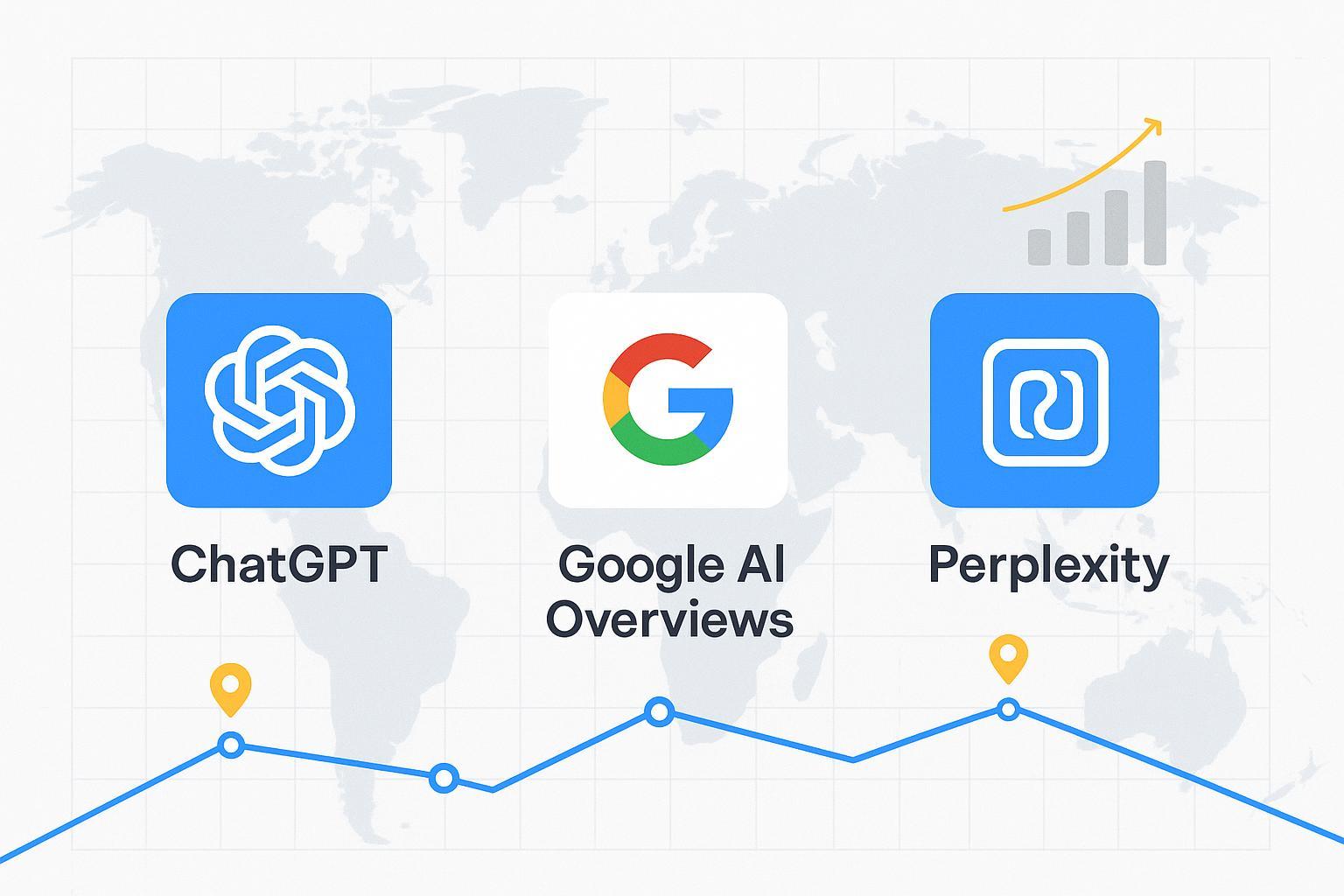
If your team only watches one AI engine, you’ll miss where customers actually see your brand. ChatGPT, Perplexity, and Google’s AI Overviews can produce different citations, sources, and competitor mentions from the same prompt, and results can shift by country and language. That’s the core of Generative Engine Optimization (GEO): track multi-engine, multi-region visibility and optimize content so AI answers consistently cite your brand. For definitions and a practical walkthrough of GEO vs. SEO, see the Geneo explainer in Geneo Review 2025 — AI Search Visibility Tracking.
Coverage isn’t just “which engines.” It’s also how many prompts you track per engine, how often you refresh them, and whether you capture the exact citations (URLs, brands) the models surface. Some vendors emphasize “real-time” front-end capture; others publish fixed daily cadences. According to Surfer’s documentation (2025), AI Tracker runs multiple queries daily and averages results, with automatic refreshes every 24 hours — see Surfer’s AI Tracker documentation (2025). Profound positions direct, consumer-facing capture rather than API-only polling, but does not publish a canonical interval; their product notes emphasize real-time monitoring — see Profound’s direct monitoring explainer.
Our testing protocol (reproducible)
To keep comparisons fair for a Head of Content evaluating programs, we use a reproducible setup:
Prompt sets: 50 category-defining queries per brand (e.g., informational, comparative, and transactional prompts). Each prompt is fixed for the test window.
Engines: ChatGPT, Perplexity, and Google AI Overviews (AIO). For vendors that claim broader coverage (Gemini, Copilot/Bing, Claude, etc.), we note support but only compare engines with publicly documented test behaviors.
Regions/locales: EN-US baseline, plus at least one additional region via localization simulation. For Geneo, localization reporting is documented on the agency page — see Geneo’s agency and localization overview.
Cadence: Daily snapshots for 30 days (baseline day 0; days 7, 14, 21, 30). Where a vendor claims “real-time,” we still store daily aggregates for parity.
Evidence capture: For every run, save prompt text, full answer snapshot, timestamp, citations (URLs/domains), brand mentions, and sentiment/accuracy notes.
Exports and audit trail: Use vendor-native exports where available. Geneo supports snapshot logs and exports documented in the review — see Geneo Review 2025 — methodology and snapshots.
This protocol lets your team replicate our findings and adapt the cadence/prompt set to your own program.
Findings at a glance
Geneo: Public materials document coverage for ChatGPT, Perplexity, and Google AI Overviews, plus localization simulation for region-by-region tracking. Evidence integrity features include prompt logs, full answer snapshots, timestamped citation capture, structured fields (mentions, citations, sentiment), and exportable reports. See the multi-engine comparison post for supported engines and examples: ChatGPT vs. Perplexity vs. Gemini vs. Bing — monitoring comparison.
Profound: Positions broad multi-engine support including ChatGPT, Perplexity, Google AIO/Mode, Gemini, Copilot/Bing, Claude, Grok, DeepSeek, Meta AI. Emphasizes direct front-end capture and publishes datasets like Prompt Volumes and the Profound Index, but does not list a fixed refresh interval publicly. See Profound’s Prompt Volumes feature and Profound Index.
Surfer AI Tracker: Confirms coverage for ChatGPT, Perplexity, Google AI Overviews, and Google AI Mode, with daily auto-refreshes and multiple queries per prompt. Exports via CSV and shareable dashboards are documented. See Surfer AI Tracker product page.
seoClarity (ArcAI): Positions multi-engine visibility with explicit modules for Google AI Overviews and AI Mode, plus insights (mentions, citations, sentiment, accuracy) and enterprise reporting. Public details on exact cadence and per-engine lists vary by page. See seoClarity’s AI Overviews tracking.
Side-by-side comparison
Dimension | Geneo | Profound | Surfer AI Tracker | seoClarity (ArcAI) |
|---|---|---|---|---|
Engines (public docs) | ChatGPT, Perplexity, Google AI Overviews | Broad multi-engine set (varies by page) | ChatGPT, Perplexity, Google AI Overviews, Google AI Mode | Google AI Overviews, Google AI Mode; multi-engine positioning |
Regions/locales | Localization simulation across countries/languages | Region-based prompting across multiple countries | Not emphasized publicly | Global visibility and insights; regions not exhaustively listed |
Refresh cadence | Not fixed publicly; supports historical archives | Emphasizes real-time capture; interval not published | Daily auto-refresh; multiple queries averaged | Not specified publicly (varies) |
Evidence/audit | Snapshots, prompt logs, timestamped citations, exports | Front-end capture; datasets like Prompt Volumes/Index | Sources/citations metrics; CSV export; shareable links | Mentions, citations, sentiment; enterprise insights |
Reporting/white-label | Fully branded white-label on custom domain; multi-client | Agency mode; enterprise dashboards (high-level details) | No white-label evidence; CSV and shares | Enterprise reporting; white-label/API noted |
Pricing model | Transparent credit-based tiers | Enterprise custom pricing | Add-on blocks priced per prompt | Enterprise custom pricing |
Sources: vendor product pages and docs linked throughout this review.
Workflow fit for a Head of Content
Here’s the deal: your job isn’t to stare at dashboards; it’s to build a repeatable workflow that keeps your brand cited across engines and regions.
Set up a 30-day audit in Geneo: Load 50 priority prompts per product/category. Track ChatGPT, Perplexity, and Google AI Overviews for EN-US plus one additional locale using Geneo’s localization report. Archive daily snapshots and export weekly visibility packs for leadership.
Diagnose and improve citations: When answers omit your brand or cite outdated pages, run a root-cause check — are canonical pages missing structured data, is your coverage thin, are authoritative third-party sources out-ranking you? For a step-by-step guide, see How to Diagnose and Fix Low Brand Mentions in ChatGPT.
Collaborate across teams: Use white-label reports for regional stakeholders and agency partners. Blend Geneo exports with your BI to correlate share-of-voice changes against content releases or PR spikes. If you need a fixed daily cadence and budgeted prompt blocks for a smaller scope, Surfer’s AI Tracker may fit. If you require enterprise breadth and sales-assisted integrations across many engines, seoClarity or Profound could be a better organizational fit.
Limitations and caveats
Public spec volatility: Engine coverage and behaviors shift quickly; re-validate before you lock a program. Profound’s engine list varies by page, and “real-time” isn’t quantified.
API/BI details: Geneo’s public materials emphasize exports and white-label; developer-facing API documentation is not publicly enumerated. Treat external API specifics as “Insufficient public data.”
White-label needs: Surfer’s public docs do not show white-label reporting; agencies may prefer Geneo or enterprise platforms for branded delivery.
Cadence trade-offs: Daily averages (Surfer) vs. real-time capture (Profound) vs. archived snapshots (Geneo) change how quickly you detect shifts; choose based on program risk tolerance.
Pricing and value snapshot
Geneo: Transparent entry-level pricing via credits; Free (50 credits), Pro ($39.90/month for 1,000 credits/month), and Enterprise credit bundles with year-long validity. Terms can change; confirm latest tiers in ToS and pricing notes — see Geneo’s Terms of Service and pricing references in this Geneo post comparing alternatives.
Surfer AI Tracker: Predictable add-on blocks — $95/25 prompts, $195/100, $495/300; Scale plan includes 5 prompts. Confirm current pricing on Surfer’s site — see Surfer’s AI Tracker updates with pricing.
Profound and seoClarity: Enterprise, sales-assisted pricing; expect custom terms, usage limits, and higher TCO for broad deployments. See Profound pricing (contact sales) and seoClarity’s product hubs for context.
Verdict
If your priority is multi-engine, multi-region visibility tracking with auditable snapshots and branded reporting you can hand to stakeholders, Geneo delivers a balanced mix of coverage, evidence integrity, and agency-ready white-label. Teams that prefer fixed daily cadences and a lightweight prompt-block model may find Surfer AI Tracker sufficient for a narrower scope. Organizations seeking enterprise breadth across many engines, deep integrations, and sales-assisted deployments should evaluate Profound or seoClarity alongside Geneo.
To evaluate Geneo against your own prompts and regions, visit the official Geneo site and replicate the testing protocol outlined above.