
How to Choose the Best Answer Engine Optimization Solutions
Step-by-step guide for SEO Leads at AI tech companies to select answer engine optimization solutions and reduce competitor narrative erosion in AI answers.
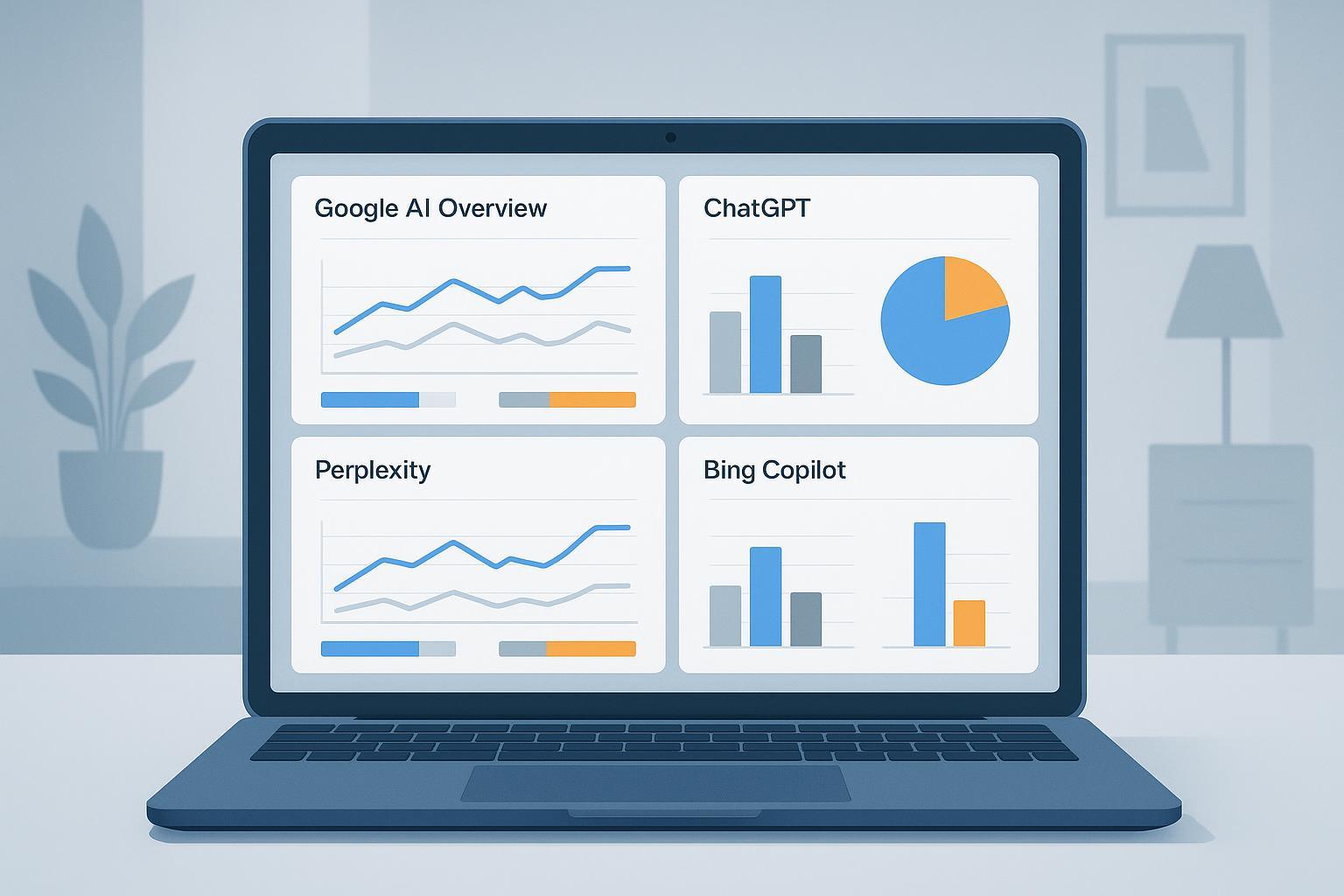
When AI engines answer instead of listing links, your brand can be mentioned—or quietly replaced by a competitor. That displacement is narrative erosion: non-brand and competitor citations crowd out your story in synthesized answers from engines like Google AI Overviews/AI Mode, ChatGPT, Perplexity, and Bing Copilot. For SEO Leads and Content Ops, the job isn’t just “more visibility.” It’s ensuring your brand is cited accurately and often enough that competitors don’t define you.
This guide gives you a vendor-neutral, step-by-step process to evaluate Answer Engine Optimization (AEO/GEO) solutions with one measurable goal: reduce erosion of your brand narrative in AI answers.
Step 1 — Align on scope and success criteria
Start by agreeing on which engines, regions, topics, and competitors matter most. From there, define a seed set of task and comparison queries (e.g., “best X for Y,” “X vs Y,” “how to do Z with [category]”). Success should be measured with outcome-centric KPIs: the rate of non-brand/competitor citations within answers on your core topics, your brand’s share of answer and prominence within responses, consistency of framing/sentiment, and topic coverage gaps where you’re omitted or misdescribed.
If stakeholders need a primer on “AI visibility,” share an explainer on brand exposure in AI search such as What Is AI Visibility? Brand Exposure in AI Search Explained.
Step 2 — Establish a baseline with a reproducible test suite
Build a prompt matrix for each topic with one canonical prompt plus a few variants to avoid overfitting. Run snapshots at a fixed cadence (for example, weekly for four weeks) across your chosen engines and regions. Save screenshots or cached responses with timestamps and prompt IDs so you can reproduce results and audit changes.
For context on how Google presents AI-generated answers and citations, see the site owner guidance in AI features in Search (2025). To understand a transparency-first model that presents sources in every answer, review Perplexity’s Deep Research overview in introducing Perplexity Deep Research (2025-02-14).
Step 3 — Build your selection criteria and scoring matrix
Not all AEO/GEO solutions are built the same. Weight criteria according to your risk and operating model. At minimum, consider eight dimensions: cross-engine coverage and sampling fidelity; narrative erosion measurement; evidence and auditability; competitive benchmarking; actionability and diagnostics; governance/compliance/privacy; integrations and reporting; and cost/scalability.
Criterion | Weight | Vendor A | Vendor B | Vendor C |
|---|---|---|---|---|
Cross-engine coverage & fidelity | 20% | |||
Narrative erosion metrics | 20% | |||
Evidence & auditability | 15% | |||
Competitive benchmarking | 10% | |||
Actionability/diagnostics | 15% | |||
Governance/compliance/privacy | 10% | |||
Integrations & reporting | 5% | |||
Cost & scalability | 5% |
When stakeholders ask how this differs from traditional SEO evaluations, point them to a clear comparison such as Traditional SEO vs GEO: 2025 Marketer’s Comparison, which contrasts metrics and workflows.
Step 4 — Demand evidence and auditability from vendors
If you can’t reproduce results, you can’t trust them. Ask vendors for exportable logs with timestamps, prompt histories, and regions/languages, plus screenshots or cached answer artifacts for every calculation. Require versioned methodologies and change detection so you know when parsing or sentiment models shift.
For credible guidance on measuring brand presence when clicks aren’t the main signal, see Search Engine Land’s “Measuring visibility in a zero-click world” (2025-11-25).
Step 5 — Compare vendors with a controlled pilot
Run a four-week pilot with a consistent test matrix across vendors. Define pass/fail thresholds tied to your outcome: non-brand/competitor citation rate drops from baseline on priority topics; brand share of answer rises with stable or improved sentiment; evidence completeness is near-total with reliable exports.
Practical, neutral micro-example: suppose you trial a platform like Geneo. Disclosure: Geneo is our product. In a pilot, you could track brand vs. competitor mentions across ChatGPT, Google AI Overviews/AI Mode, and Perplexity. If findings show frequent omissions on comparison prompts, route that signal into a remediation sprint using a structured playbook such as the step-by-step guidance in How to Optimize Content for AI Citations. The value isn’t a magic dashboard; it’s the closed loop from monitoring → diagnosis → fix → re-measure.
Step 6 — Translate insights into fixes and governance
Selection should accelerate action, not just measurement. Strengthen entity clarity with Organization/Person, FAQPage/HowTo, Article, and Product markup; connect @id and sameAs to trusted sources; publish precise, data-backed descriptions and FAQs. Support with authority and distribution: earn corroborating mentions on reputable, topic-relevant sites and refresh comparisons and buyer’s guides.
On governance, expect clear access controls, configurable data retention, audit trails, and baseline certifications such as ISO/IEC 27001 and SOC 2. Many teams combine these with CSA STAR for cloud security assurance, as outlined in the Cloud Security Alliance’s “Do SOC 2 and ISO 27001 the Right Way with CSA STAR” (2024-06-21). If your organization emphasizes AI governance, consider alignment to ISO 42001 practices; see CSA’s “ISO 42001: Lessons Learned” (2025-05-08).
Step 7 — Roll out and monitor continuously
Standardize alerts when non-brand citations spike or when a competitor gains share-of-answer on high-stakes topics. Publish monthly reports with annotations for content and PR interventions, segmented by engine, topic cluster, and region. If you work with agencies, confirm white-label reporting and workspace controls so teams can collaborate without friction.
Troubleshooting patterns you’ll likely encounter
Even with the right platform, familiar patterns recur. Here’s how to triage and recover without getting stuck in loops.
Brand omission in AI answers often stems from low entity salience, thin structured data, or too few authoritative third-party mentions. Tighten schema, improve entity linking, publish definitive resources, and pursue corroborations.
Competitor dominance or non-brand framing typically follows PR spikes or stronger topical authority. Refresh comparisons and buyer’s guides, target editorial mentions, and monitor co-citations with alert thresholds so you can respond quickly.
Misattribution or ambiguous descriptions usually trace back to vague product language, inconsistent facts across profiles, or sparse corroboration. Publish precise FAQs, standardize boilerplates across owned and third-party sites, and earn validations on reputable domains.
Opaque vendor methodology is a red flag: if logs aren’t exportable, screenshots or cached responses aren’t provided, or updates are undocumented, enforce RFP requirements for evidence artifacts, versioning, and reproducibility.
If you need a deeper dive into root causes for low mentions and practical fixes, see a diagnostics guide like “How to Diagnose & Fix Low Brand Mentions in ChatGPT.” To understand mechanisms behind why some brands are cited over others, a conceptual explainer such as “Why ChatGPT Mentions Certain Brands” can sharpen your test design.
Next steps and templates
Finalize your engines, markets, topics, and competitor set, then build a four-week prompt/test matrix with a clear sampling cadence. Define pass/fail thresholds for non-brand citation rate, brand share of answer, and evidence completeness. Issue an RFP that demands exportable logs, cached answers, prompt/version histories, and change detection. Pilot two or three vendors using identical matrices and select the solution that reduces narrative erosion while providing actionable diagnostics and strong auditability. Finally, standardize alerts, reporting, and governance controls and schedule quarterly methodology reviews.
By selecting on evidence, auditability, and the ability to drive content and distribution fixes—not just dashboards—you’ll protect your brand narrative where it increasingly matters: inside AI-generated answers.