
GEO for Food & Beverage: 2025 Best Practices That Actually Move the Needle
Discover 2025 GEO best practices for Food & Beverage: advanced, compliant frameworks, F&B schema, AI visibility measurement, and operational workflows for digital teams.
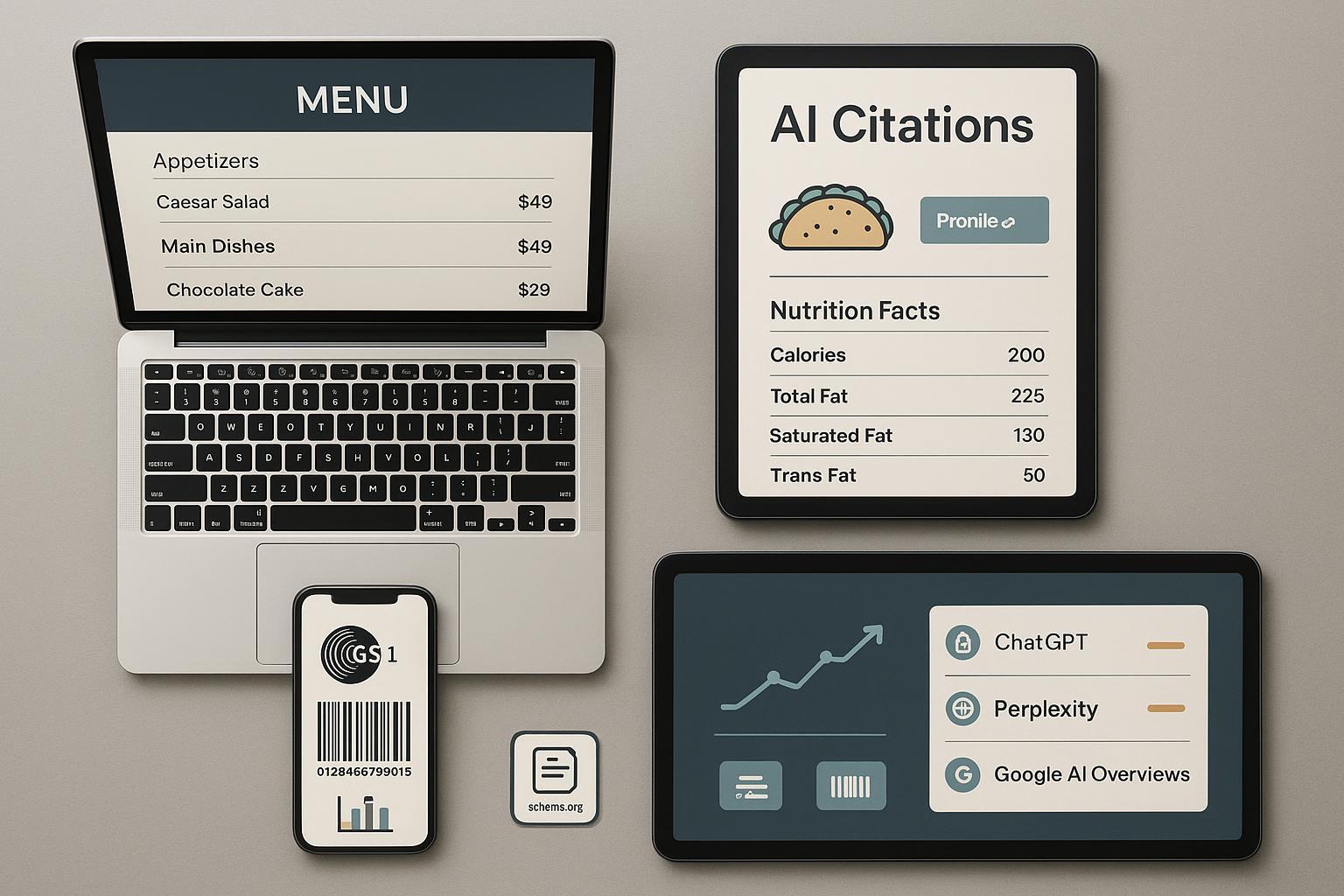
AI answers now sit between your audience and your website. When Google’s AI Overviews appear, many informational clicks fall away, and answer engines like Perplexity summarize from a handful of sources. If your brand isn’t cited or linked, you’re invisible at the moment of consideration. That’s why Food & Beverage (F&B) teams need GEO—Generative Engine Optimization—as a practical, data-backed layer on top of technical SEO.
What GEO means for Food & Beverage
GEO is the discipline of making your content and product data easy for AI systems to understand, cite, and trust. For F&B, it blends three pillars:
- Compliant, transparent product info (nutrition, allergens, provenance) that matches packaging and regulatory standards.
- Structured data and clean site architecture for recipes, menu items, and locations.
- Monitoring and optimization for AI citations, sentiment, and downstream traffic.
Google’s documentation notes that AI features like AI Overviews don’t require special structured data to qualify; inclusion hinges on indexing and helpful content quality, not a secret tag. See Google’s “AI features and your website” overview (2025). Structured data still matters for rich results and discovery, and it supports clarity that AI systems rely on.
Phase 1 — Data Foundations & Compliance
Get the data layer right before chasing AI citations. Use JSON-LD consistently and mirror label-accurate details online—especially nutrition and allergens.
- Schema.org core types for F&B: Recipe, Menu, NutritionInformation, FoodEstablishment, Product, Review. Canonical references live at schema.org, including Recipe, Menu, NutritionInformation, FoodEstablishment, Product, and Review.
- FDA/EU labeling online: Align product pages and feeds with allergen and nutrition rules. FDA’s Edition 5 Q&A (Jan 2025) clarifies allergen labeling (sesame included via FASTER Act). See FDA’s guidance Q&A (2025) and EU distance selling requirements that mandate pre-purchase information; see EU FIC distance selling.
- GS1 standards: Use GTINs in product data and feeds; prepare for GS1 Digital Link and 2D barcodes (Ambition 2027). Start with GS1’s 2D barcodes guideline and the GS1 Web Vocabulary to plan consumer-facing URIs.
| Entity | Recommended Schema | Where It Lives | Critical Properties |
|---|---|---|---|
| Packaged product | Product | PDP (product detail page) + feed | brand, gtin, offers, nutrition, allergens, aggregateRating |
| Recipe | Recipe | Blog/recipe hub | image, datePublished, recipeIngredient, recipeInstructions (HowToStep), nutrition |
| Menu item | MenuItem via Menu | Menu page | name, description, nutrition, offers, allergens |
| Restaurant location | FoodEstablishment (Restaurant) | Unique location page | address, geo, openingHoursSpecification, servesCuisine, hasMenu, aggregateRating |
| Reviews | Review/aggregateRating | Product/Location pages | author, reviewRating, datePublished |
Validate with Google’s Rich Results Test; keep nesting clean (e.g., Recipe → NutritionInformation; Menu → MenuSection → MenuItem). Keep hours, prices, and ingredients current.
Phase 2 — Multi‑Location Restaurant Execution
Multi-location restaurants need consistent, AI-readable location pages, not just generic store locators.
- Build unique pages per location with accurate NAP, amenities, local photos, and current menu links. Add FoodEstablishment JSON-LD: servesCuisine, priceRange, openingHoursSpecification, hasMenu pointing to your Menu or menu URL, plus aggregateRating/review.
- Maintain an index page that lists locations with scannable details; where appropriate, use ItemList schema and consider Google’s structured data carousels (beta) for collections.
- Treat reviews as first-class content. Publish a mix of first-party highlights and third-party embeds where permitted; mark up reviews to add context. Local SEO authorities stress distinct location content and clean information architecture; see Whitespark’s location website guide (2025).
Why does this matter? AI systems prefer sources with clear, consistent entities. A well-structured location ecosystem increases the odds that your pages become the citation of record.
Phase 3 — Feeds & Marketplace Readiness
Your feeds are often the single source of truth for product data seen by search and marketplaces.
- Merchant Center identifiers: Submit accurate GTINs, brand, MPN; use identifier_exists for custom goods. See Google’s Unique product identifiers overview.
- Feed hygiene: Normalize titles, attributes, and nutrition; avoid duplicative SKUs and stale inventory. Automations are helpful, but monitor diagnostics severity and fix errors promptly.
- Syndication and sync: If you sell across Google, marketplaces, and social, enforce consistent identifiers and near-real-time updates. Platforms like Feedonomics provide robust enrichment and synchronization; their data feed management overview explains the operational model.
Phase 4 — AI‑Citation‑Ready Content
AI answers echo credible, well-sourced pages. Structure your content so it can be excerpted with confidence.
- Source transparency: Add citations within your content—linking to standards, studies, and your own data—and make authorship and dates clear. This helps both AI systems and human readers.
- Recipes and how-tos: Use HowToStep patterns inside recipeInstructions; clarify measurements and timing.
- Perplexity considerations: Perplexity displays sources in answers and exposes search_results metadata in its APIs; high-quality, indexable articles from authoritative domains are more likely to be cited. See Perplexity’s help center on how it works.
Measurement That Matters
Expect fewer organic clicks where AI Overviews appear, but don’t stop measuring—expand your KPIs.
- AI visibility and citation share: Track how often your brand is cited or linked across Google AIO and answer engines. Industry coverage shows AIO links tend to pull from top organic sources and can reduce CTR on informational queries; see Search Engine Land’s 2025 synthesis.
- Sentiment: Monitor tone in AI-generated summaries. Negative or outdated mentions require fast content fixes.
- Downstream traffic: Attribute visits from AI-referred clicks where possible; pair with traditional impressions, rankings, and rich results eligibility.
- Operations: Establish a monthly GEO review with content, SEO, and data teams.
For deeper how-tos, see How to Optimize Content for AI Citations and How to Perform an AI Visibility Audit.
Example Workflow — Monitoring & Optimization (Geneo)
Disclosure: Geneo is our product.
Here’s a neutral, practical way F&B teams can monitor and improve AI visibility. Configure queries around core products, recipes, and locations. Track citations and sentiment across Google AIO, ChatGPT, and Perplexity. Identify which pages are repeatedly referenced and which gaps exist (e.g., missing nutrition details, unclear menu data). Prioritize fixes—clean up JSON-LD, refresh allergen notes to match FDA/EU guidance, and align GTINs across site and feed. Recheck citations monthly and compare sentiment trendlines. A tool like Geneo centralizes cross-platform brand mentions, links, and emotions, then surfaces content opportunities without marketing fluff. Use it to anchor a monthly GEO stand-up: review changes, assign owners, and push updates.
Role‑Based Operating Model (Quick Checklist)
- Marketing: Own measurement and prioritization. Validate brand claims, offers, and feed identifiers. Set quarterly GEO goals.
- Content: Maintain recipes, menus, and product pages with clear sources, updated nutrition/allergen notes, and clean schema.
- Tech/SEO: Implement JSON-LD; validate rich results; maintain location architecture; monitor Merchant Center diagnostics and site performance.
Start a 60–90 Day Pilot
Pick two product lines and three restaurant locations. In month one, fix the data foundations (schema, identifiers, labeling alignment). In month two, publish AI-citation-ready content and clean feeds. In month three, measure: visibility, citations, sentiment, and downstream clicks. If AIO reduces informational CTR, did citations improve brand consideration elsewhere? Iterate.
Ready to put GEO to work—what will you test first?