
Generative Engine Optimization (GEO) Best Practices for Pet Brands
Discover practical GEO best practices for pet brands. Learn compliance, structured data, UGC, and AI measurement to boost visibility in generative engines.
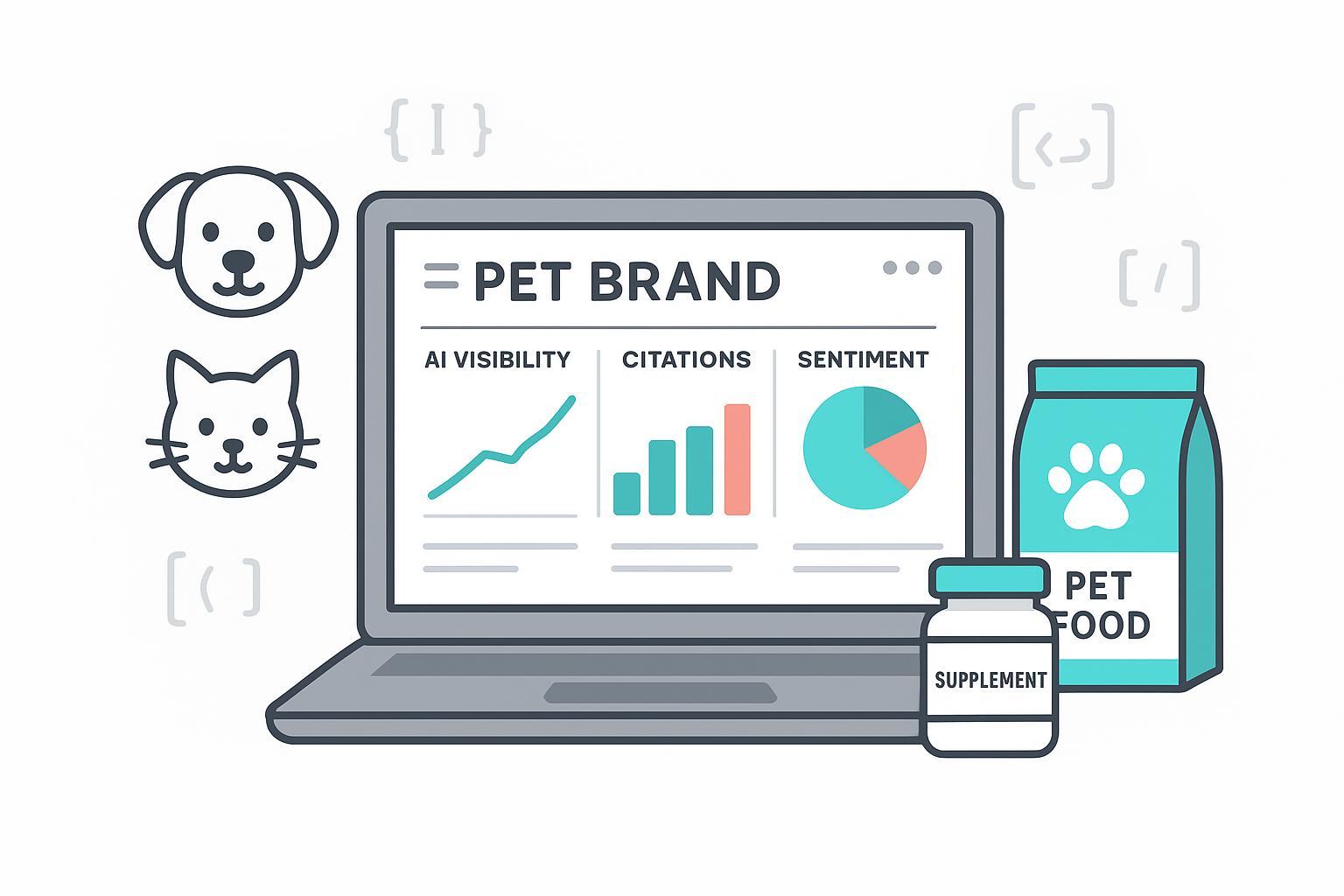
Pet brands are feeling the squeeze: AI summaries increasingly answer care, nutrition, and product questions without pushing many clicks to websites. If you’re only optimizing for blue links, you’re leaving visibility on the table. GEO—Generative Engine Optimization—shifts the focus to being cited, quoted, and represented accurately by AI systems across Google’s AI Overviews, Perplexity, and Copilot.
What GEO is (and how it differs from SEO)
GEO optimizes your content, structure, authority signals, and compliance so generative engines can reliably ingest, attribute, and surface your brand in answers. Traditional SEO targets rank and CTR. GEO targets presence in AI responses: citations, sentiment, and coverage across platforms. That shift is grounded in 2024–2025 evidence showing AI summaries depress click-through rates in many informational scenarios—for example, a multi-organization study summarized by Search Engine Land in 2025 on AI Overviews CTR drops.
The pet-brand challenge set
Pet categories blend products, health claims, and consumer education, so you must harmonize compliant product data (ingredients and adequacy statements), credible medically reviewed content with transparent authorship, and reliable UGC (reviews and Q&A) backed by structured FAQs. Think of GEO for pet brands as three pillars working together: content architecture, compliance and credibility, and community signals.
Architect content for AI retrieval
AI systems favor content that’s scannable, structured, and verifiable. Your site should make it easy to parse the “who,” “what,” and the “evidence.” Make sections explicit with H2/H3 headings for feeding guidelines, ingredient lists, suitability by life stage, and safety notes; include on-page citations for key claims (for instance, dental approvals or nutrient standards). Mirror the page in structured data: combine Product/ProductGroup with FAQPage on common questions (feeding amounts, allergy concerns) and Article for deep guides; validate JSON-LD with Google’s tools and ensure the visible text matches schema fields. Provide author identity and credentials. For medical content, show DVM bios and review dates.
Platform behaviors to design for
Google indicates that AI Overviews reward helpful, crawlable, clearly structured content and that Overviews traffic is included in Search Console reporting; design pages accordingly and monitor performance per Google’s “AI features and your website” documentation. Perplexity emphasizes verifiable citations, so pages with clear authorship, dates, and source attribution map well to its results fields, as explained in Perplexity’s Search Quickstart guide. Microsoft Copilot displays grounded links beneath summaries even though selection logic isn’t fully documented; plan for transparent claims and authoritative sources, per Microsoft’s Copilot transparency note.
Compliance and credibility foundations
Pet brands operate under specific labeling and claims rules. Clear compliance helps AI engines trust and quote your content.
- AAFCO label modernization: Use standardized naming, the Pet Nutrition Facts Box, and proper intended-use statements; ensure ingredient lists and adequacy align with current model regulations. See AAFCO’s Pet Food Labeling Guide (2025) for scope and examples.
- Ethical medical publishing: Align care content with veterinary ethics—clear disclaimers on VCPR limitations, encourage consultation with a vet, and present evidence levels. The AVMA Principles of Veterinary Medical Ethics (2024) summarize standards practitioners expect.
UGC that AI engines trust
User reviews and Q&A can strengthen trust if they’re verified and well-structured. Encourage experience-rich reviews and separate variants so ratings aren’t muddled across different formulas or sizes; add an FAQ section answering top questions and mark it up with FAQPage schema; moderate responsibly—remove inappropriate or misleading submissions and disclose moderation policies.
Measurement: shift from clicks to share-of-voice
You won’t always get the click—even when your brand is cited. Success looks like being present, cited, and positively described across generative engines. Track those signals alongside Search Console.
GEO metrics table
| Metric | Definition | Owner |
|---|---|---|
| Cross-platform presence | Your domain cited/linked in Google AI Overviews, Perplexity answers, and Copilot responses for priority queries | SEO lead |
| Citation frequency | Number of times your pages are referenced per topic cluster across platforms per audit cycle | Content operations |
| Sentiment | Tone of AI summaries toward your brand/products (positive, neutral, negative) with notes and examples | Brand/reputation |
| Platform coverage | Percentage of priority queries where your brand appears across target AI systems | Digital marketing |
| AIO impressions/clicks | Search Console metrics specific to queries that trigger AI Overviews | SEO/analytics |
| Compliance signals | Presence of AAFCO-aligned labeling data, disclaimers, and author credentials on key pages | Regulatory/comms |
A practical measurement workflow
Build prompt libraries for product comparisons, feeding guidelines, ingredient safety, and brand reputation; audit Google AI Overviews, Perplexity, and Copilot monthly, logging which sources are cited, how your brand is described, and the sentiment; refresh content hubs by adding or updating FAQs, aligning Product/ProductGroup + FAQPage + Article schema, and including DVM-reviewed notes on care pages; retest after changes and correlate with Search Console trends for queries that show AI Overviews; report share-of-voice and coverage gaps and prioritize remedial content where you’re missing.
Disclosure: Geneo is our product. As an example of how teams operationalize this, brands sometimes use an AI visibility tool to compile prompt libraries, track cross-platform citations and sentiment, and produce share-of-voice reports for priority topics. A neutral, practical reference is Geneo’s workflow resources, such as the AI visibility audit guide, which outline prompt-level tracking, citation capture, and iteration cycles.
Short audit checklist
- Identify top 10 queries per category (nutrition, ingredient safety, product comparisons, care) and test across Google AIO, Perplexity, and Copilot.
- Log citations, sentiment, and missing data points (e.g., unclear adequacy statements, missing FAQ schema, absent author credentials).
- Ship fixes within two sprints; re-audit and note changes.
Implementation details pet brands often miss
- Exact schema-text match: if your JSON-LD lists chicken first, the on-page ingredient list must also lead with chicken; discrepancies undermine trust.
- Variant clarity: ensure ProductGroup schema reflects variations (size, flavor) so reviews and Q&A map correctly.
- Freshness discipline: feeding tables, adequacy statements, and policies should have clear update dates and change logs.
Putting it all together
GEO is not a one-off project; it’s an ongoing discipline. Start with your highest-impact pages: flagship product lines, ingredient explainer hubs, and top care guides. Layer compliant data, expert review, and structured FAQs. Track presence and sentiment across AI engines, then adjust.
If you want a monitoring option to centralize audits and reporting, you can use a dedicated AI visibility platform that tracks citations and sentiment across generative engines. For context on features and use cases, see Geneo’s overview for agencies, which describes cross-platform monitoring and reporting for brands and partners.
References
- Google AI Overviews and site owner guidance: AI features and your website
- Perplexity: Search Quickstart
- Microsoft Copilot: Transparency note
- Labeling and compliance overview: AAFCO Pet Food Labeling Guide (2025)
- Ethics baseline: AVMA PVME (2024)
- Traffic impact context: Search Engine Land’s summary of CTR changes (2025)