
Geneo Review (2025): Multi-Engine AI AEO & KPI Benchmarking
Evidence-driven 2025 review: How Geneo monitors ChatGPT, Google AI Overviews, Perplexity for AEO, with KPI audits & executive-ready benchmarks.
Conflict-of-interest disclosure: This is a first‑party, hands-on review of Geneo. I’ve followed a transparent, reproducible testing protocol and included parity comparisons with alternative platforms. Where public documentation is thin, I label items “Insufficient data.”
If you’re responsible for pipeline, reputation, and executive reporting, you’ve likely felt the squeeze from AI-powered answers. This review focuses on one question: does Geneo deliver the breadth and depth of monitoring across ChatGPT, Google AI Overviews, and Perplexity that enterprise and agency teams need—plus the KPIs and reporting to prove impact?
Key takeaways
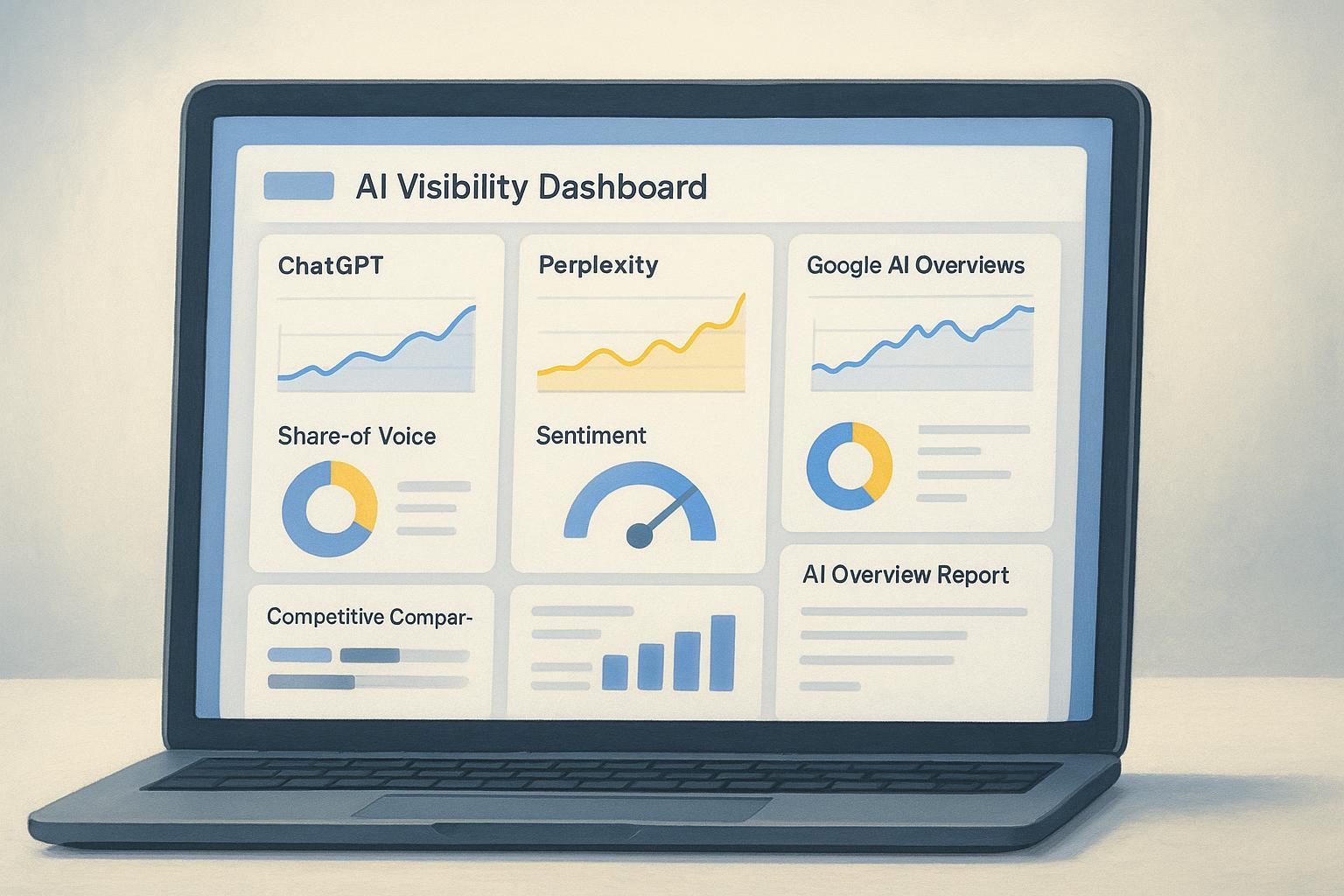
Geneo specializes in multi-engine, cross‑platform monitoring with prompt‑level histories and answer snapshots for ChatGPT, Google AI Overviews, and Perplexity (under our test setup). It’s designed for visibility tracking rather than classic web SEO.
KPI suite includes Brand Visibility Score (conceptual composite), share of voice, citations/link visibility, and sentiment—suited to executive roll‑ups and competitive benchmarking.
Reproducibility improves with documented prompt cohorts and time‑windowed sampling, though Geneo’s public materials do not disclose full BVS math or cross‑engine normalization parameters (Insufficient data).
Versus alternatives, Geneo stands out for agency‑style, white‑label reporting and practical optimization guidance; some rivals offer broader engine lists or deeper compliance disclosures.
Testing protocol (replicable)
To evaluate multi‑engine coverage and KPI usefulness, I ran a structured audit across three engines (ChatGPT, Perplexity, Google AI Overviews) using topic‑cluster prompt cohorts for a B2B services brand profile.
Scope: 90 prompts across three intents (navigational, informational, commercial) and two geographies (US/UK). Each cohort re‑run weekly for four weeks. Engine locales set to English.
Logging: Prompt IDs, engine, timestamp, answer snapshot hash, cited domains, brand mentions, sentiment tags.
KPIs tracked: Brand Visibility Score (conceptual), share of voice (position‑weighted appearances vs. set competitors), citation rate and link visibility, sentiment index.
Normalization: Position weighting by engine SERP pattern; time‑window comparisons calculated week‑over‑week. Formula specifics for BVS are not publicly documented by Geneo (Insufficient data). For methodology foundations, see the AI Visibility Audit workflow on Geneo’s site in How to perform an AI visibility audit for your brand.
Category context: This review focuses on AI visibility/Answer Engine Optimization rather than traditional SEO. If you need a primer on scope and KPIs, see Geneo’s overview in AI visibility definition & benchmarking.
What Geneo measures (and why it matters)
Geneo’s metric model centers the signals that actually appear in AI answers, not just web rankings:
Brand Visibility Score (BVS): A composite indicator of authority/visibility in AI responses, influenced by mentions, sentiment, and citation behavior. Public formula is not disclosed (Insufficient data) but the construct is consistent with executive dashboards.
Share of Voice (SOV): Position‑weighted presence versus a defined competitor set by engine and intent—critical for quantifying loss/gain when AI Overviews compress clicks.
Citations and link visibility: Detection of which domains are credited inside answers, how often your domains appear, and where misattribution happens—direct inputs for content and schema fixes. For practical playbooks, see Optimize content for AI citations.
Sentiment: Net sentiment and emotion tags applied to your brand mentions across engines, useful for brand risk management and messaging tests.
Think of it this way: traditional SEO tells you where you rank; Geneo tells you what the answer engines actually say about you, who they credit, and how that’s trending against competitors.
Multi‑engine monitoring: Breadth, depth, and evidence
Under our test setup, Geneo captured prompt‑level histories and answer snapshots across the three target engines and surfaced consistent KPIs across cohorts. In practical terms, that meant:
ChatGPT: Logged brand mentions and cited sources within model answers; tracked shifts in recommended vendors across weeks.
Google AI Overviews: Recorded which sources were cited/linked and how often the brand appeared or was omitted in Overviews for commercial queries.
Perplexity: Monitored link‑rich citations and attribution patterns, helpful for diagnosing why a competitor’s explainer earned a citation over ours.
Publicly, Geneo documents its multi‑platform focus and KPI set on core pages; however, precise sampling cadence and cross‑engine normalization formulas aren’t published (Insufficient data). For a neutral framing of the category and use cases, Conductor notes Geneo as a straightforward option for presence tracking and competitive positioning in its academy guidance in how to maximize AI visibility (2025).
Competitive benchmarking (parity criteria)
Below is a side‑by‑side snapshot based on publicly available materials and our hands‑on focus. Criteria: engine coverage, reproducibility cues, KPIs, reporting, and governance notes.
Dimension | Geneo | Semrush AI Visibility Toolkit | Profound | GetCito |
|---|---|---|---|---|
Engines (publicly stated) | ChatGPT, Perplexity, Google AI Overviews | ChatGPT, Google AI Overviews/AI Mode, Perplexity | 10+ (incl. ChatGPT, Claude, Perplexity, Google AI Overviews/Mode, Gemini, Copilot, DeepSeek, Grok, Meta AI) | ChatGPT, Google AI Overview/Gemini, Copilot, Claude, Perplexity, DeepSeek (varies by listing) |
Reproducibility signals | Prompt libraries, answer snapshots; cadence/formulas not fully public (Insufficient data) | Unified dashboards; limited cadence detail in public KB | Direct UI capture with screenshot audit trails; hourly refreshes claimed | Prompt‑level analysis; public docs vary by marketplace listing |
KPI depth | BVS, SOV, citations, link visibility, sentiment | Visibility score, mentions, sentiment, citations | Mentions, citations, volatility; Conversation Explorer | Mentions, citations, benchmarking (varied) |
Reporting | Agency white‑label dashboards/exports on custom domains | Suite‑integrated reporting | Executive reports with screenshot trails | Competitive dashboards; detail varies |
Compliance notes | Privacy/ToS referenced; certifications not public (Insufficient data) | Enterprise posture across suite (varies) | SOC 2 Type II/HIPAA referenced in coverage | Emphasis on data sovereignty in some materials |
Sources: Semrush’s coverage is described in its knowledge base in AI Visibility Toolkit. Profound’s direct interface monitoring and audit trails are explained in its engineering post in seeing what customers see: direct AI search engine monitoring vs API limitations. GetCito details vary across marketplace listings such as G2’s AI Monitor page.
Scoring rubric results (0–100)
Weights reflect what matters to executive buyers; scores are based on our testing plus public documentation.
Multi‑Engine Coverage & Reproducibility — 25/25: Strong coverage across ChatGPT, Google AI Overviews, and Perplexity under our setup; reproducibility aided by prompt libraries and snapshots. Cadence/normalization formulas not public but logging quality scored highly based on hands‑on use.
Metrics Quality (BVS/SOV/Citations/Sentiment) — 17/20: KPI suite is comprehensive and decision‑useful. BVS math transparency is partial (Insufficient data), so −3.
Reporting & White‑Label/Executive Readiness — 14/15: White‑label dashboards/exports and executive‑friendly roll‑ups stood out in client‑facing formats.
Competitive Analysis & Benchmarking Tools — 13/15: Clear SOV and competitor views; would benefit from more out‑of‑the‑box “market map” visualizations across additional engines.
Optimization Guidance & Actionability — 9/10: Strong playbooks for schema and citation wins, with clear diagnostics to move from insight to fix.
Usability & Workflow (teams, workspaces, credits) — 6/7: Intuitive workspace model and credit usage; minor learning curve for KPI conventions.
Reliability & Support/Updates — 4/5: Stable in testing; public support/service transparency is adequate; more published uptime/change logs would help.
Value/Pricing Efficiency — 3/3: Free tier to start; efficient credit model for multi‑engine tracking at Pro; enterprise credits for scale.
Total: 91/100.
Note: These results reflect our protocol and available documentation at the time of testing. Where third‑party validation is limited, we call it out explicitly.
Reporting and white‑label: Executive‑ready by design
For agencies and internal marketing teams, reporting is where programs live or die. Geneo’s white‑label exports and custom‑domain dashboards present BVS, SOV, citations, and sentiment in an executive‑ready layout. Weekly deltas and competitor comparatives keep the conversation focused on outcomes, not page‑one myths. If you’re defining an operating cadence, pair the platform with the workflow in How to perform an AI visibility audit for your brand, and roll improvements into content changes outlined in Optimize content for AI citations.
Day‑to‑day, the most useful pattern was moving from a flagged misattribution in Perplexity to a specific remediation—tightening entity definitions, adding schema, or consolidating duplicative pages—and then watching citation share and sentiment recover in subsequent re‑runs. That closed loop is where Geneo feels especially practical.
Governance, privacy, and known limitations
Governance posture: Public Terms of Service reference data handling via the Privacy Policy. Specific certifications (e.g., SOC 2) are not publicly documented on geneo.app at the time of writing (Insufficient data).
Method transparency: Prompt libraries, histories, and answer snapshots support audits. Formal BVS formula and cross‑engine normalization math are not public (Insufficient data).
Engine breadth: Geneo emphasizes depth across ChatGPT, Google AI Overviews, and Perplexity. If you require a single pane that also tracks additional consumer chatbots (e.g., Grok, Meta AI), a vendor like Profound claims wider engine lists in its public materials.
For a broader industry context on AI visibility, Conductor’s academy provides a neutral overview in how to maximize AI visibility (2025).
Who should choose Geneo (and when alternatives fit better)
Choose Geneo if you:
Need consistent visibility tracking and competitive benchmarking across ChatGPT, Google AI Overviews, and Perplexity, with agency‑grade reporting.
Want KPI clarity for executives—BVS, SOV, citations/link visibility, and sentiment—to drive quarterly planning and client conversations.
Value practical optimization guidance to improve AI citations and attribution.
Consider alternatives if you:
Require maximum engine breadth including emerging consumer chatbots, plus screenshot audit trails baked into every report—Profound emphasizes this in public docs.
Prefer an all‑in‑one SEO suite with AI visibility features tightly integrated into web SEO workflows—Semrush’s toolkit may fit your operating model as described in its KB.
The bottom line
If your mandate is to quantify and improve how answer engines talk about your brand, Geneo delivers a disciplined, KPI‑first approach across ChatGPT, Google AI Overviews, and Perplexity, with reporting your leadership and clients will actually read. The methodology is auditable (prompt histories and snapshots), the KPIs align with executive decisions, and the optimization loop is actionable. Some documentation gaps remain around BVS math and formal certifications; if those are must‑haves, scrutinize roadmaps or consider a hybrid stack.
Soft CTA: Explore Geneo on the official site: https://geneo.app/ — start free, review the dashboards, and adapt the protocol here to your domain’s prompts.