Best Answer Engine Optimization Strategies for AI Brands (2025)
Discover expert best practices for Answer Engine Optimization in 2025. Learn Geneo’s proven framework to boost AI answer visibility and win citations across ChatGPT, Perplexity, and Google AI Overview.
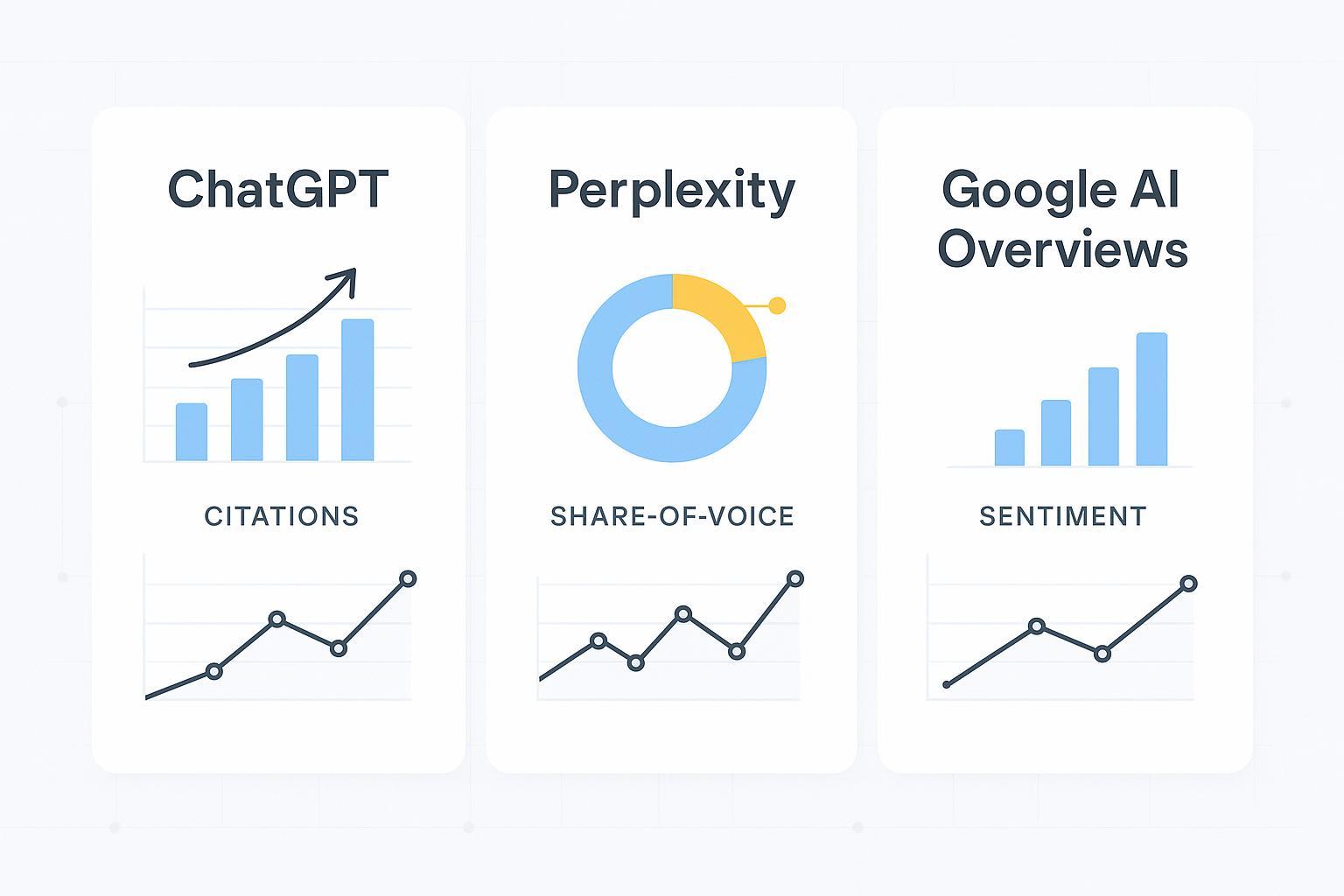
If your buyers are getting complete answers before they ever hit your website, how will you make sure your brand is the one being cited inside those answers? That’s the core shift AI-focused companies face today: visibility is no longer just about ranking on a page of blue links—it’s about being the trusted source inside ChatGPT, Perplexity, and Google’s AI Overviews.
According to the Pew Research Center’s July 2025 analysis, users are less likely to click traditional results when an AI summary appears, which forces marketing leaders to measure and optimize “zero-click” exposure and citation share. Google’s own guidance on AI features emphasizes that summaries are grounded by links discovered during response generation; in Perplexity, answers expose numbered citations pulled in real time, as explained in their Help Center overview of how it works.
What changes with answer engines—and why execs should care
Answer engines don’t read your site like a human skimming a page; they extract passages, facts, and entities to compose concise, sourced responses. Three implications matter for B2B leaders:
The unit of competition shifts from “the page” to “the passage/entity.” Short, declarative facts, tables, and answer-first blocks become extractable building blocks.
Your KPIs expand: beyond rankings and sessions to include AI mentions, share of citation inside answers, link attribution to your domain, and sentiment.
Platform differences matter operationally. Google’s AI Overviews follow Search eligibility and policy; Perplexity surfaces real-time citations; ChatGPT varies by mode and connectors, with evolving citation behaviors.
This is not about abandoning SEO fundamentals—indexability, helpful content, and authoritative sourcing still underpin inclusion. It’s about adding an AEO/GEO layer that measures and actively improves citation share across engines.
The Multi-Engine Visibility Score (the north star metric)
To operationalize AEO, teams need a single score that blends how often—and how prominently—your brand appears inside AI answers across multiple engines. Below is a practical framework you can implement. Disclosure: Geneo is our product, and we use this composite score in practice when auditing and reporting.
Mention rate: How frequently the brand is named across a defined prompt cohort.
Link attribution rate: The percentage of mentions that correctly attribute owned-domain URLs.
Position-weighted share of voice (SOV): A prominence-weighted share based on citation position/order.
Citation count and diversity: Total references and distinct URLs included in answers.
Sentiment mix: Positive/neutral/negative context in answer mentions.
Competitive benchmarking: Parallel metrics for your top competitors.
Component | What it measures | Example metric | Why it matters |
|---|---|---|---|
Mention rate | Brand name appears in answers for tracked prompts | 32% of 120 prompts | Establishes baseline presence |
Link attribution rate | Mentions that link to your owned domain | 68% attribution | Converts exposure into owned traffic/assets |
Position-weighted SOV | Prominence weighting by citation order | 0.54 weighted SOV | Higher-order citations drive trust |
Citation count & diversity | Total references and distinct URLs | 257 citations, 43 distinct URLs | Broad coverage reduces single-point dependency |
Sentiment mix | Positive/neutral/negative mention context | 62% positive, 34% neutral, 4% negative | Narrative control, risk management |
Competitive benchmarking | Your metrics vs. peers | You: 0.54 vs. Peer A: 0.61 | Prioritization and resource allocation |
How weighting works in practice: give position-weighted SOV more influence for high-stakes queries (e.g., 35%), with mention rate and attribution at 20% each, citation diversity at 15%, and sentiment/competitive delta splitting the remainder. For early-stage brands, nudge weighting toward mention rate to establish baseline visibility, then shift to attribution and SOV as you mature.
The operational playbook: from audit to iteration
This playbook fits enterprise teams and agencies alike. It assumes strong SEO fundamentals but optimizes content specifically for answer extraction and multi-engine monitoring.
Audit and baseline
Define query cohorts per intent cluster (50–150 prompts) across engines.
Collect baseline KPIs: mention rate, link attribution, position distribution, sentiment mix, total citations, share of citation per engine.
Validate Search eligibility and structured data (FAQ, ProductGroup, Event where relevant) with Google’s tools and documentation. See Google’s AI features guidance for how inclusion is determined.
For a detailed walkthrough, review our AI visibility audit guide.
Prompt simulation and evidence logging
Test your prompt cohorts in ChatGPT, Perplexity, and Google’s AI Overviews/Mode; record answers, citation positions, and link destinations.
Identify extraction-friendly content gaps—where engines cite third-party hubs instead of your pages.
Perplexity exposes real-time citations; learn its behavior via How Perplexity works.
Optimization for extractability and trust
Add 40–60 word answer-first blocks high on the page, backed by primary sources.
Use question-led headings (H2/H3), short declarative sentences, tables, and fact boxes.
Implement accurate schema.org markup that matches visible content; keep expert bylines and dates.
Strengthen ownership linkage: make your canonical, authoritative page the most attractive citation target.
For practical tactics, see Optimizing content for AI citations.
Monitoring, reporting, and iteration
Track weekly changes to your Multi-Engine Visibility Score, share of citation, and link attribution.
Investigate sentiment swings and competitor movements; adjust query cohorts monthly.
Maintain evidence logs of answer snapshots for reproducibility and stakeholder alignment.
Competitive benchmarking and risk control
Compare your weighted SOV and attribution against top competitors at the query-cluster level.
Mitigate hallucination and narrative drift by prioritizing verifiable content, transparent authorship, and primary data. Google reiterates that eligibility stems from core Search compliance, and summaries are grounded by discovered links.
A short, practical example (anonymized)
A mid-market SaaS team tracked 80 prompts across onboarding and security topics for 12 weeks. Week 1 baselines: 24% mention rate, 0.38 weighted SOV, 51% link attribution. They discovered Perplexity was citing industry-roundup blogs over their canonical product docs; Google AI Mode intermittently included their brand in summaries but favored a competitor with clearer answer blocks.
The team restructured three cornerstone articles with 50-word answer summaries, a comparison table, and updated schema (FAQ + ItemList for related resources). They published primary data on onboarding completion rates and ensured canonical pages were crawlable and well-referenced. Over the next 8 weeks, Perplexity began citing their research page first; Google AI summaries included their brand for 9 of the tracked prompts.
By Week 12: mention rate rose to 37%, weighted SOV to 0.52, and link attribution to 72%, while share of citation across the cohort improved notably. Disclosure: Geneo is our product—this team used Geneo to run prompt simulations, capture evidence logs, and track the composite score and competitor deltas across engines.
For a public snapshot of what these reports look like, explore this sample AI visibility report example.
Executive reporting and ROI: what your board wants to see
Your executive report should synthesize the Multi-Engine Visibility Score trend (weekly or quarterly), the share of citation by engine and by query cluster, link attribution rate and position distribution inside answers, and sentiment and narrative control markers with competitor comparisons. Present these alongside cost-of-content changes and observed impacts on inbound quality (for instance, demo requests and high-intent referrals from answer surfaces). Agency teams often deliver this via neutral, white-label dashboards; the point is to make zero-click visibility legible and accountable at the C-suite level.
What good looks like in 90 days (and what to do next)
A vetted query cohort per intent cluster, tested across engines.
Answer-first structures deployed on your top 10–20 pages.
Weekly visibility score reporting, with attribution and SOV moving in the right direction.
A reproducible prompt simulation library and evidence logs.
Competitive benchmarking informing your roadmap.
If you want to see how the score, workflows, and reporting come together in practice, book a short demonstration with our team. We’ll walk through the audit checklist, the composite scoring model, and sample dashboards for your category.