
Preparing Your Content for Voice Search Dominance in 2025
Unlock 2025-ready best practices for voice search. Learn actionable workflows, schema tactics, local SEO, and measurement to future-proof your content for conversational queries.
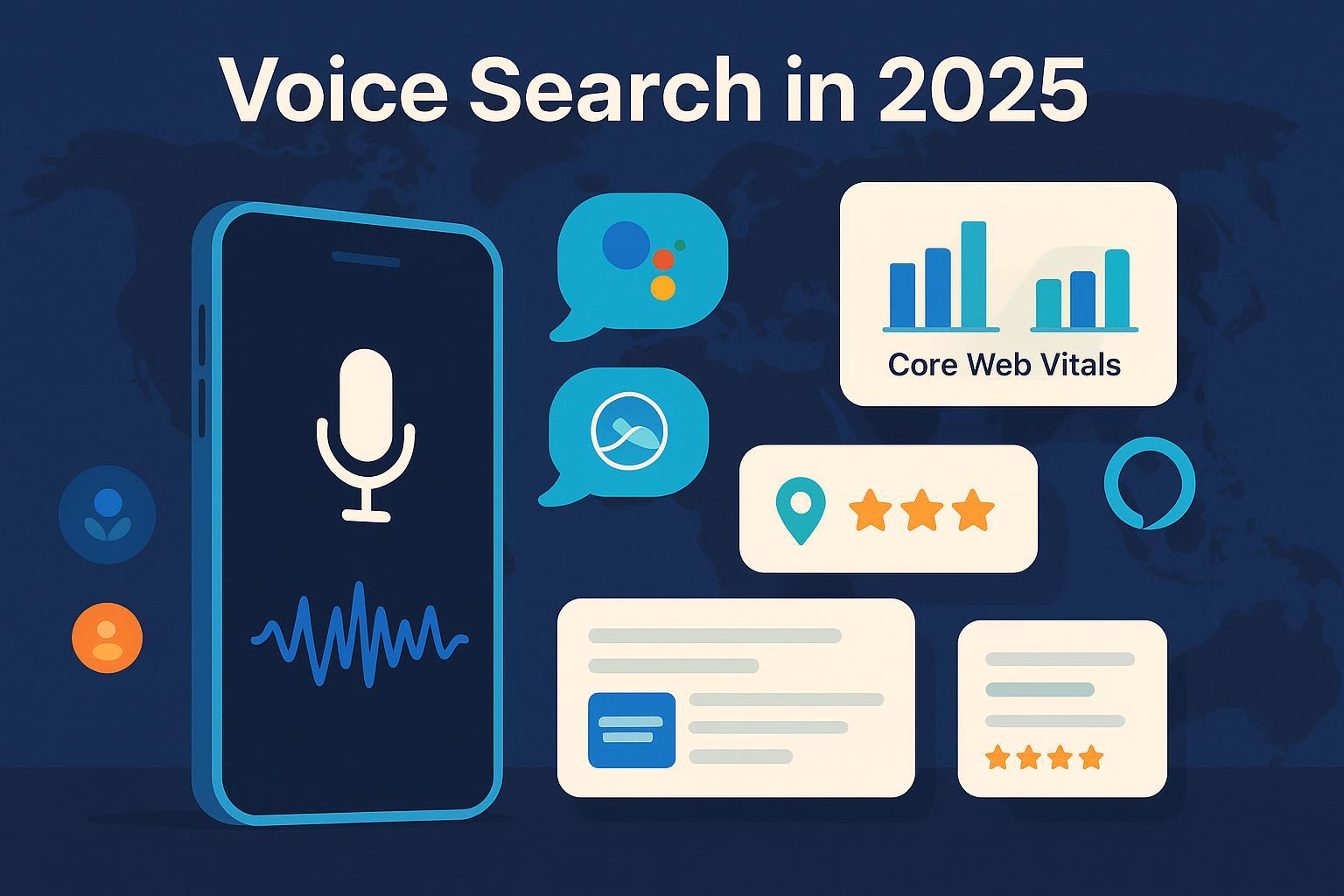
If you’re planning for the oft-quoted scenario where voice search handles half of all queries, treat it as a directional planning premise—not a guaranteed outcome. In 2024–2025, multiple indicators show rapid growth, but not 50% yet. For instance, global voice assistants in use reached billions of devices in 2024, signaling ubiquity across phones and smart speakers, according to the Statista landing page on worldwide assistants in use (2024) — see the dataset described in the Statista global assistants overview. Insider Intelligence’s learning center summarizes U.S. assistant user bases and device patterns in its 2024–2025 guidance — the eMarketer voice assistants learning center is a useful synthesis.
In practice, what matters for marketers is that conversational queries are now mainstream across phones, car systems, and home devices. Prepare your content to be the answer. Below is a practitioner-tested playbook for 2025: evidence-backed, stepwise, and clear about trade-offs.
1) Reset Expectations: Optimize for Reality, Plan for Growth
- Treat “50% of queries by voice in 2025” as a scenario. Build plans on measurable adoption in your market and device mix. Use ranges rather than absolutes when forecasting.
- Prioritize content patterns assistants reliably extract: concise definitions, straightforward steps, clean headings, and strong local signals.
- Diversify beyond classic featured snippets. Google’s AI Overviews reshaped SERPs, affecting how answers are sourced and displayed. Glenn Gabe’s 2024–2025 analyses discuss snippet prevalence and AI Overviews interactions; see the methodology and tracking approach in the GSQI analysis of featured snippets vs. AI Overviews.
Trade-off: Over-investing in speculative formats (or deprecated rich results) wastes cycles. Focus on durable fundamentals and supported schema, then iterate as platforms evolve.
2) Make Your Content Answer-Ready (Format Beats Hype)
Voice assistants commonly pull short, direct answers. Based on multi-year featured snippet studies (updated through 2024), paragraph snippets dominate and concise “definition blocks” work well when placed early:
- Aim for a tight answer paragraph of roughly 40–60 words near the top (ideally within the first 100–200 words). Ahrefs’ long-running dataset outlines snippet formats and placements; see the overview in the Ahrefs featured snippets study.
- Use natural question phrasing as H2/H3s (“What is…”, “How do I…”, “Why does…”). Provide a scannable, one-paragraph answer, then elaborate.
- Structure lists for procedural queries (numbered steps for “how”), and tables for comparison queries. Keep headings semantic and predictable.
A simple pattern I use:
- H2 with the question in plain English
- A 40–60 word direct answer paragraph
- Supporting detail (examples, caveats, context)
- Optional checklist of steps
To deepen this discipline across your site, see Geneo’s foundational explainer on natural-language structuring in the Voice Search Optimization Best Practices for 2025.
3) 2025 Page Experience: Core Web Vitals, Mobile, and Stability
Faster, stable pages are more likely to be surfaced, visited, and retained—important for both classic snippets and AI/voice answers.
- Hit Core Web Vitals thresholds (75th percentile): LCP ≤ 2.5s, INP ≤ 200ms, CLS ≤ 0.1. Google’s 2024–2025 overview consolidates the targets and measurement guidance — review the Google Core Web Vitals documentation.
- Note the metric change: Interaction to Next Paint (INP) replaced First Input Delay (FID) officially in March 2024. The web.dev launch post explains implications and measurement methods — see the web.dev INP launch announcement.
- Optimize for mobile-first, HTTPS, and clean rendering. Reduce JS bloat, compress images, minimize third-party scripts, and improve server TTFB.
- Validate performance with field data (CrUX, PageSpeed Insights) and set thresholds in your CI/CD.
Trade-off: Chasing perfect CWV scores can be costly. Prioritize the templates that hold your answer blocks (homepage, category hubs, top FAQs, local landing pages) and the pages most likely to rank for conversational queries.
4) Structured Data That Still Matters (and What Doesn’t) in 2025
- FAQ rich results: Since mid-2023, Google limits FAQ rich results primarily to authoritative government and health sites. You can keep valid FAQPage markup for clarity, but don’t expect rich result display on typical sites. The change is documented in the Google Search blog post on HowTo/FAQ changes (2023).
- HowTo rich results: Deprecated; removed from both mobile and desktop in 2023–2024.
- Speakable schema: Still BETA and limited to U.S. English news publishers. If you’re a qualifying news site, see implementation details in the Google Speakable structured data overview. For most brands, do not rely on Speakable for exposure.
- What to implement broadly: LocalBusiness (and relevant subtypes), Organization, Product, Article. Use JSON-LD, ensure completeness (name, logo, contact info, addresses, hours), and validate in the Rich Results Test.
Example: LocalBusiness JSON-LD for a service-area business
{
    "@context": "https://schema.org",
    "@type": "LocalBusiness",
    "name": "Acme HVAC & Air",
    "image": "https://www.example.com/images/storefront.jpg",
    "url": "https://www.example.com",
    "telephone": "+1-555-0100",
    "priceRange": "$$",
    "address": {
      "@type": "PostalAddress",
      "streetAddress": "250 Market St",
      "addressLocality": "San Jose",
      "addressRegion": "CA",
      "postalCode": "95113",
      "addressCountry": "US"
    },
    "geo": {
      "@type": "GeoCoordinates",
      "latitude": 37.336,
      "longitude": -121.890
    },
    "openingHoursSpecification": [
      {
        "@type": "OpeningHoursSpecification",
        "dayOfWeek": ["Monday", "Tuesday", "Wednesday", "Thursday", "Friday"],
        "opens": "08:00",
        "closes": "18:00"
      }
    ],
    "sameAs": [
      "https://www.facebook.com/acmehvac",
      "https://www.yelp.com/biz/acme-hvac-air-san-jose",
      "https://maps.apple.com/?address=250%20Market%20St,%20San%20Jose,%20CA%2095113"
    ]
  }
Trade-off: Schema completeness takes time. Start with Organization/LocalBusiness on your homepage and primary locations, then expand to key services/products that drive voice queries.
For a broader 2025 playbook tying schema, content, and tracking together, consider the GEO Best Practices for AI Search Engines: 2025 Playbook.
5) Conversational Keyword Targeting That Actually Works
Voice queries are more colloquial, often longer, and frequently include intent markers like “best,” “nearby,” “how do I,” or “what’s the difference.”
- Mine question keywords from customer support logs, live chat, CRM tickets, and review platforms. These sources beat generic keyword tools for voice intent.
- Group questions by task and device context. For example, “how to reset model X while driving” implies quick, hands-free steps.
- Build Q&A sections that map to real phrasing, but avoid “near me” stuffing. Use neighborhood and landmark terms naturally.
- Place the most asked questions in hub pages with answer-first blocks, then link out to deeper resources.
If you’re new to AI-driven visibility concepts, this primer can help frame the approach: the Beginners Guide to GEO and AI-Driven Search.
6) Local Voice SEO: GBP Hygiene and Hyperlocal Content
Voice assistants frequently resolve to local results, especially for time-bound or proximity needs.
- Maintain a complete Google Business Profile: primary and secondary categories, attributes, services, hours (including holidays), photos, and regular Posts. Keep NAP consistent across major directories.
- Earn and respond to reviews. Assistants often surface businesses with strong ratings and fresh feedback.
- Ship hyperlocal content: service pages by neighborhood, “how we serve [area]” explainers, and location FAQs. Use natural references to landmarks, transit, and community terms.
- Include LocalBusiness schema on your site and ensure location landing pages have unique, answer-first content.
For operations teams, this 2025 guide ties local SEO and AI search together step by step: AI Search Optimization for Local Businesses (2025).
7) Accessibility That Helps Voice and Humans (WCAG 2.2)
Accessible pages are easier for assistive tech and, by extension, for voice interfaces to parse and extract.
- Ensure clear focus indicators and that focus isn’t obscured by sticky UI. WCAG 2.2 introduces new criteria around focus visibility and target size — see the standards in the W3C WCAG 2.2 recommendation.
- Provide transcripts and captions for audio/video; include alt text for images. Semantic headings and landmarks help screen readers and parsing engines.
- Use plain language and consistent help patterns. Reduce cognitive load with shorter sentences and familiar terms.
Trade-off: Accessibility improvements often require cross-team alignment (design, dev, content). Start with high-traffic templates and media libraries.
8) Measurement: How to Know If Voice Optimization Is Working
Because platforms don’t label “voice” explicitly, you’ll infer success through a combination of signals:
- Featured snippet visibility: Track if your pages win answer boxes and list/tables. Triangulate with rank tracking and manual verification for priority queries.
- AI Overviews presence: Document which pages or domains surface in AI answers and whether your brand is cited. Compare week over week to catch shifts (tie this to your content changes).
- Local actions: Monitor calls, direction requests, and messages in Google Business Profile Insights. Correlate spikes with content releases and review campaigns.
- Conversion proxies: For how-to content, watch time-to-first-action, scroll depth, and CTA clicks following top-of-page answer blocks.
9) Monitoring Workflow Example: Brand Visibility Across AI/Voice Surfaces
In practice, we combine search console exports, local insights, and cross-platform brand monitoring to see whether our content is being chosen as “the answer” on conversational platforms.
- Set a weekly cadence to check priority queries across assistants and AI answers (mobile voice, smart speaker, AI Overview, and chat platforms).
- Record whether your brand appears, how it’s described, and the sentiment of the answer.
- Tie observations back to changes (new schema, faster templates, updated FAQs) and annotate in your analytics.
For this layer, I use Geneo to monitor brand visibility across ChatGPT, Perplexity, and Google’s AI answers, and to track sentiment in the responses over time. Disclosure: Geneo is developed by our team; we include it here because it materially assists the monitoring workflow described.
If you prefer a more general playbook approach before adding tools, the GEO Best Practices for AI Search Engines: 2025 Playbook outlines workflows for setting hypotheses, iterating, and measuring impact.
10) Prioritization Roadmap (12 Weeks)
Week 1–2: Baseline and quick wins
- Audit top 50 pages for answer-first patterns; add 40–60 word definitions to priority pages.
- Identify 30 question queries from support logs and reviews; map to content hubs.
- Set CWV monitoring; fix glaring LCP/INP issues on key templates.
Week 3–6: Local and structured data rollout
- Complete/refresh Google Business Profile data; publish 2–3 hyperlocal pages.
- Implement Organization and LocalBusiness JSON-LD on homepage and locations; validate.
- Ship transcripts for top media assets; add alt text where missing.
Week 7–9: Iteration and measurement
- Track featured snippet wins and AI Overview citations for 30 priority queries.
- Compare local actions (calls, directions) pre/post content changes.
- Annotate in analytics; adjust answer blocks based on engagement.
Week 10–12: Scale and refine
- Expand Q&A hubs; add neighborhood-specific FAQs.
- Optimize remaining templates for CWV; consider image CDN and code splitting.
- Consolidate insights into an internal playbook and assign ongoing owners.
Trade-offs and resource notes:
- If bandwidth is limited, prioritize pages with commercial intent and local visibility. Avoid spreading thin across low-impact content.
11) Common Pitfalls (and How to Avoid Them)
- Chasing deprecated formats: With HowTo and widespread FAQ rich results changes, don’t bet your roadmap on rich result exposure. Focus on valid schema and content clarity as documented by Google’s 2023 updates.
- Over-stuffing “near me”: Assistants prefer natural, hyperlocal phrasing. Use neighborhood and landmark terms; let proximity and reviews do the ranking work.
- Ignoring performance: Slow pages lose eligibility and users. Make CWV a non-negotiable for templates hosting answer blocks.
- Measuring only rankings: Voice success shows up in downstream actions (calls, messages, AI citations). Triangulate multiple signals.
12) Implementation Checklist
Content
- Add answer-first paragraphs (40–60 words) to priority pages.
- Use question-form H2/H3s and natural language.
- Build task-based Q&A hubs; link deeper guides.
Technical
- Meet CWV thresholds (LCP ≤ 2.5s, INP ≤ 200ms, CLS ≤ 0.1).
- Validate JSON-LD for Organization/LocalBusiness.
- Maintain HTTPS, mobile-first, and fast TTFB.
Local
- Refresh Google Business Profile data and photos.
- Publish hyperlocal landing pages; incorporate neighborhood terms.
- Encourage and respond to reviews.
Accessibility
- Ensure WCAG 2.2 focus and target size compliance.
- Provide transcripts/captions; use semantic headings.
Measurement
- Track featured snippets and AI Overview citations.
- Monitor local actions (calls, directions) and annotate changes.
- Review brand/sentiment across conversational platforms weekly.
Final Notes: Stay Current and Iterate
Platforms evolve quickly. Keep an eye on official documentation and verified changes. Google’s Search documentation centralizes updates on rich results and schema—start with the evolution explained in the HowTo/FAQ changes post (2023). Maintain your page experience targets via the Core Web Vitals overview, and remember that INP is now the standard interaction metric per the web.dev INP announcement.
Lastly, watch how snippets and AI answers shift through 2025, and keep refining your answer-first content structure with empirical checks and weekly monitoring.