Ultimate GEO Course Guide 2026: Comprehensive Generative Engine Optimization
Explore the ultimate 2026 GEO course guide—find top generative engine optimization programs, certifications, learning tracks, and tools for AI search visibility. Start mastering GEO today!
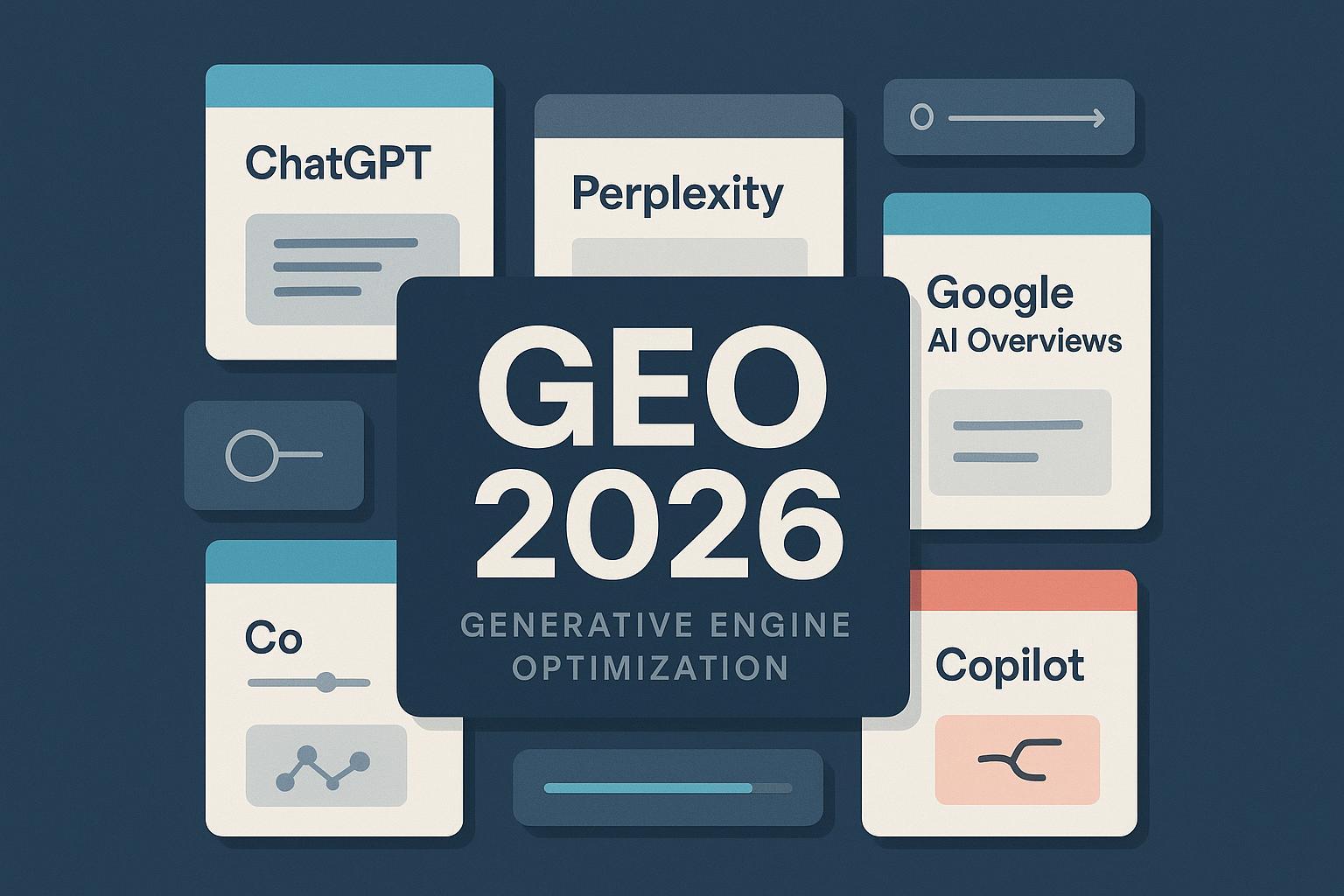
If you’re planning team upskilling for AI-driven search in 2026, GEO isn’t optional anymore—it’s the backbone of how brands show up inside AI-generated answers. This guide maps the courses, learning paths, tools, and practical exercises you’ll need to turn GEO from theory into repeatable workflows.
What GEO is—and how it differs from SEO and AEO
Generative Engine Optimization (GEO) is the practice of optimizing your content and entities so they’re visible, cited, and aligned inside AI-generated answers across engines like ChatGPT, Google’s Gemini/AI Overviews, Perplexity, and Copilot. Unlike SEO—which focuses on ranking and clicks in SERPs—GEO prioritizes answer inclusion, authoritative citations, and entity clarity across multi-source LLM outputs. AEO (Answer Engine Optimization) targets concise answers in search features and assistants; GEO extends this to conversational synthesis and multi-citation grounding. For a side-by-side comparison of skillsets and KPIs, see Traditional SEO vs GEO (2025 Marketer’s Comparison).
For an external industry definition, see Search Engine Land’s explainer in What is Generative Engine Optimization (2024).
Core competencies and KPIs for GEO in 2026 (the 80/20)
Think of GEO as four high-impact skill clusters. First, evidence binding and citations: craft claims tied to canonical, primary sources; use descriptive anchor text; ensure provenance. Google notes that AI features in Search appear when generative AI adds value and quality is high, and publisher guidance emphasizes maintaining authoritative, indexable content, as outlined in AI features and your website (Search Central).
Second, entity and knowledge graph alignment: use JSON-LD with stable identifiers, choose precise schema types, connect authoritative profiles via sameAs, and keep properties complete. Validate changes and track Knowledge Panel stability. Third, authoritative sources and consistency: publish expert-led content and keep cross-channel facts aligned. Fourth, monitoring and feedback loops: track inclusion and sentiment across engines, then adjust content based on what gets cited (and what doesn’t). Perplexity’s documentation highlights answer citations and source metadata; publisher-oriented guidance is available in Perplexity search best practices.
KPIs to instrument include:
- Inclusion rate in AI answers (by engine)
- Citation quality and coverage (e.g., precision@k, source diversity)
- Entity alignment consistency (schema completeness, profile coherence)
- Sentiment of mentions and share of voice inside AI responses
2026 GEO course marketplace overview
Most learners choose among university certificates, bootcamps, vendor trainings, and ongoing webinars. University programs (often via the major MOOC platforms) provide accredited foundations in SEO/AI SEO, content strategy, and analytics; many are self-paced with low-cost certificates. Browse options through the Coursera SEO course listings and prioritize curricula that include LLM prompting, structured data, and citation practice.
Bootcamps compress learning into intensive, cohort-based sprints with labs and capstones; a representative option is Crews Education’s GEO training (2026). Vendor trainings and certifications can be valuable when they include real assessments and practice environments rather than slideware. Webinars and summits help you track platform changes and case studies; pair them with hands-on labs so the knowledge sticks.
A practical selection lens: confirm instructor credibility, insist on explicit modules for citations and entity alignment, ask how you’ll practice monitoring and measurement, review grading rubrics and portfolio outcomes, and check the true time and budget commitment.
Role-based learning paths (modular tracks)
SEO Manager track: Start with structured data and entity alignment, then layer on AI answer discovery and GEO-focused content briefs. Your goal is to produce clean JSON-LD, consistent cross-profile signals, and measurable inclusion gains. A useful practice is running a schema audit, adding stable identifiers and sameAs links, validating changes, and logging answer inclusion weekly for a month.
Content/PR Strategist track: Focus on evidence binding and narrative authority. Source expert voices, link to primary research, and standardize author credentials. Publish an expert Q&A with strong references and then watch where it’s cited in Perplexity and Google AI Overviews; refine headlines and abstracts to improve selection.
Analytics Specialist track: Build evaluation and reporting muscle. Create a rubric that scores accuracy, faithfulness to sources, relevance/personalization, and citation quality. Assemble a dashboard for inclusion, precision@k on citations, and sentiment trends. Propose specific content or schema adjustments based on your findings.
Team Lead / Head of Growth track: Establish governance and operating rhythms. Draft a disclosure policy (FTC/EU compliant), clarify roles, define quarterly objectives, and set vendor selection criteria. Your capstone is a GEO playbook that teams can adopt with minimal hand-holding.
Hands-on exercises and assessment rubric
Evidence binding workflow: Plan your claims, identify canonical sources, draft descriptive anchors, publish, then measure inclusion and citations across engines. Grade with a precision@k check and a faithfulness review against source documents.
Entity alignment lab: Audit organization/person/product schema, fix gaps, connect profiles via sameAs, re-validate, and monitor Knowledge Panel and answer inclusion changes over several weeks.
Monitoring loop: Track weekly presence across ChatGPT, Perplexity, and Google AI Overviews; log sentiment and share of voice; iterate the content and PR plan based on what gets cited.
For a structured way to score outputs, align to LLMO-style metrics—accuracy, relevance/personalization, faithfulness, and citation quality—outlined in LLMO Metrics: Measure Accuracy, Relevance, Personalization in AI.
Tooling stack and vendor considerations
Your stack should cover cross-engine monitoring, content audits, citation capture, and analytics. Compare vendors on engine coverage (ChatGPT, Perplexity, Google AI Overviews/Gemini, Copilot), reliability and auditability, integrations, and pricing. A neutral overview of alternatives is available in Geneo vs Profound vs Brandlight: Best AI Brand Visibility Tools Comparison.
Disclosure: Geneo is our product. It can be used as a practice environment in your course module to track brand inclusion and sentiment across ChatGPT, Perplexity, and Google AI Overviews. Use it—or any comparable tracker—to log queries, capture citations, and compare weekly changes as you implement entity and evidence updates.
For platform behavior and publisher guidance, consult canonical sources. Google’s implementation details and publisher guidance are summarized in AI features and your website (Search Central). For retrieval and provenance in custom GPTs, see OpenAI’s RAG overview for GPTs. Perplexity’s publisher-oriented practices are in Perplexity search best practices.
Compliance and ethics for GEO coursework
Disclose material connections in a clear, conspicuous way and keep claims truthful per advertising law. In the EU, transparency obligations under the AI Act begin phasing in from 2025; ensure appropriate disclosures and, where required, machine-readable markings for AI-generated or manipulated content. A high-level reference is the European Commission’s AI Act overview (2024). Align your coursework templates (author bios, sponsorship notes, dataset disclosures) to these standards so you can ship safely.
Sample 12-week study plan (beginner to advanced)
Week 1: GEO foundations—definitions, differences vs SEO/AEO, KPIs, study plan setup.
Week 2: Evidence binding—source discovery, anchor text, link discipline; publish a pilot article.
Week 3: Entity alignment I—Organization schema, identifiers, cross-profile consistency; validation.
Week 4: Entity alignment II—Person/Product schema; Knowledge Panel checkpoints.
Week 5: Monitoring setup—choose a tracker; baseline inclusion and sentiment across engines.
Week 6: Evaluation rubric—accuracy, faithfulness, relevance/personalization, citation quality.
Week 7: Content/PR integration—expert quotes, media outreach; track citation changes.
Week 8: Gemini/AI Overviews specifics—publisher guidance; re-audit structured data and crawlability.
Week 9: Perplexity specifics—publisher-friendly content and citation behaviors; measure inclusion.
Week 10: Experimentation—A/B test evidence placement, author credentials, and schema completeness.
Week 11: Governance—disclosure standards and policy drafting; enablement plan.
Week 12: Portfolio and presentation—compile dashboards, before/after metrics, and a team rollout plan.
Next steps: Build your 2026 GEO program
Put your plan into motion. Start with one pilot topic, publish with strong evidence and clean entities, then measure weekly and iterate. For longer-term risk planning and budgeting, see How to Prepare for a 50% Organic Search Traffic Drop by 2028: Guide.
If you want a consistent practice environment during the course, you can use a cross-engine monitoring tool to log queries, citations, and sentiment over time—Geneo included.