
The science behind Geneo’s detection of visibility risk from outdated or negative reviews in AI search environments
Learn how Sentiment–Citation Authority Composite Weight (SCAW) explains brand visibility risk in AI answers. Practical guide for brand leaders and CMOs.
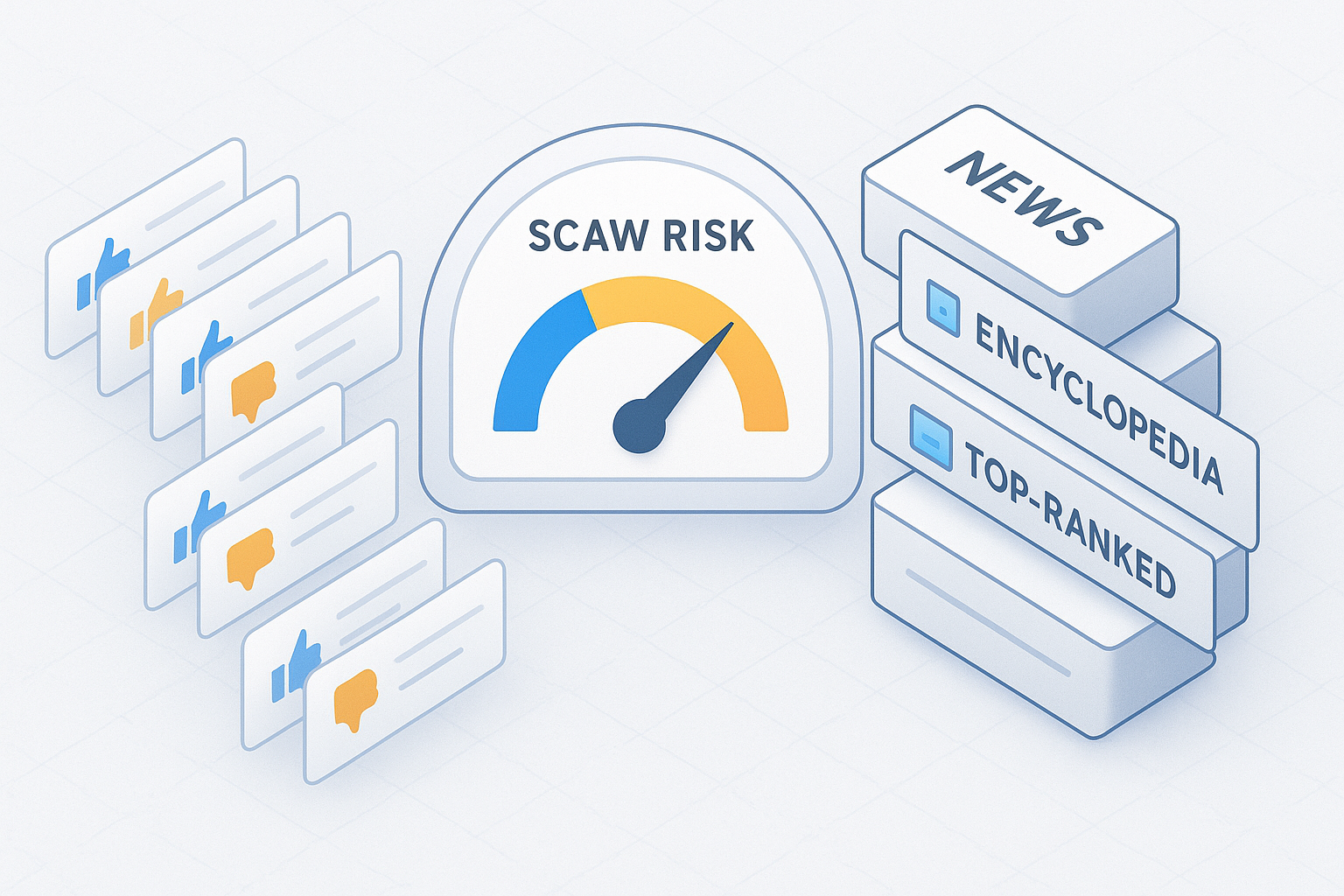
If brand visibility in AI answers suddenly dips, what changed? Often it isn’t a single ranking tweak—it’s the composite effect of public sentiment and the authority of the sources engines are comfortable citing. Think of it as a two-gear system: one gear is how people talk about you (reviews, forums, social, editorial); the other is which sources are deemed safe to cite. When both turn against you, visibility drops and negative narratives can carry through.
What SCAW means—and why it matters
SCAW—Sentiment–Citation Authority Composite Weight—is a practice-ready construct that describes how answer engines combine two families of signals during retrieval and synthesis:
Sentiment: recency‑aware aggregation of polarity and tone from reviews, forums, social posts, and editorial commentary.
Citation authority: confidence in and credibility of the sources engines choose to cite for grounding (overlap with high-ranking organic results, editorial rigor, topical expertise, verified community authority).
When sentiment skews negative and authority citations thin out or skew toward lower-confidence sources, engines have less incentive to surface your brand or to present you favorably. SCAW gives brand leaders a way to monitor and act on this composite behavior.
The signals behind SCAW
Signal family | What’s measured | How it’s normalized |
|---|---|---|
Sentiment | Polarity (−1 to 1), tone, verification (e.g., verified buyer), source type (reviews, forums, editorial), timestamp | Recency weighting (exponential decay), de‑duplication, confidence scoring for verified/editorial items |
Citation authority | Source authority (editorial rigor, domain trust), overlap with top organic results, topical expertise, presence of video/Q&A structure | Platform‑aligned weighting (e.g., heavier for top‑10 organic overlap in Google AI Overviews), recency decay, structural clarity scoring |
Platform patterns: directional evidence you can use
Patterns differ by engine. Treat these as evidence‑based tendencies, not rules.
Google AI Overviews (AIO) frequently cite pages that already rank well. Observational analyses report a strong overlap with top organic results—for example, studies have found large shares of AIO citations from top‑10 rankings and high overlap periods with organic results. See the synthesis in WhitePeak’s explainer “How Google’s AI Overviews Select Sources” and Ahrefs’ research hub “Google AI Overviews”.
Perplexity answers typically include multiple citations and blend authoritative editorial, vendor, and YouTube content, with community sources like Reddit appearing selectively. A cross‑engine dataset of ~8,000 citations summarized by Search Engine Land indicates platform‑specific citation mixes and emphasizes the breadth of sources beyond community content. See “How to get cited by AI: SEO insights from 8,000 AI citations”.
ChatGPT provides fewer explicit citations overall and tends to favor high‑trust, encyclopedic or major editorial sources when it does cite. Robust, platform‑wide prioritization studies are limited; treat generalizations cautiously. For broader context on cross‑platform referrals and how AI answers shift discovery, see Passionfruit’s analysis “Are AI search referrals the new clicks?”.
The implication for CMOs: citation authority is not a pure SEO concept anymore—it’s an AI answer comfort zone. If engines don’t find enough “safe‑to‑cite” support around your brand, sentiment has more room to dominate.
Why outdated or negative reviews linger in AI visibility
“Outdated” doesn’t mean irrelevant. In most monitoring setups, older reviews carry less weight than recent ones, but they still shape the historical baseline. Without fresh, credible positives, stale negatives remain part of the narrative.
Temporal information retrieval research has long used recency weighting—often exponential decay—to balance stability and freshness. A contemporary survey of time‑aware IR summarizes decades of approaches, from time‑based language models to temporal clustering. See “It’s High Time: A Survey of Temporal Information Retrieval” for a concise technical backdrop.
On the user trust side, BrightLocal’s ongoing Local Consumer Review Surveys report that low average ratings and “mostly negative written reviews” strongly drive consumer mistrust, and responsiveness matters. While these are consumer studies, they underscore the practical reality: persistent negativity suppresses willingness to engage unless counterbalanced by recent, authentic positives. See BrightLocal’s survey series.
A detection workflow you can operationalize
You don’t need to reverse‑engineer proprietary algorithms to monitor SCAW. Build a reproducible workflow and use defensible proxies.
Ingest
Capture brand mentions, reviews, forum posts (e.g., Reddit), editorial coverage, and appearances in AI answers with citations (Google AI Overviews, Perplexity, ChatGPT where available). Persist timestamps and URLs.
Normalize
De‑duplicate near‑identical posts; harmonize sentiment scales (−1 to 1); classify source types; tag verification/editorial quality.
Score
Compute recency‑weighted sentiment and authority context. Here’s an operational proxy:
Inputs
  - For each sentiment item i: polarity p_i ∈ [−1, 1], confidence c_i ∈ [0, 1], timestamp t_i, verification weight v_i
  - For each candidate citation source j: authority w_j ∈ [0, 1], recency r_j, structure score u_j

  Recency weighting
  - decay_s(i) = exp(−λ_s · Δt_i)
  - decay_a(j) = exp(−λ_a · Δt_j)

  Aggregates
  - Sent_t = Σ_i [p_i × c_i × v_i × decay_s(i)]
  - Auth_t = Σ_j [w_j × r_j × u_j × decay_a(j)]

  Composite risk (proxy)
  - Risk_t = σ(α × (−Sent_t) + β × (τ − Auth_t))
    where τ is the target authority baseline; α, β tuned for alerting; σ is a logistic squash.
Thresholds and alerts
Trigger alerts when negative Sent_t persists for X weeks and Auth_t drops below your baseline τ (e.g., loss of authoritative media citations in AIO or fewer credible corroborations in Perplexity).
Monitor change
Track four‑week rolling trends and month‑over‑month deltas. Annotate PR and content initiatives to assess impact.
This proxy is explanatory, not a claim about any single engine’s exact algorithm. It aligns with temporal IR practices and credibility‑aware retrieval principles.
Practical micro‑example (evidence‑safe)
Disclosure: Geneo is our product.
A brand monitors AI visibility across Google AI Overviews and Perplexity. Over four weeks, Reddit threads and a third‑party review site show a rise in recent negative posts. At the same time, fewer authoritative media pages are cited in AI Overviews for the brand’s core queries.
Sent_t turns negative after recency weighting; Auth_t drops below the baseline τ.
Risk_t crosses the alert threshold for two consecutive weeks.
Response protocol kicks in: transparent replies to recent reviews; a data‑backed FAQ and an expert‑reviewed guide are published; a short explainer video is added; two independent expert validations are earned.
The team monitors Sent_t and Auth_t over the next four weeks to evaluate recovery.
For related context on GEO vs. classic SEO KPIs, see the internal explainer “Traditional SEO vs GEO: how KPIs differ”, and for program setup fundamentals, “Best Practices for Tracking and Analyzing AI Traffic (2025)”.
Mitigation and governance you can drive
Review hygiene
Encourage authentic, recent reviews; respond transparently. BrightLocal’s survey findings associate responsiveness and balanced sentiment with higher trust.
Digital PR and expert validation
Earn mentions from reputable publications and recognized experts to lift authority context—helpful for AIO and ChatGPT patterns where credible editorial sources matter.
Structured, citation‑friendly content
Publish clear, well‑sourced pages with Q&A clarity where appropriate and include video when it adds value. Google’s documentation explains AI features and structured data policies; treat third‑party claims about schema and AI citations cautiously. See Google’s AI features guidance.
Entity clarity and schema
Maintain accurate organization and product profiles, and applicable structured data (Organization, Product, ProfilePage). Validate with Google’s Rich Results tools and follow spam guidance.
Narrative freshness
Update high‑visibility resources regularly so newer, credible signals outweigh outdated negatives.
Executive checklist: audit this quarter
Do we have a weekly feed of reviews, forums, editorial coverage, and AI citations with timestamps and URLs?
Are we applying recency weighting and de‑duplication to harmonize sentiment data?
Have we defined an authority baseline τ by engine (e.g., organic overlap for AIO; source diversity and video presence for Perplexity; high‑trust encyclopedias/news for ChatGPT)?
Are alerts configured for sustained negative Sent_t and sub‑baseline Auth_t?
Is there a documented response protocol—review replies, expert‑backed content, video, PR validation—and a way to annotate interventions?
Are internal KPIs oriented to GEO/AEO, not just classic rankings? If not, align with our GEO vs SEO explainer.
Closing: make SCAW a governance habit
Visibility in AI answers depends on both public sentiment and the authority of sources engines can safely cite. You can’t control every narrative, but you can govern the inputs: keep reviews fresh and authentic, earn credible citations, and publish structured, citation‑friendly resources. Put SCAW monitoring on your operating calendar, agree on thresholds, and rehearse mitigation. When the composite turns, you’ll know—and you’ll be ready.