
How to Optimize for Claude AI Answers (2025 Best Practices)
Master Claude AI answer optimization in 2025: latest GEO best practices, entity schema, LLMO metrics, and citation workflows for digital marketers and brands.
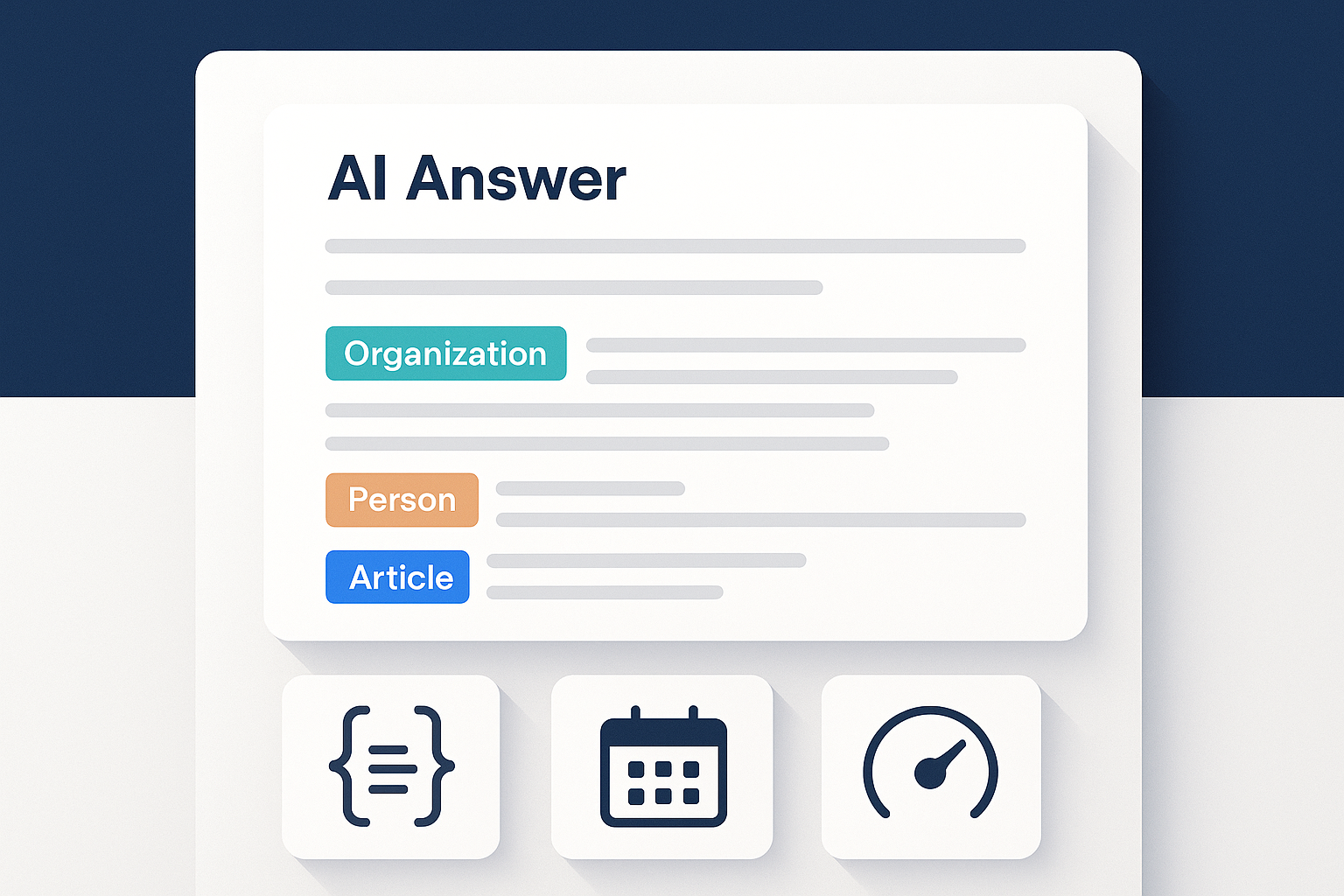
If your brand isn’t visible inside AI answers, you’re ceding ground you’ve already won in organic search. Claude is increasingly used for research, briefs, and quick comparisons—yet Anthropic hasn’t published a formal “how to get cited” guide. That’s okay. You can still win by applying proven generative engine optimization (GEO) and evaluation (LLMO) practices, and by treating your brand’s presence in AI as a trackable form of AI visibility.
What We Know About Claude’s Answers Today
Anthropic discloses model capabilities and guardrails but does not provide a publisher playbook for source selection. The company’s Transparency Hub notes knowledge dates, safety methods, and research updates—e.g., Claude Opus 4.5’s knowledge cutoff is May 2025, with safety informed by Constitutional AI and RLAIF, per the Anthropic Transparency Hub (2025). In product support, Claude can fetch the web when enabled and analyze full page content, and responses may include citations, according to Claude’s web search support article (Sept 2025).
Why does this matter? Generative overlays change user behavior. When an AI summary appears, people tend to click fewer links. In March 2025, about one-in-five Google searches produced an AI summary, and users were measurably less likely to click, per Pew Research’s 2025 behavioral study. If you’re not in the answer, you’re often not in the journey.
The Claude-First Content Playbook
1) Entity and E‑E‑A‑T scaffolding
To be selected and cited, your brand and authors must be easy for models to identify and trust. Implement Organization, Person (author), and Article schema using JSON‑LD. Assign unique @id values to keep your internal knowledge graph consistent; link authors to organizations; and include sameAs links to authoritative profiles (e.g., Wikidata, LinkedIn). The Web Almanac’s Structured Data chapter (2024) summarizes why JSON‑LD is preferred and how to validate implementations.
Practical tips: Put JSON‑LD on the page (don’t rely on microdata) and keep it consistent across articles and author pages. Use stable author pages with bios, credentials, and outbound identity links—your bylines should be unambiguous. Add an Article-level references block linking original sources you synthesized so models can trace claims.
2) Citation‑friendly formats and structures
Engines favor content they can cleanly quote, summarize, or structure. That doesn’t mean writing for robots; it means making your best ideas extractable.
| Format you publish | Why engines cite it | Implementation tip |
|---|---|---|
| Concise definition blocks | Easy to quote to ground a term | Lead with a one‑sentence definition, then add nuance |
| Step‑by‑step guides | Supports procedural answers | Number steps; keep each action short and verifiable |
| Compact tables | Enables fast comparisons | 3–5 rows max; plain language; clear headings |
| FAQs with direct answers | Maps to common prompts | One question per H3; answer in 2–3 crisp sentences |
Add a visible “Last updated” date and a short references section. Use consistent anchor text for internal linking across a topic cluster.
3) Freshness and coverage cadence
Claude and its peers show a bias toward recent, well‑maintained sources on many informational queries. In a 2025 study, Perplexity citations skewed toward very recent content, suggesting freshness can boost inclusion probability in citation‑forward engines, per Seer Interactive’s recency analysis (June 2025). Build a refresh rhythm: prioritize high‑intent hub pages and keep satellite articles in the cluster current. Cover the whole topic (core definitions, how‑tos, comparisons, pitfalls) so an LLM can answer from your domain without jumping elsewhere.
Measure What Claude Can Use: LLMO Metrics
You can’t improve what you don’t measure. Instrument answer‑quality and provenance metrics that reflect how Claude (and similar engines) evaluate sources.
Core metrics to track:
- Groundedness: fraction of claims in your content that are explicitly supported by cited sources.
- Citation coverage: share of answers that include at least one citation to you.
- Citation precision: whether the cited passage actually supports the answer.
These map closely to industry evaluation frameworks—for example, AWS describes citation coverage and precision in its knowledge base evaluation guidance, see AWS Bedrock’s evaluation metrics (2024). For practical formulas and dashboards suited to marketers, see the LLMO metrics guide on Geneo.
Quick instrumentation checklist:
- Define 10–20 priority query clusters and capture baseline answers weekly.
- Score groundedness and citation precision with a calibrated rubric; sample with an LLM‑as‑judge plus human review.
- Track share‑of‑voice across engines and sentiment of mentions. Create remediation tickets when scores slip.
Disclosure: The following is a neutral example of how one tool can support this workflow.
Example workflow with Geneo (illustrative): Connect your brand domains and entities, select priority query clusters (e.g., “product category + best,” “brand + alternatives”), and schedule weekly fetches for Claude‑style answers alongside other engines. Review dashboards for “citation coverage,” “groundedness,” and sentiment by cluster. Use the historical view to spot when a refresh or reference update changed inclusion. Export flagged queries into your content backlog for rapid sprints. Learn more about Geneo’s cross‑engine scope at https://geneo.app.
A Hands‑On Claude GEO Audit (Prompts Included)
Run this audit quarterly or before major launches.
- Map entities and authors: Confirm Organization and Person schema, @id usage, sameAs links, and author→organization relationships. Ensure author bios and credentials are visible and consistent.
- Build query clusters: Group 50–150 prompts by intent (definition, how‑to, comparison, pitfall). Include nuanced phrasing you see in Claude logs and customer emails.
- Baseline answers: With web fetch enabled, ask Claude your cluster prompts and note whether you’re cited. Capture snippets and sources.
- Content gap analysis: For prompts where you’re absent or misquoted, compare your page to cited sources. Do you have quotable definition blocks, step lists, or tables? Is your “Last updated” fresh? Are references clear?
- Remediation sprint: Update the most leveraged pages first. Add extractable blocks, fix schema, improve references, and strengthen author bios. Ship iteratively and re‑check.
- Re‑measure and document: Compare citation coverage and groundedness before/after. Prioritize what moved the needle.
Sample prompts for Claude audits:
- “In 3–5 sentences, define [topic term] with citations. Which sources did you use and why?”
- “Create a step‑by‑step checklist for [task] and cite authoritative publisher pages.”
- “Compare [Brand] vs [Competitor] in a 4‑row table. Cite the pages supporting each row.”
For a deeper template and cadence, see our GEO audit checklist.
Technical Hygiene That Supports Citations
Technical friction reduces your odds of being fetched, parsed, and cited. Keep your sitemaps fresh and canonical tags correct so engines can discover and consolidate the right URLs. Allow reputable AI crawlers where appropriate via robots.txt policies aligned with your legal and business goals. Make pages fast and accessible, with clean headings, descriptive alt text, and stable URLs that won’t break references. Add author bio widgets, editorial notes for updates, and a brief references block to reinforce provenance. Above all, keep byline names and profile URLs consistent over time.
Cross‑engine trend: product teams are moving toward visible, linkable citations. OpenAI describes its search experience as designed to “help users connect with publishers by prominently citing and linking to them,” per Introducing ChatGPT search (Oct 2024). Invest in citation hygiene now; it pays across engines.
Fixing Misattributions and Negative Mentions
When a misquote, outdated stat, or competitor citation beats yours, respond with evidence and clarity. Update the page that should win with a clean definition block, a short methodology note, and two high‑quality references. If comparison drives the query, add a compact table and label each row with a supporting citation. Publish supporting assets—like an expert quote or guest contribution on a reputable site—and align author names and bios to strengthen entity signals. After shipping, rerun your audit prompts and document changes. If an engine continues citing an outdated or incorrect source, consider polite outreach to the publisher that’s being referenced when a correction is warranted.
International Notes
If you operate in multiple languages or regions, replicate entity scaffolding on each locale site. Use hreflang, localized author pages, and region‑specific references where applicable. Ensure sameAs links point to the correct regional profiles (e.g., localized Wikipedia or company registry entries). Think of your knowledge graph as multilingual; each locale should be independently unambiguous.
Next Steps
- Ship entity scaffolding, extractable formats, and a refresh plan on your top clusters.
- Instrument LLMO metrics and run a monthly mini‑audit.
- Track wins and expand to secondary clusters.
Prefer a cross‑engine tracker to speed this up? Geneo can help you monitor citations and sentiment while you iterate.