
Low Brand Mentions in ChatGPT Responses: Definition, Thresholds, and Fixes
Define “Low Brand Mentions in ChatGPT Responses”: thresholds, causes, and an agency-ready remediation checklist for ChatGPT brand mentions notably lacking citations.
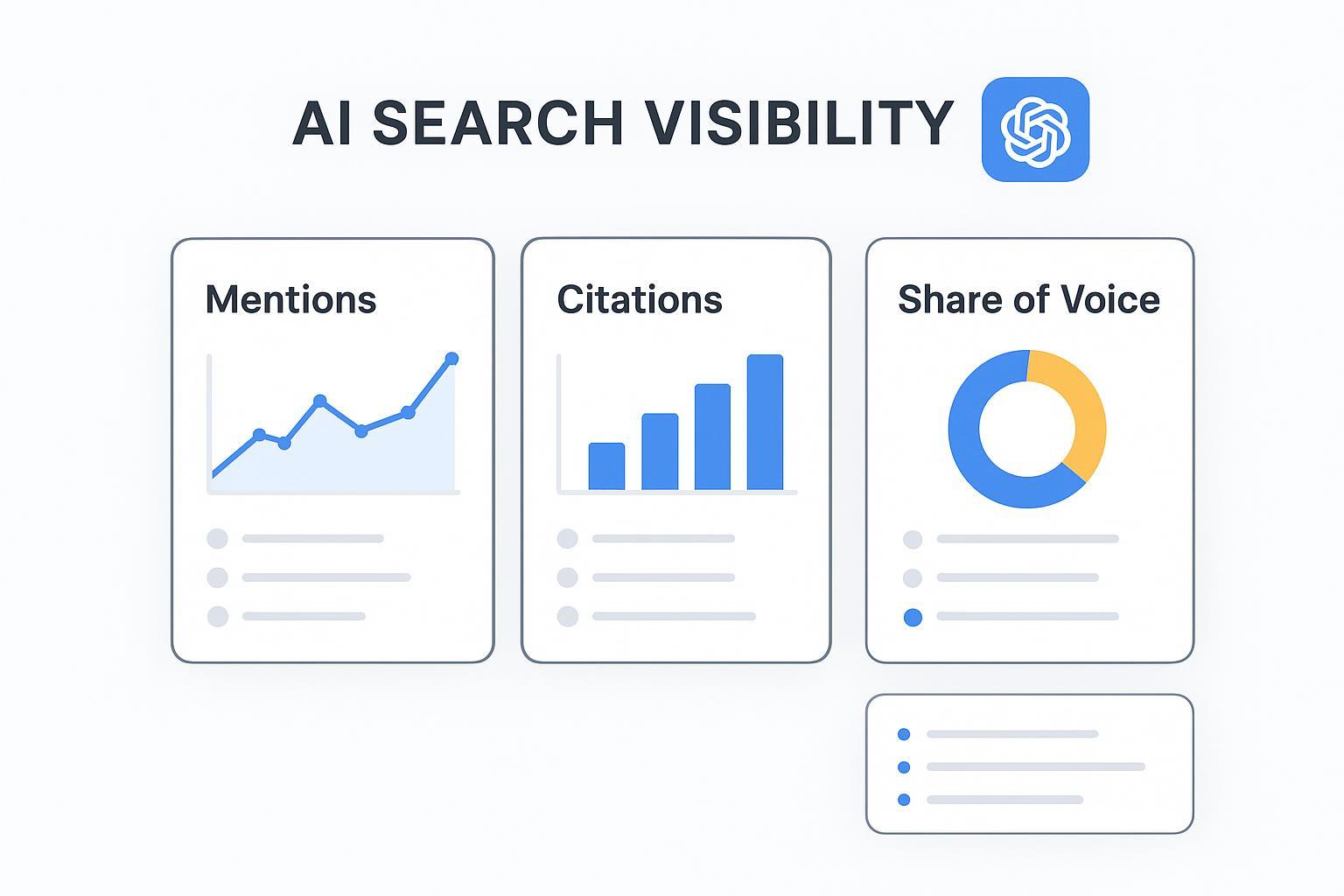
Low Brand Mentions in ChatGPT Responses describes a condition where a brand appears in fewer than the expected share of answers across its priority prompt set—especially “best,” “recommendations,” and “alternatives” queries—and is often mentioned without authoritative links or citations. In practice, when your ChatGPT brand mentions are scarce or citation‑less, visibility and trust suffer in AI search.
Why agencies and clients should care
When your brand is absent from recommendation‑type answers or named without citations, discovery drops and credibility stalls. Agencies see this reflected in lower share‑of‑voice (SOV) within AI answers, inconsistent inclusion in list‑style responses, and weaker attribution signals. Practitioner resources note that unlinked mentions tend to outnumber linked citations; strengthening authoritative evidence improves inclusion and trust. See the 2025 overview on mentions versus citations in Almcorp’s guidance on ranking for mentions in ChatGPT and the metrics frameworks in Profound’s Generative Engine Optimization guide (2025).
Mentions vs citations vs linked citations
Not all appearances in ChatGPT answers are equal. Here’s how to differentiate:
Concept | What it means | Link present? | Where it appears | Example |
|---|---|---|---|---|
Brand mention | Your brand or product is named in the generated answer text. | Not required | In the narrative body | “Top tools include Asana, Trello, Monday.com…” (no links) |
Citation | A source page the AI lists as evidence for the answer. | Yes (URL/card) | In source cards or references | Source cards like “example.com/guide-to-kanban” |
Linked citation | A clickable brand mention or anchor in the answer that points to a cited URL. | Yes (inline link) | In the answer text, sometimes also in sources | “Popular CRMs include HubSpot CRM” with the brand name clickable |
For broader context on AI visibility and these distinctions, see Conductor Academy’s AI search explainer.
How to measure ChatGPT brand mentions (and diagnose “low”)
Start with a reproducible prompt set and track a small set of KPIs. Build a baseline sample of 50–100 prompts across “best/recommendations/alternatives,” comparison (“X vs Y”), and solution/use‑case queries; rotate variants (plural/singular, synonyms, different locales) and log whether you’re mentioned, where you’re positioned in the answer, which citations appear, and the sentiment framing. Focus on four KPIs: mention rate (the percentage of answers that include your brand in each prompt cluster), citation frequency (the share of answers that cite your domain or authoritative third‑party sources), share of voice (your mention share vs competitors across the set), and positioning/sentiment (lead list placement vs buried mentions, with tone notes).
As working thresholds, flag “low” when you’re absent from “best/recommendations/alternatives” prompts, when your SOV sits below roughly 30% across priority prompts, when citationless mentions exceed ~70%, or when the competitive delta is ≥20 percentage points vs top category peers. For methodology background, review Semrush’s approach to tracking ChatGPT visibility and a KPI primer in AI Search KPI Frameworks for Visibility, Sentiment & Conversion.
Why low mentions happen
Several drivers tend to depress inclusion or produce citation‑less mentions. Weak or inconsistent entity signals—unclear brand descriptions, categories, and attributes across your site, schema, and authoritative profiles—make selection harder. Strengthen Organization, Product, FAQ, HowTo, and Review schema, and keep labels consistent across major profiles; Strapi’s GEO guide offers practical direction. Limited third‑party authority and reviews also matter: LLMs weight industry media and review platforms, and a lack of distributed authority depresses recommendations; NAV43’s 2025 playbook outlines inclusion tactics. Coverage and indexation in Bing/Google can constrain eligibility, since ChatGPT browsing and Google AI Overviews frequently mirror major indices; Profound’s guide summarizes these patterns. Freshness and fact‑density gaps are another culprit—outdated or thin pages underperform, while Q&A‑formatted, concise, verifiable facts tend to fare better; Oomph’s insights on Q&A content are helpful. Finally, sentiment and positioning issues—negative forum narratives and low ratings—reduce recommendation likelihood; Search Engine Land’s 2025 snapshot covers variability and inclusion patterns.
Remediation checklist (prioritized)
Entity and structured data hygiene: implement JSON‑LD for Organization, Product, FAQ, HowTo, and Review; maintain consistent brand descriptions and category labels across your site and third‑party profiles.
Expand your semantic footprint with fact‑dense content: publish or refine “X vs Y,” “best tools for…,” “alternatives to…,” and use‑case pages with explicit, verifiable facts (including pricing/eligibility when appropriate).
Build third‑party authority and community signals: secure coverage on industry media and review platforms; encourage updated, auditable reviews; participate in reputable communities (e.g., Reddit, niche forums).
Freshness cadence: update cornerstone resources quarterly; include recency‑stamped data, customer stories with auditable numbers, and category‑defining thought leadership.
Monitor, iterate, and attribute: track mention SOV and citation mix weekly; focus on prompts with the largest competitive deltas; connect movement to branded search, direct traffic, and conversions.
Agency playbook highlights
Agencies can structure delivery around a clear cadence. Begin with a baseline audit using a 50–100 prompt set, logging mentions, citations, position, and sentiment, and repeat monthly to observe changes. Maintain weekly monitoring to watch SOV, citation authority distribution, and spikes or drops; set alerts for absence in critical queries. Finish the cycle with white‑label reporting that presents client‑ready dashboards showing SOV vs competitors, citation quality, and remediation progress. For a broader view on AI visibility and KPIs, see AI Search KPI Frameworks for Visibility, Sentiment & Conversion.
Cross‑engine notes
Engine behavior differs and affects how you measure and prioritize. ChatGPT (with browsing) has selective citations and often references directories or listings; Perplexity shows strong citation transparency, which makes tracking domain presence and per‑query link counts straightforward; Google AI Overviews tie citations closely to SEO rankings and visibility is selective. To compare patterns, see Semrush’s AI mode comparison study and ChatGPT vs Perplexity vs Google AI Overview GEO – Comparison Guide.
Practical example: monitoring and reporting
Disclosure: Geneo is our product.
A neutral, replicable workflow for agencies: Run a 50‑prompt set across ChatGPT, Perplexity, and Google AI Overviews to baseline mention SOV, citation frequency, and sentiment. Produce a weekly summary for each client that highlights movement in SOV, citation authority, and the largest competitive deltas. Document remediation tasks tied to gaps—for example, add FAQ schema to a pricing page or pursue coverage on a high‑authority industry publication. For a concrete explanation of “mention rate, mention coverage, and citation frequency,” see the Geneo Docs — Brand AI Visibility Assessment.
FAQ
What is a “brand mention” in ChatGPT?
A brand mention is when ChatGPT names your brand or product in the answer text. It doesn’t require a link or source attribution, which means it carries less trust than a cited recommendation.
How are ChatGPT brand mentions different from citations?
Mentions name the brand, while citations list the evidence sources used to generate the answer. Linked citations are clickable anchors in the answer pointing to a cited URL, and generally signal higher authority.
What counts as a “low” mention rate?
Operationally, flag “low” when you’re absent from “best/recommendations/alternatives” prompts, your share‑of‑voice is below roughly 30% across priority prompts, citationless mentions exceed ~70%, or your SOV trails competitors by ≥20 percentage points.
How often should agencies measure and report?
Baseline monthly with weekly monitoring for key clusters. Rotate prompt variants each cycle and track mention rate, citation frequency, SOV, position, and sentiment.
{
    "@context": "https://schema.org",
    "@type": "FAQPage",
    "mainEntity": [
      {
        "@type": "Question",
        "name": "What is a brand mention in ChatGPT?",
        "acceptedAnswer": {
          "@type": "Answer",
          "text": "A brand mention is when ChatGPT names your brand or product in the answer text. It doesn’t require a link or source attribution."
        }
      },
      {
        "@type": "Question",
        "name": "How are ChatGPT brand mentions different from citations?",
        "acceptedAnswer": {
          "@type": "Answer",
          "text": "Mentions name the brand, while citations list evidence sources. Linked citations are clickable anchors in the answer pointing to a cited URL."
        }
      },
      {
        "@type": "Question",
        "name": "What counts as a low mention rate?",
        "acceptedAnswer": {
          "@type": "Answer",
          "text": "Flag ‘low’ when you’re absent from recommendation-type prompts, your share-of-voice is below roughly 30%, citationless mentions exceed ~70%, or your SOV trails competitors by ≥20 percentage points."
        }
      },
      {
        "@type": "Question",
        "name": "How often should agencies measure and report?",
        "acceptedAnswer": {
          "@type": "Answer",
          "text": "Baseline monthly with weekly monitoring for key clusters, rotating prompt variants and tracking mention rate, citation frequency, SOV, position, and sentiment."
        }
      }
    ]
  }
If you need consolidated tracking across engines and client‑ready white‑label reporting, Geneo can be used to monitor mentions, citations, and share‑of‑voice for multi‑client delivery. Explore the Geneo homepage.