
How to Increase Your Brand Mentions in ChatGPT: Step-by-Step Guide
Follow this step-by-step guide to measure, increase, and track your brand mentions in ChatGPT with actionable strategies and practical KPIs for marketers.
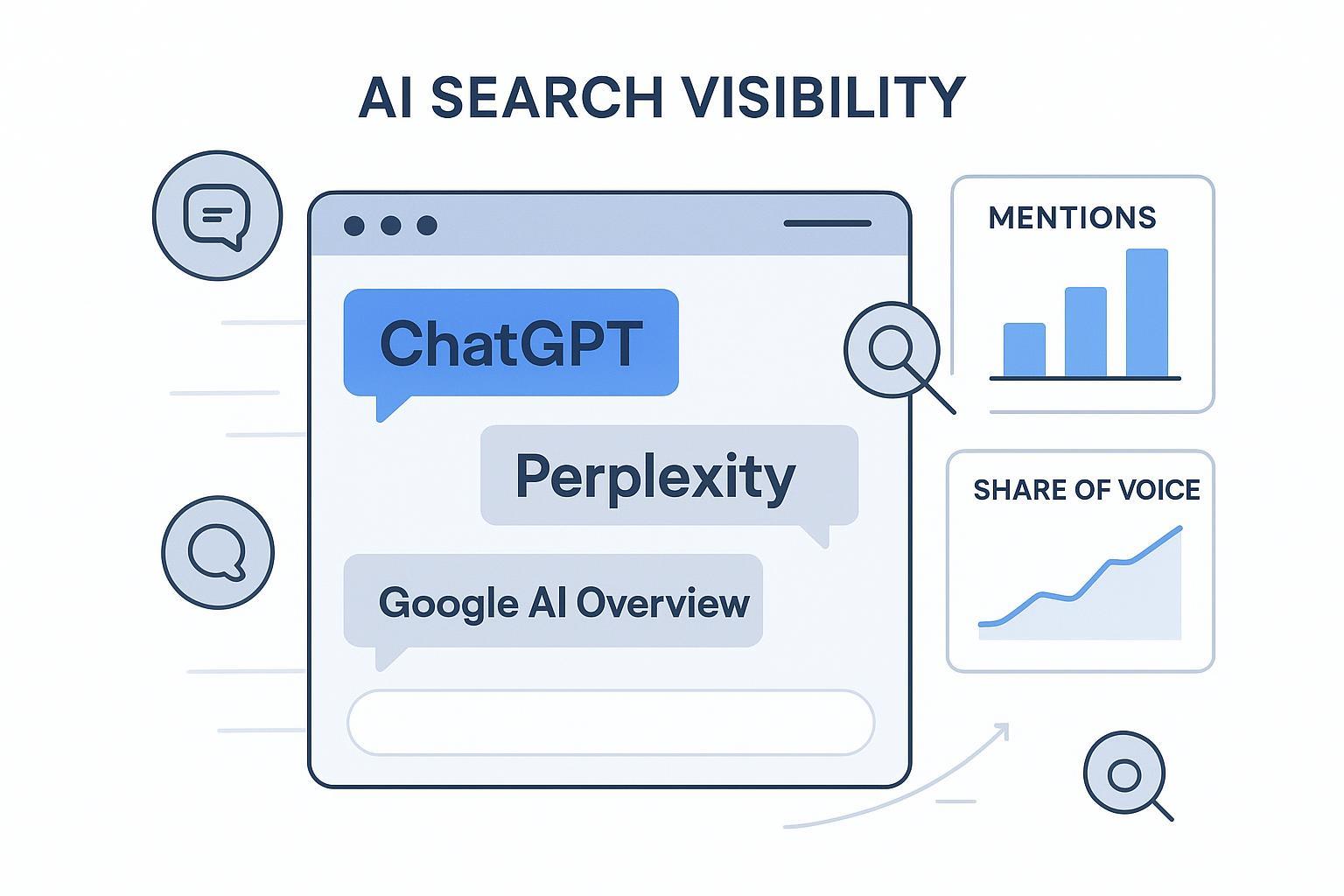
Step-by-Step Process to Increase Your Brand Mentions in ChatGPT Responses
When marketers ask why their brand isn’t named in ChatGPT’s recommendations, the answer is rarely a single tactic. It’s a system of signals: how clearly your entity is defined, how often authoritative sites reference you, and whether your pages are easy for AI systems to crawl, parse, and reuse in answers. The good news is you can make this measurable. Build a baseline, execute high-impact fixes, and track deltas month over month. If you’ve been optimizing for search alone, think of this as shifting from traditional SEO to Generative Engine Optimization—see the contrast in Traditional SEO vs GEO (Geneo) comparison.
Step 1 — Establish Your Baseline
Start with a standardized prompt set and a simple logging framework. Design 20–30 prompts across the funnel (category discovery, comparisons, and brand/competitor alternatives). Examples:
“Best [category] platforms for [use case]”
“[Brand] vs [competitor]”
“Alternatives to [competitor]”
Run each prompt in ChatGPT on the same day, document whether your brand is mentioned, how it’s framed (positive/neutral/negative), which competitors appear, and any sources cited. Define KPIs so you can track change:
AI Mention Frequency: The percentage of prompts where your brand is named.
Share of AI Voice: The proportion of multi-brand answers that include your brand.
Sentiment Accuracy: Whether the description aligns with your positioning.
Citation Sources: The domains ChatGPT cites when your brand appears.
Mentions and citations don’t always correlate, and answers can be volatile by prompt phrasing and model updates. Tracking mentions separately helps you spot real trends—see Semrush’s AI visibility trends (2025).
KPI | What It Means | How to Measure |
|---|---|---|
AI Mention Frequency | How often your brand is named in ChatGPT answers for your prompt set | Count “mentioned” prompts ÷ total prompts, monthly |
Share of AI Voice | Share of multi-brand recommendations that include your brand | For prompts returning lists, your brand presence ÷ prompts with lists |
Sentiment Accuracy | Whether ChatGPT’s description is on-position | Qualitative tag per prompt: positive, neutral, negative |
Citation Sources | Domains cited when your brand appears | Record domains and note authority (press, directories, blogs) |
For context on why certain brands get named more often, review Why ChatGPT Mentions Certain Brands.
Step 2 — Consolidate Entity Signals
If your identity is unclear, you’ll struggle to be recommended. Strengthen your organization’s structured data and profiles so large language models can disambiguate you reliably.
Organization schema: Use
Organizationwith clearname,url,logo/image,sameAs(link authoritative profiles like Wikipedia/Wikidata/LinkedIn/Crunchbase), and applicable identifiers (e.g., DUNS/LEI). ApplymainEntityOfPageon brand-defining pages. Validate markup. See Schema.org Organization.Author and content markup: Apply
Article/NewsArticle/BlogPostingfor content andPersonfor authors; useFAQPagewhere questions make sense. The SEO Works offers practical on-page guidance—see How to appear in ChatGPT answers (2025).Crawler directives: Ensure AI crawlers can access your content. OpenAI lists GPTBot and OAI-SearchBot and notes they honor robots.txt; confirm you’re not blocking the ones you want—see OpenAI Publishers & Developers FAQ (2025). Keep Googlebot unblocked and use meta directives thoughtfully for AI features; Google explains controls and limitations in Search Central: AI features appearance (2025).
Step 3 — Secure Authoritative References
ChatGPT leans on web consensus. If trusted publications, ranked listicles, and widely used directories mention you, your probability of being named rises. First Page Sage notes that inclusion in well-ranked comparison lists and popular directories often coincides with recommendations and that PR, reviews, and awards fortify reputation—see First Page Sage’s ChatGPT optimization guide (2025).
Build a simple outreach plan:
Target top listicles in your category; pitch your inclusion with transparent criteria and evidence.
Strengthen profiles on review sites and industry databases (e.g., complete entries, add images, and accurate descriptors).
Pursue relevant awards and third-party validations.
Place thought leadership in tier-1 or niche media; communications teams have a role here—see PR strategy for ChatGPT mentions (LF Channel, 2025).
Step 4 — Optimize Content for AI Retrieval
What makes your content answer-ready? Clear questions, authoritative voices, and clean structure.
Build question-led pages and well-structured FAQs; tie to canonical content where appropriate.
Use expert quotes and verified author bylines to reinforce E-E-A-T.
Interlink your core pages; keep content fresh.
Validate schema (Article/FAQ/Product/LocalBusiness as relevant). Practical steps are outlined in RankMath’s ChatGPT SEO guide (2025).
If you’re defining AI visibility and the metrics that matter beyond legacy SEO, this primer is helpful: What Is AI Visibility?.
Step 5 — Improve Discoverability (Bing/IndexNow)
Generative engines draw from multiple search indices. Improving crawl and index freshness increases the chance your recent updates are reflected in AI answers.
Generate your IndexNow API key and host the key file at your site root.
Submit changed URLs (single or bulk) to the IndexNow endpoint when publishing or updating content.
Verify submissions and monitor coverage in Bing Webmaster Tools.
Setup and verification are documented here: IndexNow overview (Bing, 2025).
Step 6 — Verify Changes and Track Deltas Monthly
Re-run your prompt set every month. Compare AI Mention Frequency, Share of AI Voice, Sentiment Accuracy, and any citation sources. Don’t overreact to single swings; generative answers can be volatile by model update and prompt phrasing. Cohort data shows monthly shifts in cited domains and cross-model differences—see Most-cited domains in AI features (Semrush, 2025).
Maintain a changelog that links outreach and content updates to observed visibility shifts. Annotate known model updates when vendors publish them.
Practical Example: Baseline and Tracking in Practice
Disclosure: Geneo is our product.
Imagine your team sets a 24-prompt baseline across discovery, comparison, and alternatives. You record current AI Mention Frequency at 29%, with neutral sentiment in most answers. Over the next six weeks, you implement Organization schema with consistent sameAs links (LinkedIn, Crunchbase, Wikidata), complete profiles on two major review platforms, pitch inclusion to three high-ranking listicles, and publish two question-led FAQ pages with expert quotes.
You then re-run the prompt set. A neutral, objective tracker—such as Geneo—can be used to log prompt-level brand mentions across ChatGPT and other engines, monitor share of AI voice, and compare against competitors without making performance guarantees. The result isn’t a promise of instant uplift; it’s a reliable way to see whether your changes correspond to improved mention rates and more accurate descriptions over time.
For platform-specific monitoring comparisons, see ChatGPT vs Perplexity vs Gemini vs Bing: monitoring comparison.
Troubleshooting Common Issues
Entity ambiguity: Conflicting names or descriptors across profiles can suppress mentions. Standardize your naming, descriptors, and
sameAstargets; validate schema.Indexing gaps: New content isn’t reflected. Check robots and server responses, ensure Googlebot isn’t blocked, implement IndexNow, and fix sitemap or canonical issues.
Reputation drag: Negative or outdated reviews can bias narratives. Run a review uplift campaign and correct inaccuracies via publisher outreach with verifiable updates.
Weak sources: If most references to your brand are from low-authority sites, prioritize authoritative publications and directories.
Next Steps
You now have a repeatable process: baseline your prompts and KPIs, consolidate entity signals, earn credible references, make content answer-ready, improve discoverability, and verify changes monthly. If you want a neutral way to track mention frequency and share of AI voice across ChatGPT and other engines while you iterate, start a Geneo free trial to set up your baseline and monthly monitoring.