
How to Pitch GEO Services to Non‑Technical Decision-Makers Effectively
Learn actionable steps to pitch GEO (local SEO) services to non-technical executives, focusing on outcomes, executive dashboards, and revenue impact.
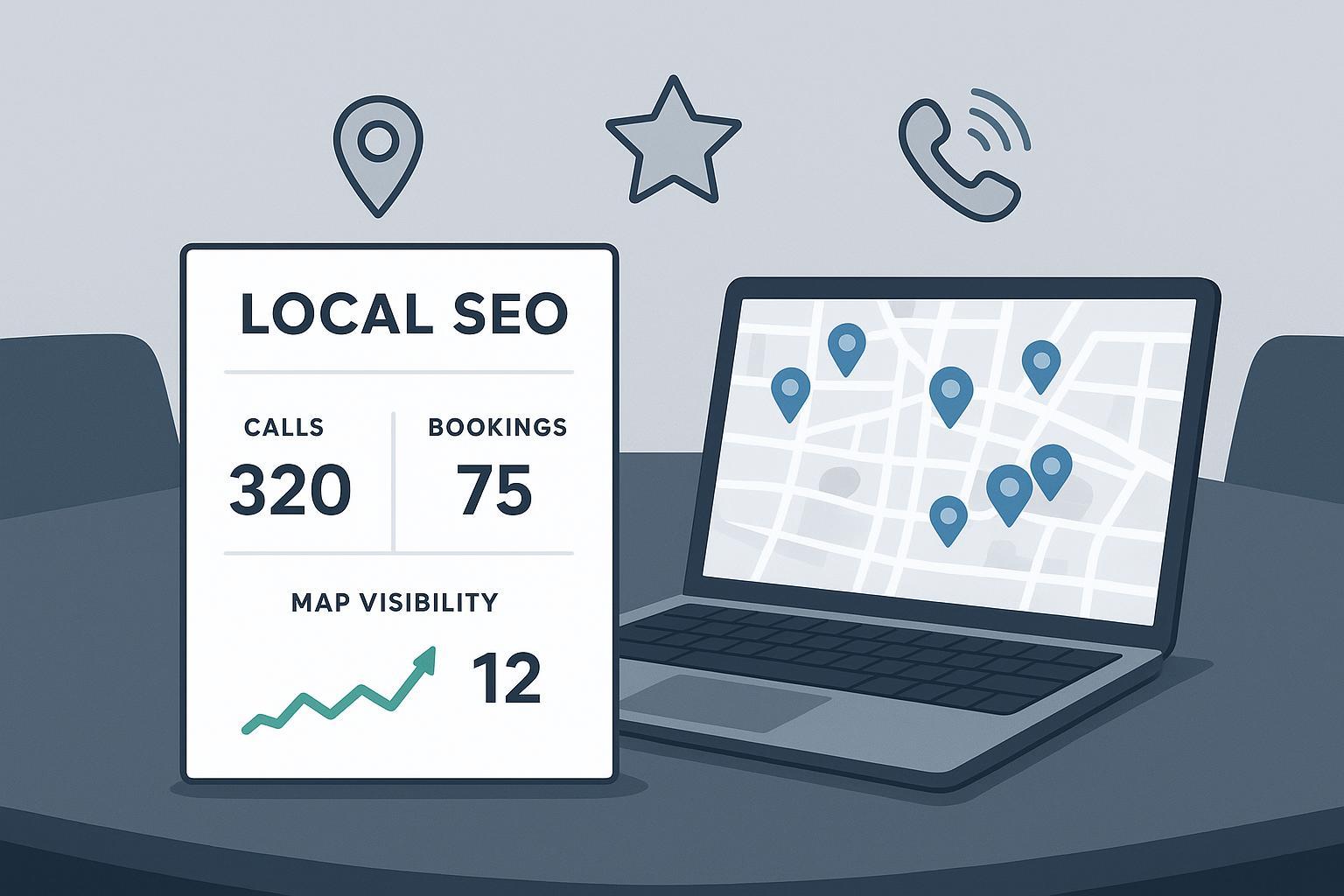
If a business owner told you, “People nearby don’t find us, our calls are uneven, and paid is getting expensive,” how would you respond in one minute? Here’s the line that lands: GEO (local SEO) is how we put your business on the busiest streets of the internet—Google Maps, the Local Pack, and nearby organic results—so more locals call, book, and visit.
Translate GEO deliverables into outcomes executives care about
Executives don’t buy acronyms; they buy outcomes. Frame each deliverable in plain English and tie it to a business result.
Google Business Profile (GBP) → Local Pack visibility and phone calls. Category selection, profile completeness, and review signals influence prominence and relevance. Google states local ranking is driven by relevance, distance, and prominence, and that complete details and reviews help a business show up more often; see the official guidance in Google Support’s “Tips to improve your local ranking on Google.” (Source: Google Support: local ranking factors and tips) Next, reviews and reputation → trust and conversion. Most buyers read reviews, and many avoid businesses below a threshold rating; recency and responses matter. BrightLocal’s industry resources emphasize how review quantity, recency, and ratings map to visibility and selection, and they summarize the “relevance, distance, prominence” model used in the Local Pack. (Source: BrightLocal’s local algorithm and ranking factors hub) Citations/NAP consistency → legitimacy and discoverability. Clean, consistent listings reinforce location trust signals. Whitespark’s primers outline why core citations and NAP consistency support local rankings and how to prioritize them efficiently. (Source: Whitespark: What is a Local Citation?) Local content and on‑page → relevance and conversion. Service + city pages, real local proof (photos, FAQs), and clear CTAs help you appear for “near me” and neighborhood queries while converting visitors who land on those pages. Finally, tracking and attribution → revenue connection. Dynamic Number Insertion (DNI) attributes phone calls to sources like Maps, organic, or ads; GA4 events track forms and directions. When you can say “Maps delivered 78 calls last month at $X average job value,” decisions get easier. (Source: CallRail’s guide to phone call tracking and DNI) Think of it this way: each deliverable is a lever. Pull them in the right order, and you move from “invisible” to “considered” to “chosen.”
What to show in the room: one-page executive view
Skip keyword dumps and rank spreadsheets. Show a single page that answers: Are we showing up, are people contacting us, and what’s that worth? In practice, the executive view should summarize four things. First, a lead snapshot—calls, forms, bookings, and direction requests—because those are actions tied to revenue. Second, local visibility—your Local Pack/Maps presence for priority terms and neighborhoods—so you can say whether you’re on the digital Main Street. Third, review health—star rating, review velocity, and response rate—since trust is an input you can improve weekly. Fourth, an attribution panel that shows which channels drove which leads (for example, Maps vs. an organic page vs. paid), plus a 90‑day trend line so everyone can see whether the program is compounding.
If stakeholders want measurement depth, point them to a primer that explains how AI and search traffic are tracked without getting lost in minutiae. For example, see the internal explainer on brand and AI traffic measurement in the article “AI traffic tracking best practices” (2025). (Source: Geneo blog: Best Practices for Tracking and Analyzing AI Traffic)
A 30/60/90-day plan that sets expectations
Leaders want to know what happens when. Use a simple timeline with fast wins first and compounding work next.
| Timeframe | What we’ll do | What you should see |
|---|---|---|
| Days 1–30 | GBP hygiene: verify, fix categories, hours, photos; baseline rank and lead tracking; launch review prompts; reconcile top citation/NAP errors. | Faster answers on Maps, consistent listings, first uptick in branded calls and direction requests. |
| Days 31–60 | Publish priority service + city pages; accelerate review velocity; expand citations; implement DNI and GA4 events; start local link prospecting. | More non‑brand visibility, rising call volume from Maps/organic; cleaner attribution. |
| Days 61–90 | Add FAQs and proof to key pages; secure first local links; continue review cadence; fine‑tune categories/attributes; expand to adjacent neighborhoods. | Consistent Local Pack presence for target terms; steady month‑over‑month lead growth; clearer ROI picture. |
Timeframes vary by competition, proximity, and review gap, but this cadence gives non‑technical leaders a clear path and checkpoints.
KPIs and simple ROI math (keep it on a napkin)
Report in the language of money: direct leads (calls, forms, bookings); offline intent (direction clicks, store visits); conversion and close rates; and average job value with gross margin to translate leads into revenue.
Fast math example you can say out loud: “We added 60 calls from Maps last month. If 40% are qualified and you book half, that’s 12 jobs. At $600 average value and 50% gross margin, that’s $3,600 gross profit. We spent $1,200 on the program. ROI is 200%.” When clients ask “How do you know those calls came from Maps?” show the attribution: DNI numbers for Maps traffic and GA4 events for taps on the call button from the Business Profile. (Implementation details in the CallRail and GA4 docs linked above.)
Objections you’ll hear—and talk tracks that work
Executives are rational skeptics. Meet them with clarity, not jargon.
“Can’t we DIY?” Some steps are DIY, like updating hours and posting photos. But the lift is in consistent review programs, category tuning, content and link acquisition, and clean attribution. Your promise: set it up so they see leads and dollars, not just rankings.
“How fast will this work?” Expect hygiene wins in 2–4 weeks and compounding gains in 1–3 months. Pace depends on proximity to searchers and the review gap with competitors. Agree on 30/60/90 checkpoints to keep it transparent.
“What if we’re too far from downtown?” Proximity matters, and you can’t move the building. But you can expand service‑area relevance with neighborhood content, build prominence via reviews and local links, and target categories where the business can consistently win.
“Reviews feel out of our control.” Systematize requests after service, make it easy for happy customers to respond, and reply to every review. Recency and responsiveness are signals you can manage.
“What exactly are we paying for?” A program that produces leads: GBP optimization, review operations, citation cleanup, local content, and attribution. Promise to show a one‑page dashboard with calls, forms, and direction requests with their sources.
AI/Generative search: what leaders need to know in one slide
You don’t need to unpack models; you need to manage expectations. Independent analyses through 2025 show Google’s AI Overviews appear on a meaningful minority of queries (about 13% of US desktop searches as of March 2025), and those experiences can reduce organic clicks when they trigger. (Sources: Search Engine Land on AI Overviews prevalence; Ahrefs analysis of reduced clicks from AI Overviews)
But local‑intent searches behave differently: Maps and the Local Pack still dominate selection. So the play is twofold—keep winning classic local surfaces while monitoring how your brand is mentioned in AI answer boxes across engines. If stakeholders want an executive explainer on measuring AI surfaces, share a primer for leaders. (Source: Geneo blog: AEO best practices for executives)
Practical example: how to present the dashboard without drowning in detail
Here’s a simple cadence you can reuse in pitch and in monthly check‑ins:
- Start with outcomes (60 seconds): “Last 30 days: 186 calls (+22%), 34 forms (+12%), 211 direction requests (+15%). Estimated revenue: $48k at your average close rate and job value.”
- Show where it came from (60 seconds): “Maps drove 52% of calls, organic pages 31%, paid 17%. We shifted budget to the categories and neighborhoods that compound.”
- Explain the levers (90 seconds): “Review velocity up 35%, average rating up from 4.2 to 4.5; two new service + city pages published; citations cleaned on the top 20 directories; three local links secured.”
- Confirm the next 30 days (60 seconds): “Publish two more neighborhood pages, expand review prompts to post‑service SMS, and test a category tweak to ‘Emergency [Service]’ after 5 p.m.”
If you need an executive‑friendly, white‑label dashboard to present this without spreadsheets, some agencies use platforms that track cross‑engine brand mentions and summarize visibility. For example, Geneo can be used to host a client‑branded portal that shows AI and local visibility trends alongside lead metrics. Disclosure: Geneo is our product.
Notes for multi‑location and franchise pitches
Multi‑location deals succeed on consistency and prioritization. Map the work in this order: fix the basement, then add floors.
- Standardize the data layer: master NAP, categories, attributes; location groups in GBP; UTM/DNI conventions by location.
- Prioritize rollouts: pilot 5–10 locations representing different competitive profiles; prove the playbook; then templatize content and review ops.
- Create neighborhood relevance at scale: reusable page frameworks with unique local proof (photos, staff, testimonials), plus internal links to parent service pages.
- Governance: clear response SLAs for reviews, content approval flows, and a monthly “Top 10 wins” digest to keep regional managers engaged.
A short pitch script you can adapt
“Here’s the problem we solve: locals can’t consistently find or trust you at the exact moment they’re choosing a provider. In the first 30 days we’ll clean up your Business Profile, fix the big listing errors, and kick off a review program so buyers see current proof. In 60 days we’ll publish the pages that help you win in your highest‑value neighborhoods and show you which channels created which calls. By 90 days you’ll see steadier lead flow and a clear ROI picture. If we don’t tie activities to leads and revenue, you shouldn’t keep paying us. Fair?”
Next step: baseline your current leads and visibility, agree on the 30/60/90 milestones, and set a 20‑minute recurring review where you only look at one page.”