
The shocking truth about ranking factors after the 2024 leak—and what AI Overviews changed in 2025
Discover how Google's 2024 leak and 2025 AI Overviews shift ranking factors—see click data, entity focus, and next-gen SEO moves. Learn how to adapt now!
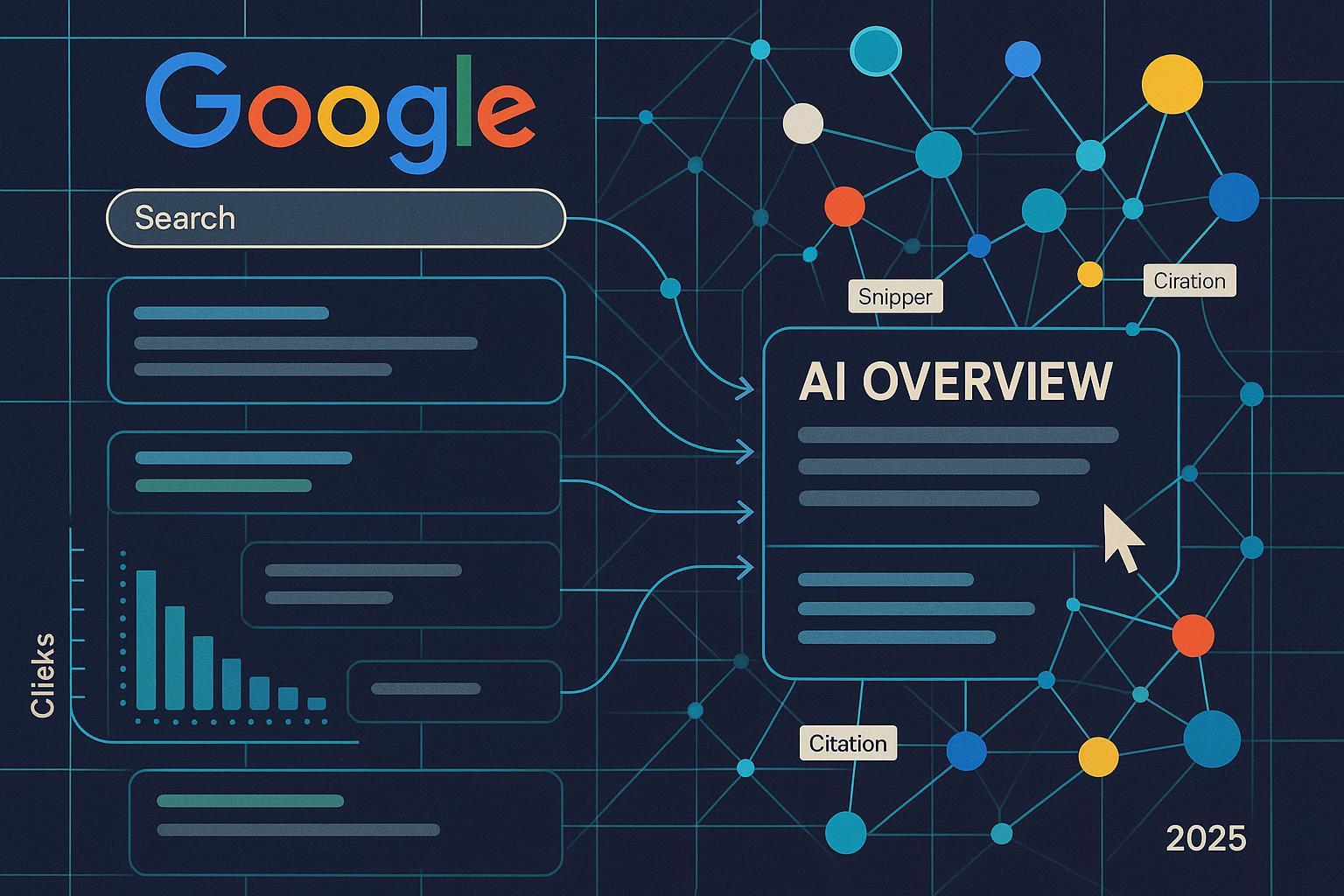
As of late 2025, two realities define search strategy: the 2024 internal Google documentation leak reframed how we think about signals, and the 2025 expansion of AI Overviews (AIO) reshaped how visibility is won—and measured. The upshot: chasing static “ranking factor lists” is less useful than building entity-level authority, engagement loops, and inclusion in AI answers.
What the 2024 document leak actually validated—and what it didn’t
In May 2024, thousands of pages of internal “Content Warehouse” API documentation surfaced and were analyzed by veteran practitioners. Rand Fishkin details the provenance, scope (2,500+ pages and 14,000+ attributes), and verification path in the SparkToro leak report (2024). Fishkin’s central caution: technical docs show what exists or existed—not how much each signal matters today.
Mike King’s deep read highlights engagement and re-ranking mechanisms, including NavBoost metrics such as “goodClicks,” “badClicks,” and “lastLongestClicks,” which speak to satisfied vs. unsatisfied user behavior; he also explains re-ranking via “twiddlers.” See the iPullRank technical analysis (King, 2024) for terminology and examples.
What we can infer with confidence from these primary reads:
- Breadth over checklists: The system considers far more than any public “top 10 factors” article suggests.
- Behavior-aware re-ranking: Click and engagement-related measurements exist in the ecosystem, but their present-day weights are unknown.
- Entities and context: The system models entities (people, brands, products) and relationships, shaping how topical authority manifests.
Equally important is what we cannot responsibly claim:
- Fixed, universal weights: The docs don’t reveal a stable ranking-weight recipe you can copy.
- Timeless truths: Some modules may be legacy, experimental, or used only in certain verticals/conditions.
Google publicly acknowledged the documents’ authenticity while warning that they can be outdated or incomplete and should not be overinterpreted; that caution is compatible with the evidence above.
2025: AI Overviews and core updates moved the goalposts on visibility
In May 2025, Google expanded AIO globally, noting it now appears across 200+ countries/territories and 40+ languages, and that usage increased for queries where AIO shows, according to the Google Search blog: AI Overviews expansion (2025). Around the same time, Google completed significant core updates—documented on the Google Search Status: March 2025 Core Update and later in June—reinforcing quality, expertise, and freshness themes.
Quantitatively, independent studies indicate that AIO changes user behavior and the competitive landscape:
- Prevalence: Semrush found AIO appeared on a growing share of queries in 2025; in one cut, 13.14% of all queries triggered AIO in March 2025 (up from 6.49% in January), and informational intent dominated, per the Semrush AI Overviews study (2025).
- Click behavior: In a March 2025 panel of 900 U.S. adults covering 68,879 searches, Pew reports that when an AI summary appears, users clicked a traditional result link in 8% of visits vs. 15% without AIO; source links inside AIO were clicked about 1% of the time. See Pew Research Center short read (2025). Pew also observed higher rates of session end on pages with AIO.
Implication: Even if your blue-link rankings hold, overall discoverability may drop when AIO appears. Winning now means earning inclusion and citation inside AI answers in addition to traditional rankings.
From “factors” to a working framework for 2025
The leak and 2025 updates suggest a durable operating model:
- Entities and topical authority
- Build coherent content clusters around the entities you want to be known for (products, problems, people), not isolated posts. Use clear relationships and consistent terminology across pages, bios, and structured data (Organization, Person, Product, FAQ, HowTo).
- Consolidate thin or overlapping content. Make fewer, better, deeper resources that demonstrate true coverage of a topic.
- Engagement loops and task completion
- Design for satisfied clicks: fast pages, clear answers above the fold, credible citations, and sensible next steps. The NavBoost-style emphasis on “longest clicks” aligns with finishing jobs to be done, not just attracting clicks.
- Treat UX signals (Core Web Vitals, readability, on-page clarity) as enablers of completion and comprehension.
- Evidence-backed authorship (E-E-A-T in practice)
- Commission or credit subject-matter experts. Add credentials and experience markers. Cite primary literature where appropriate—especially for YMYL-adjacent content.
- Refresh aging evergreen pieces with new data, screenshots, and methods; make your updates explicit.
- Answer-engine readiness (AEO/GEO)
- Structure sections so AI systems can excerpt verifiable facts: concise summaries, bullet points with citations, and explicit measurements (ratings, specs, dates). This raises the chance of being included or cited in AIO and other answer engines.
A practical monitoring workflow you can implement this week
Here’s a pragmatic, tool-agnostic flow to measure and improve visibility across AI answers and traditional SERPs:
- Define your entity set
- List your core entities: brand, products, executive names, and problem/solution phrases.
- Build a questions map
- For each entity, list 20–50 real queries (how, what, best, vs., pricing, safety). Prioritize informational intent, where AIO prevalence is higher (as Semrush observed in 2025).
- Track inclusion and citations across engines
- For each query, check whether AIO appears, whether your brand/content is included, and which sources are cited. Repeat for ChatGPT and Perplexity answer panels.
- Log sentiment and gaps
- Record sentiment of mentions/citations and note missing entities or weak coverage.
- Improve with evidence and structure
- Where you’re absent, add sections that contain concise, verifiable facts with citations and schema. Strengthen expert attribution and cross-link related entities.
Tooling note: You can operationalize this cross-engine monitoring with platforms built for AI answer visibility. For example, Geneo can track brand mentions and citations across ChatGPT, Perplexity, and Google AI Overviews, monitor sentiment, and keep historical query logs. Disclosure: Geneo is our product. For extended reading on how teams operationalize this, see the internal case roundup, 2025 AI search strategy case studies.
KPIs to reboot for 2025 and beyond
Classic rankings and sessions still matter, but they no longer tell the full story when AIO appears. Expand your scorecard:
- AIO inclusion rate: Percent of target queries where your brand/content appears inside the AI panel.
- Citation depth and quality: Number and prominence of your pages cited (top-level vs. sub-links) and how often competitors are preferred.
- Cross-engine citation presence: Inclusion in ChatGPT and Perplexity answers for the same query set.
- Sentiment trend: Positive/neutral/negative tone in AI answers mentioning your brand over time.
- Entity coverage: How comprehensively you cover key entities and relationships across your site and profiles.
- Engagement/completion: Satisfied-click proxies such as dwell patterns, conversion on task pages, and reduced pogo-sticking.
- Traditional SEO: Rankings, impressions, clicks, and Core Web Vitals—tracked alongside the new AI metrics, not instead of them.
What to watch next (Q4 2025–Q1 2026)
- AIO coverage rates by category and market: Update your inclusion benchmarks monthly; expect variance by query intent and vertical.
- Core update guidance: Monitor Google’s status posts during rollouts and be prepared to update critical evergreen assets with fresh evidence and clarifications.
- Citation ecosystems: Track which publishers AIO prefers for your topics and build relationships or complementary assets accordingly.
- Regulatory and UX changes: Interface tweaks (placement, link density) can swing click behavior significantly, so revisit KPIs after major UI shifts.
Mini glossary
- Entities: Discrete, named things (people, brands, products) and their relationships used by search systems to model relevance.
- Twiddlers: Re-ranking functions or adjustments that can change result order after an initial scoring pass.
- NavBoost-style metrics: Engagement measurements (e.g., satisfied vs. unsatisfied clicks, longest clicks) used in parts of ranking/re-ranking systems.
- AEO/GEO: Answer Engine Optimization / Generative Engine Optimization—structuring content and authority so generative and answer systems can include, cite, and trust your material.
Evidence trail (selected)
- Leak provenance and scope summarized by SparkToro: 2024 leak report (2024).
- Engagement and re-ranking concepts detailed in iPullRank: Google documentation analysis (2024).
- AIO global expansion and usage lift noted in Google Search blog: AI Overviews expansion (2025).
- Core update timing recorded on Google Search Status: March 2025 Core Update (2025).
- AIO prevalence and intent patterns in Semrush: AI Overviews study (2025).
- Click behavior shifts with AIO in Pew Research Center: AIO and clicks short read (2025).
Next steps
- Audit your top 100 queries for AIO presence and your inclusion rate.
- Add evidence-backed, excerptable sections to priority pages (facts, figures, citations, schema) to raise your odds of AIO inclusion.
- Stand up cross-engine monitoring and sentiment tracking. Then iterate monthly.
For ongoing updates and monitoring tips during unconfirmed/confirmed changes, see our note on October 2025 algorithm chatter and AI visibility monitoring.
Updates: 2025-10-12 — Initial publication with 2024 leak synthesis and 2025 AIO/core-update impacts.