
10 GEO Strategies That Work for Any Industry (2025)
Discover 10 field-tested GEO strategies for AI visibility in 2025—covering Google AI Overviews, ChatGPT, and Perplexity. Get ahead!
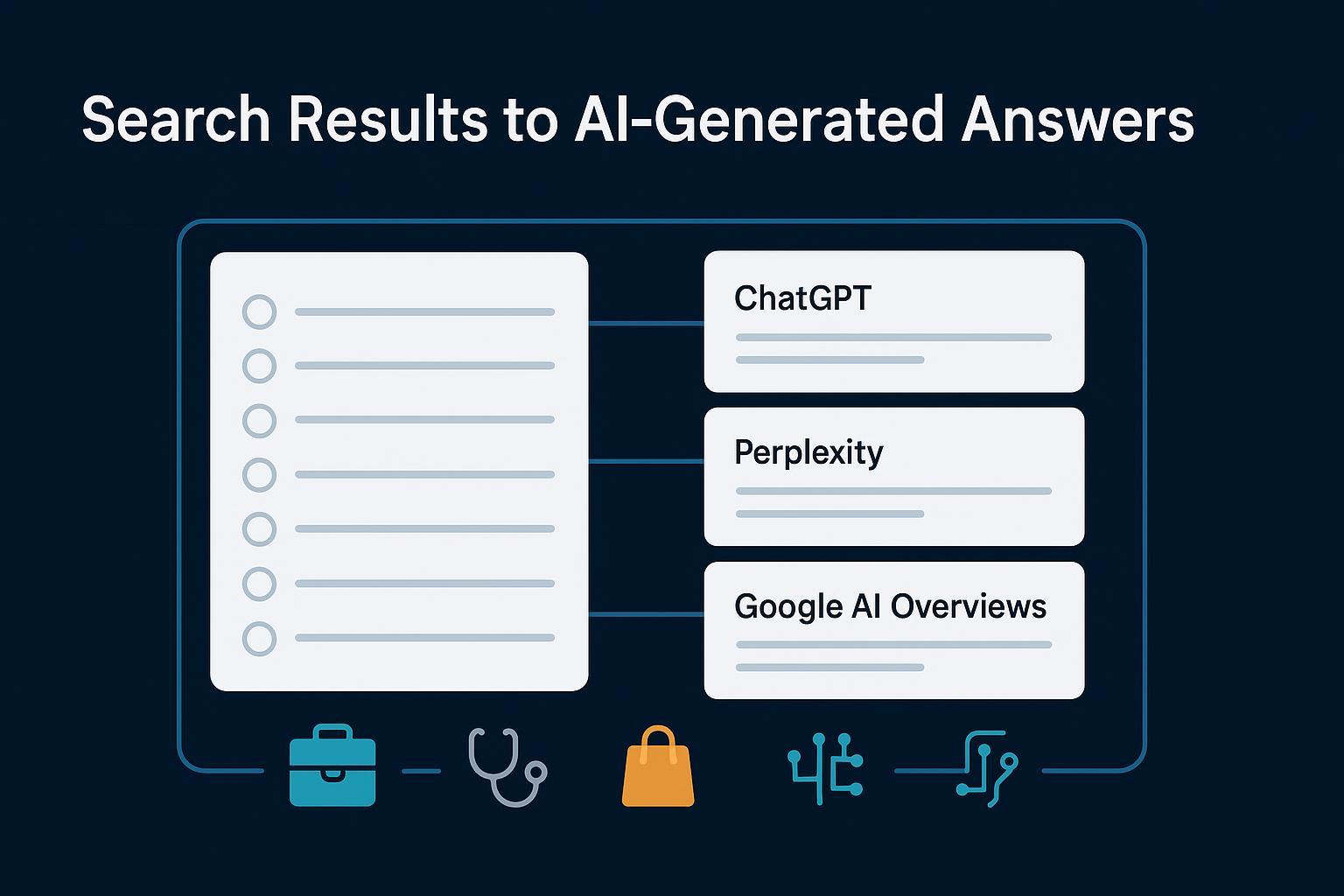
The way people “search” has changed. Answers now arrive inside AI experiences before they click. If your brand isn’t visible or cited in those answers, you’re invisible to a growing share of intent. That’s where GEO—Generative Engine Optimization—comes in: earning visibility and attribution within AI answer engines like ChatGPT, Perplexity, and Google’s AI Overviews.
If you want a deeper primer on AI visibility and why it matters, see this explainer: AI visibility and brand exposure in AI search.
Below are 10 evidence‑led strategies you can apply in any industry. They’re grouped for flow, not rank.
Content and credibility signals
1) Strengthen entity and publisher signals (Organization/Person, E‑E‑A‑T)
What to do: Make your entity unmistakable. Add Organization and Person structured data (logo, contactPoint, sameAs), consistent publisher attribution, and real author pages with credentials.
Why it works: Clear entity signals help systems disambiguate who you are and why you’re trustworthy—an anchor for E‑E‑A‑T. Google’s May 2025 guidance on AI features underscores structured, authoritative content, and Search Central’s docs detail Organization and Person markup. See Google’s “Succeeding in AI Search” (2025) and the Search Gallery overview for supported schema.
Implementation notes: Place Organization markup on your homepage/About; link authors to bios and external profiles via sameAs. Keep visible bylines and publisher labels aligned with schema. Validate in Google’s Rich Results Test.
Measurement: Watch for increased brand and author mentions within AI answers, better attribution when your content is summarized, and higher inclusion rates in AI Overviews.
2) Make first‑hand experience and authorship unmistakable
What to do: Show how you know what you know. Include author bios, methods sections, first‑hand data or photos, and conflict‑of‑interest notes when relevant.
Why it works: Experience is a pillar of E‑E‑A‑T. Google’s Quality Rater Guidelines and SEO Starter Guide emphasize clear authorship and demonstrable experience; they inform how quality is assessed even if not direct ranking factors. Reference: Google Search Quality Rater Guidelines (2025).
Implementation notes: Add “How we tested” sections on reviews, list tools used, time windows, and photos/screens. Mirror this with Person markup. For regulated or YMYL‑adjacent content, elevate credentials.
Measurement: Track engagement on pages with methods/bios vs. those without; monitor whether AI answers include your author or brand when summarizing your guidance.
Structure and extractability
3) Architect pages for extractable answers (Q&A, steps, tables, FAQs)
What to do: Design pages for quick lift‑out. Lead with a concise 2–4‑sentence answer. Use Q&A blocks, step lists, and narrow tables for comparisons.
Why it works: Generative systems tend to quote succinct, clearly structured segments. Google’s 2025 AI Search guidance promotes authoritative, well‑structured content; independent testing across 2024–2025 found that Q&A, lists, and compact tables are frequently cited.
Implementation notes: Keep FAQs genuinely helpful and visible; match any schema to on‑page content. Avoid bloated tables. Use headings that mirror common intents.
Measurement: Track the presence of your snippets in Perplexity answers and citations within AI Overviews; watch changes after restructuring for extractability.
4) Practice schema discipline that matches on‑page reality
What to do: Use JSON‑LD for Article, FAQPage, HowTo, Product, Review, etc., but only when the content truly qualifies. Cover required and recommended properties; validate and monitor.
Why it works: Schema clarifies context and eligibility for features. Google’s Search Gallery remains the canonical reference; misuse can reduce trust or trigger manual actions. Reference: Google Search Gallery (2025).
Implementation notes: Align dates, authors, images, and FAQs between markup and page. Keep one primary entity per page. Remember FAQ rich results are limited vs. prior years—use them when warranted.
Measurement: Watch Search Console for rich result coverage and inspect whether AI answers attribute correctly when schema is in place.
5) Operate for freshness with dates, changelogs, and source updates
What to do: Show “Last updated” for meaningful changes, keep datePublished/dateModified consistent, and refresh time‑sensitive stats and sources.
Why it works: For recency‑sensitive topics, clear, accurate dates improve user trust and can sway AI features’ inclusion when relevance is close. Google outlines how it estimates dates and recommends one prominent visible date. Guidance: Google’s “Add a byline date” (2025).
Implementation notes: Maintain a short changelog on high‑value pages. Avoid peppering pages with extraneous dates that confuse parsers.
Measurement: Track inclusion in AI Overviews before/after updates, and monitor organic CTR and engagement stability over time.
Authority and corroboration
6) Earn third‑party coverage and category reviews
What to do: Run digital PR for data‑backed stories; encourage independent reviews on platforms your buyers trust (e.g., G2/Capterra for SaaS, Tripadvisor/Yelp for local, industry publications for B2B).
Why it works: Comparative studies in 2024–2025 show AI engines lean on authoritative, third‑party sources. Building coverage and reviews increases the odds your brand is referenced or corroborated. See the cross‑engine findings in TryProfound’s 2025 citation patterns study.
Implementation notes: Standardize brand names and profiles across directories; pursue quotes and expert roundups; supply original data and methods so journalists can cite you.
Measurement: Track the mix of domains that cite you in AI answers; monitor review velocity and ratings on category platforms.
7) Cultivate a credible UGC footprint (Reddit, forums, video)
What to do: Participate as a subject‑matter expert where your audience asks questions—Reddit, specialist forums, and video Q&A. Aim for helpful, non‑promotional contributions.
Why it works: Multiple 2025 datasets highlight heavy Reddit and UGC presence in AI answers, especially in Perplexity; patterns vary by engine and query. Evidence synthesis: SE Ranking’s engine comparison (2025).
Implementation notes: Host AMAs, answer with references, and avoid astroturfing. Map topics to subreddits; consider YouTube chapters for how‑tos.
Measurement: Track whether UGC contributions surface in Perplexity citations; monitor sentiment shifts around your brand.
Platform‑aware presentation
8) Format for Perplexity vs. ChatGPT vs. Google AI Overviews
What to do: Tailor formats to the engine:
- Perplexity: keep pages fresh, cite sources on‑page, and include compact lists/tables.
- ChatGPT: build authoritative explainers and comparisons with clear sections.
- Google AI Overviews: lead with direct answers plus supporting lists and aligned schema.
Why it works: Engines differ in how they pull and display sources. Comparative research documents Perplexity’s link‑forward style, ChatGPT’s more encyclopedic synthesis, and AI Overviews’ blended approach. See Ahrefs’ AI Overviews guide (2025) and SE Ranking’s cross‑engine analysis (2025).
Implementation notes: Create a mapping sheet of priority queries to preferred formats. For Perplexity, include explicit source citations and up‑to‑date figures; for ChatGPT, emphasize clarity and completeness; for AI Overviews, ensure top‑section answers and consistent schema.
Measurement: Segment results by engine: appearances, citation counts, and referral clicks from AI surfaces where available.
Measurement and iteration
9) Instrument GEO measurement across engines (appearances, citations, sentiment)
What to do: Standardize a measurement stack: define a prompt set, log responses with screenshots, tag citations and sentiment, and dashboard visibility KPIs across engines.
Why it works: You can’t improve what you don’t track. Emerging frameworks outline practical KPIs for AI visibility and impact, from share of voice to conversion quality of AI‑originating sessions. See How to measure LLM visibility and impact (Search Engine Land, 2025).
Implementation notes: Establish monthly cadence for priority prompts and quarterly for secondary; store artifacts with time stamps; define governance for privacy and retention. For workflow ideas during iteration, see: Prompt‑level AI visibility workflows.
Measurement KPIs to consider:
- AI visibility rate (appearance in answers for tracked prompts)
- Citation frequency and domain mix in answers
- Share of voice vs. competitors in AI responses
- Referral traffic from AI surfaces (where measurable) and downstream conversion quality
Tools and resources (neutral): monitoring and comparison options
- Geneo — Generative Engine Optimization for AI Visibility. Disclosure: Geneo is our product. Best for teams that need cross‑engine monitoring (ChatGPT, Perplexity, Google AI Overviews), sentiment tagging, and multi‑brand workflows: Geneo product overview.
- Profound — Research‑led GEO testing and citation studies; useful for methodology inspiration and independent datasets.
- Brandlight — AI visibility tracking and monitoring; consider for straightforward brand‑mention monitoring across engines.
Selection criteria: capability fit for your prompts/engines, evidence quality and recency, data export/reporting, learning curve, and pricing transparency.
10) Run a recurring prompt battery and iteration loop
What to do: Build a fixed “prompt battery” by use‑case, re‑test monthly, compare engines, and translate gaps into a content/PR/entity roadmap.
Why it works: AI answers drift. Regular testing catches shifts in sources and formats so you can prioritize updates that improve inclusion and attribution. Practical test frameworks in 2024–2025 endorse cadence, artifact capture, and structured evaluation.
Implementation notes: Keep a prompt bank with metadata (intent, audience, geography). Automate capture where possible, perform semantic diffs on answers, and maintain a triage board mapping findings to page updates, PR targets, and profile clean‑ups. For workflow inspiration, see: Prompt‑level AI visibility workflows.
The playbook above won’t guarantee rankings—nothing does—but it will stack the odds in your favor across engines that increasingly answer before they link. Start with entity clarity and extractable content, then layer platform‑aware formats and a steady measurement/iteration rhythm. Ready to see where you stand today? Define your prompt set, run a baseline, and let the data tell you what to fix next.