
How GEO Can Improve SaaS Brand Visibility in AI Search Engines
Learn expert 2025 GEO best practices to boost SaaS brand visibility in AI search engines like Google Overviews, ChatGPT, and Perplexity. Technical, actionable guide.
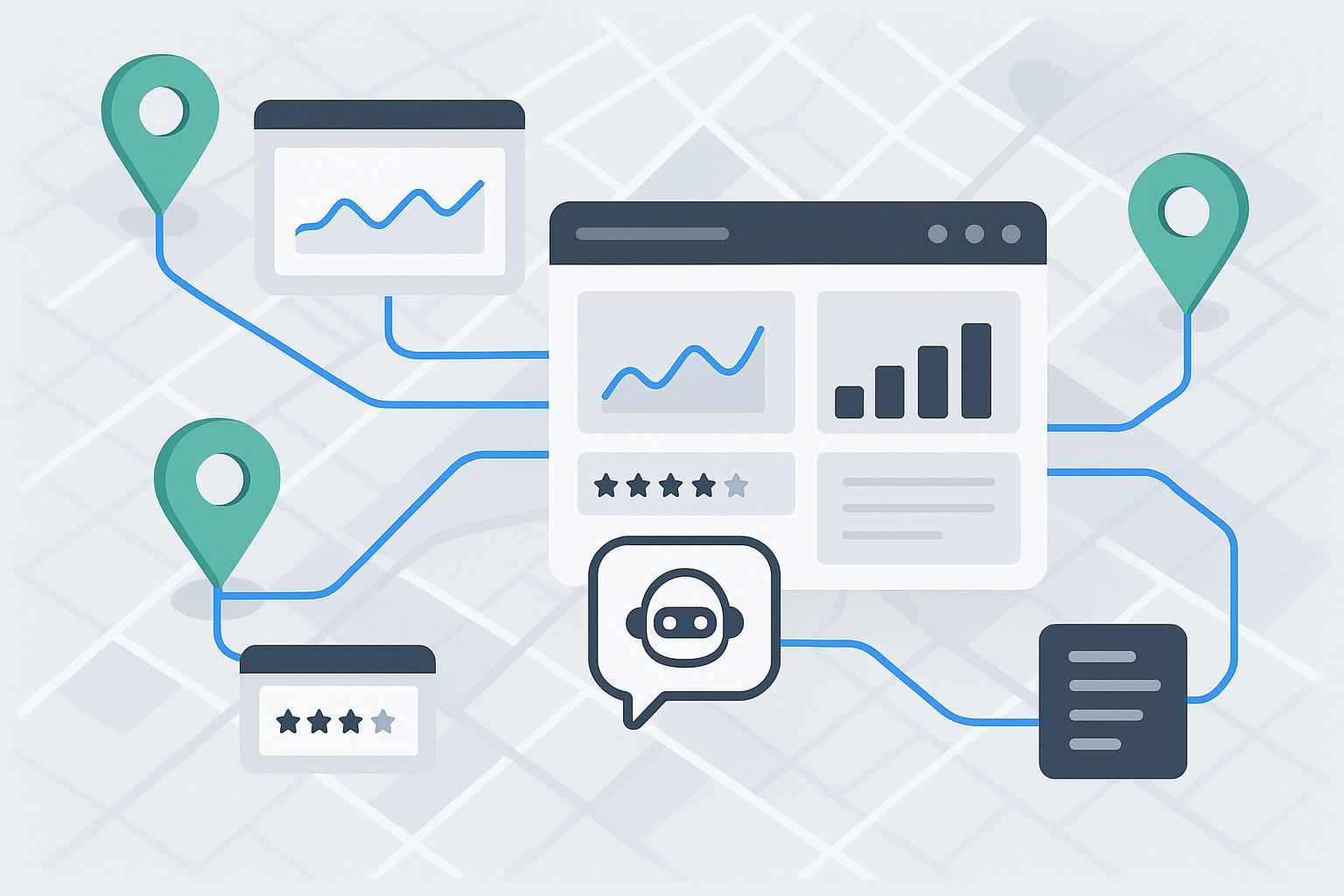
When a buyer asks an AI assistant for “the best SOC 2 compliance tool for Toronto startups,” the answer often arrives as a tidy card with a handful of cited sources—and a short list of recommended vendors. No ten blue links. No patient scrolling. If your SaaS isn’t referenced there, you’re invisible at the exact moment intent peaks. That’s why GEO—generative engine optimization—now sits beside classic SEO in the SaaS playbook. The goal is simple: make your brand the easiest, most trustworthy entity for AI systems to cite and recommend.
What’s different about AI answer engines for SaaS?
AI surfaces like Google’s AI Overviews, Perplexity, and ChatGPT’s browsing modes synthesize answers from multiple sources and then expose a limited set of citations. Google’s publisher-facing guidance explains eligibility and attribution mechanics in its overview of AI features in Search, emphasizing on-page clarity, schema, and source quality, as described in Google’s “AI features and your website” documentation (2025).
Practically, that means SaaS brands must be “legible” to these systems: crisply defined entities, unambiguous facts, up-to-date documentation, and corroborating third-party references. It also means you need geographic and intent coverage that mirrors how real buyers ask questions—by city, region, industry, and job-to-be-done.
Foundations that make your SaaS legible to AI systems
Start with entity clarity and structured data. Treat your company and product as distinct but connected entities. Publish a complete Organization profile—legal name, logo, sameAs links to authoritative profiles, headquarters, and leadership—and align names and descriptions across your site and external profiles. Model your app with SoftwareApplication schema to describe what your product does, pricing models, categories, integrations, and supported platforms. Keep facts visible on-page so your JSON-LD faithfully reflects the page. For vocabulary, the canonical reference is Schema.org; see SoftwareApplication on Schema.org and connect your app to your Organization entity.
Citations matter as much as schema. AI engines look for confirmation from credible third parties: documentation hubs, integration guides, developer portals, and review directories (e.g., G2, Capterra). Keep these sources consistent with your site’s facts—category, pricing, supported regions, compliance—and interlink sensibly without over-optimizing anchor text. Recency also plays an outsized role; stale docs are less likely to be quoted.
Content architecture that matches geography and intent
SaaS teams often assume location pages are only for bricks-and-mortar. In practice, many SaaS motions are geo-sensitive—implementation partners, support coverage, data residency, taxes, language, and region-specific compliance. Build a structure that acknowledges this reality without creating thin, duplicative pages.
Create service-city pages and market hubs when you staff implementation or support by region. A page like “ERP onboarding and support in Toronto” should include localized proof: named partners, case studies, SLAs, languages, and regional compliance details. Avoid cookie-cutter content; demonstrate real presence and capability.
Internationalization and localization deserve first-class treatment. Use hreflang for language-country variants. Translate and localize—not just language, but integrations, currencies, legal notes, and screenshots. If your EU customers need specific privacy terms or your LATAM team offers Spanish onboarding, state it plainly and keep it current.
Documentation and solution guides often earn citations because they answer tasks directly. Keep setup, integration, and troubleshooting content crisp and factual, with short task summaries at the top. Link to standards and APIs where relevant. Think of this architecture as your lattice: each market and intent gets a sturdy, differentiated page, supported by living documentation.
Formats that earn citations without fluff
Conversational engines privilege content that anticipates questions and answers them cleanly. Add on-page Q&A blocks that mirror the prompts your sales and support teams hear. Keep answers short, evidence-backed, and non-promotional. Mark them up consistently; the Schema.org types for FAQPage and QAPage provide a clear pattern, but only when the Q&A is visible and accurate on-page.
Headings and summaries should be tuned to intent. Use plain-language headings that mirror real prompts (“Is SOC 2 required for Canadian startups using X?”), followed by a two- or three-sentence sourced answer, then expand with details.
Maintain a cadence of updates. Set monthly or quarterly sweeps for your highest-value markets and intents. Add fresh examples, update integrations, and prune outdated claims. You’re signaling to crawlers and models that your pages are actively maintained and safe to quote.
Bot access and crawler governance you can stand behind
Visibility in AI answers requires crawlability by the bots that feed them. Maintain an explicit stance in robots.txt and verify behavior in server logs. For the OpenAI ecosystem, review user-agents and robots guidance and allow or block their bots (e.g., GPTBot, OAI-SearchBot) as appropriate; see OpenAI’s bot documentation for current user-agent strings and policies. Perplexity documents its bots and robots handling; set explicit directives and verify adherence in logs via Perplexity’s bots guide. Policies evolve across providers, so confirm current user-agents and configure server-level allow/deny rules where necessary.
Keep a living allow/deny list, and don’t rely on robots.txt alone. If visibility in a given engine is strategically important, ensure your content is fetchable by its documented bots; if not, enforce controls at the edge. Always corroborate with access logs rather than assumptions.
GBP eligibility for SaaS—don’t force it
Google Business Profile (GBP) remains powerful for local discovery, but it’s not a fit for every SaaS. Eligibility typically requires in-person customer interaction (a storefront, an office that serves customers, or traveling to them). Online-only SaaS without in-person service isn’t eligible and should avoid creating profiles that risk suspension. Review the rules at Google’s Business Profile policies index.
When you do qualify—hybrid teams, partner-led offices, or implementation hubs—treat GBP like a trust anchor: consistent NAP, accurate categories, localized photos, and clean citations. For online-only brands, refocus on Organization and SoftwareApplication schema, authoritative review sites, partner pages, and robust location/market hubs on your own domain.
Measurement that reflects 2025 reality
Attribution for AI-driven influence is messy. Many AI answers shape choices before a click ever happens, and when clicks do occur they often lack referrers. Still, you can build a working measurement loop that’s good enough for planning and iteration.
Create GA4 custom channels that bucket likely AI sources (chat.openai.com, perplexity.ai, gemini.google.com, claude.ai, copilot.microsoft.com). Maintain regexes and filters, and annotate major AI testing windows in GA4 so you can compare before/after cohorts. A practical walkthrough of grouping and reporting is outlined in TripleDart’s 2025 guide to tracking AI and LLM traffic in GA4.
Maintain manual prompt logs and citation tracking for priority markets and intents. Record the prompt, date, platform, whether your brand is cited, and the position within the answer block. Repeat monthly and capture screenshots of key shifts. Merge GA4 signals, server log summaries (AI crawler activity), and your prompt/citation logs into a single view. Track rate of citation, share of voice across competitors named in the same answers, and sentiment of mentions where detectable.
Disclosure: In our own workflow, we’ve used specialized visibility platforms to consolidate AI citations and share-of-voice reporting with clients. For example, a neutral option like Geneo (Agency) can monitor mentions across ChatGPT, Perplexity, and Google AI Overviews and roll them into white-label dashboards for agencies. This is not an endorsement; always validate findings with your own prompt tests and logs.
The agency checklist: from audit to iteration
- Define your entities: Update Organization and SoftwareApplication facts sitewide; sync names, descriptions, and logo usage across profiles.
- Implement structured data: Ship JSON-LD that mirrors on-page facts; validate routinely and fix errors flagged in testing tools.
- Map geo-intents: List priority countries, languages, and cities tied to sales/support capacity, data residency, and compliance.
- Build unique market pages: Publish localized hubs and service-city pages with real proof—partners, case studies, SLAs, and policies.
- Fortify documentation: Keep setup, integration, and troubleshooting content current; add concise task summaries at the top.
- Add Q&A sections: Capture sales/support questions in FAQs with tight, sourced answers; keep them visible on-page.
- Govern bots: Set and maintain robots.txt for AI crawlers; verify activity with server logs and adjust edge rules when needed.
- Track AI channels: Create GA4 channel grouping for AI sources; filter noise; annotate tests; monitor trend deltas, not absolutes.
- Log citations: Test priority prompts monthly across platforms; record whether you’re cited and where; screenshot key shifts.
- Iterate monthly: Refresh high-value pages with new facts, examples, and references; expand into new markets as capacity allows.
A final thought: would your current pages be safe for a model to quote as-is—without caveats, and with confidence they’re current? If not, you know where to start. Focus on entity clarity, geo-intent coverage, clean Q&A, and a measurement loop that keeps you honest. Then ship, check the logs, and keep improving.