
GEO Principles for Long-Term Content Success
Discover GEO principles for lasting AI search visibility. This ultimate guide delivers actionable, evidence-based tactics for Generative Engine Optimization. Read now!
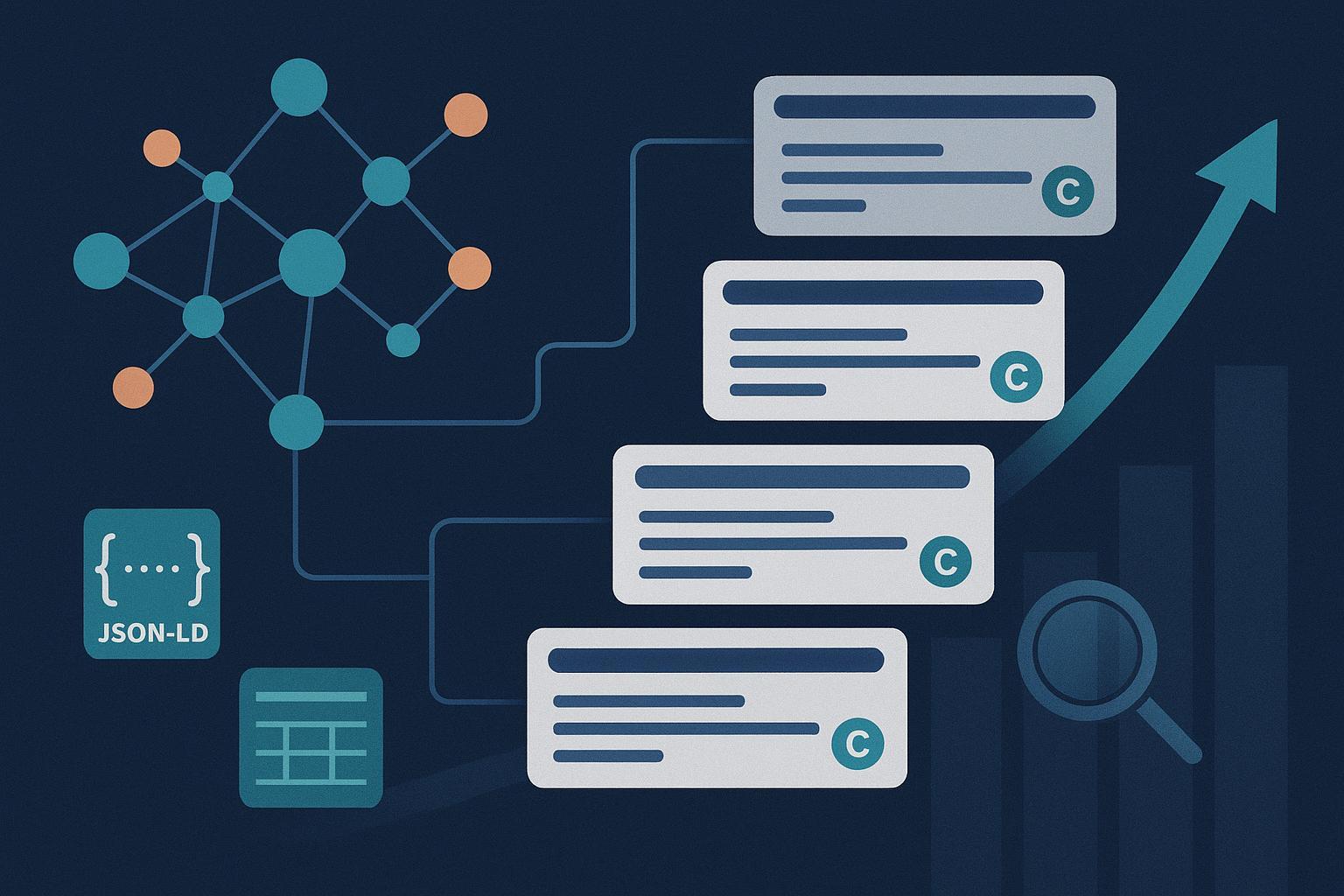
If your content strategy still treats blue links as the sole finish line, you’re leaving visibility on the table. Generative engines—Google’s AI Overviews, Bing/Copilot, Perplexity, and ChatGPT Search—now synthesize answers first and cite sources selectively. Generative Engine Optimization (GEO) is the discipline of earning inclusion and citations inside those answers, not just ranking as a standalone result. This guide distills the durable principles and field-tested workflows that compound over time.
Who this is for: marketing leaders, SEO/content leads, and agency strategists building resilient visibility across engines. The promise isn’t a trick or a hack; it’s a repeatable system grounded in evidence, clarity, and measurement.
What GEO Is (and Isn’t)
GEO aligns your content so AI systems can understand, verify, and confidently cite it. While traditional SEO chases rankings and CTR from ten-blue-link pages, GEO optimizes for inclusion inside generated answers—where citations and summaries sit up top. Multiple independent sources describe GEO as optimizing for AI-generated answers and citations rather than classic rankings. For neutral framing, see the agency perspective in the Tripledart guide to generative engine optimization (2025) and the research-backed overview in the Frase GEO guide (2025). For a deeper background on how “AI visibility” differs from traditional SEO visibility, explore our explainer on AI visibility and brand exposure in AI search.
The Principles That Compound Over Time
Think of GEO like preparing a research brief for a skeptical editor. Your job is to make the facts obvious, the structure parseable, and the sources checkable. Do that consistently, and engines will be more willing to surface and cite you. What’s the simplest way to get there without chasing short-lived tricks?
Prove experience and cite evidence (enhanced E-E-A-T)
Google has repeatedly emphasized people-first content, experience, and verifiability. While it does not publish a deterministic spec for AI Overview citations, official documentation underscores helpfulness, reliability, and evidence. For orientation, see Google’s site-owner page on AI features and your website (Search Central, living documentation) and the broader Helpful content and quality guidance (Search Central, ongoing). In practice, surface first-hand methods on-page, link to authoritative sources by name with the canonical URL, and expose author credentials and expert review. These signals help engines—and readers—validate your claims.
Map intent to clusters and expand semantic breadth
AI engines fan out across related intents. Covering only the head term leaves many answer variants untouched. Build topic clusters that map adjacent intents like definitions, comparisons, pricing, implementation, troubleshooting, and alternatives. Add FAQs that mirror real phrasing, use clear entities with disambiguation, and cross-link where it improves comprehension. Then track inclusion across head, torso, and long-tail prompts to find gaps and fill them deliberately.
Make content machine-readable (structure + schema)
Engines extract structure from clean headings, lists, tables, and schema. Use JSON-LD for Article, Organization, Person, Product/Review, FAQ, or HowTo where appropriate; populate author, datePublished, mainEntity, sameAs, and contactPoint; and validate in Google’s Rich Results Test. Keep paragraphs and headings crisp so a section can be quoted or tabulated directly. Remember: Google does not confirm that any single markup guarantees AI Overview inclusion—schema aids understanding and eligibility for rich results while citation selection remains algorithmic, per the Intro to structured data and the Search Gallery.
Be multimodal and provenance-aware
Images, charts, and transcripts improve comprehension—and provenance matters. Retain IPTC metadata for original and AI-edited images to support labeling and attribution; the IPTC provides detailed implementation in the Photo Metadata User Guide and notes on Google AI transparency aligned to IPTC standards. Use descriptive alt text and filenames and add ImageObject properties as outlined in Google’s image SEO documentation. Provide transcripts for audio/video and expose key data in accessible tables.
Monitor, measure, and iterate
Because these engines evolve, GEO is a continuous practice, not a one-off project. Build a versioned prompt library per topic cluster, collect answers on a set cadence, track inclusion/citation/sentiment/volatility by engine, and maintain screenshot baselines with timestamps as a visual audit trail.
Developer Deep Dive: From Schema to Screenshot Baselines
Below is a compact, engine-agnostic checklist for technical implementation. It’s conservative by design: there’s no guaranteed switch for AI Overview inclusion, and policies change.
- JSON-LD priorities: Article (or BlogPosting), Organization, Person, Product/Review as applicable; include mainEntity, headline, author, datePublished/dateModified, publisher, sameAs, contactPoint. Validate and monitor.
- Author and org entities: Connect bios to credible external profiles; use Organization sameAs and contactPoint to bolster trust signals.
- FAQ/HowTo where helpful: Even as visibility for these rich results has shifted, they still aid machine understanding. Google’s June 2025 update simplified some search features but retained core types; treat FAQs/HowTos as comprehension aids, not ranking switches, per the Search Central Blog simplification note (June 2025).
- Images and provenance: Embed IPTC metadata; use ImageObject; don’t strip metadata in your media pipeline.
- Transcripts and data blocks: Publish transcripts for media and expose data in machine-readable tables.
- Screenshot baselines: Create a structured store (folder or database) labeled by engine, date, prompt version, and URL.
A minimal JSON-LD scaffold
{
    "@context": "https://schema.org",
    "@type": "Article",
    "headline": "GEO Principles for Long-Term Content Success",
    "datePublished": "2025-11-22",
    "dateModified": "2025-11-22",
    "author": {
      "@type": "Person",
      "name": "Editorial Team",
      "sameAs": [
        "https://www.linkedin.com/company/your-company"
      ]
    },
    "publisher": {
      "@type": "Organization",
      "name": "Your Brand",
      "sameAs": [
        "https://twitter.com/yourbrand",
        "https://www.crunchbase.com/organization/your-brand"
      ],
      "contactPoint": {
        "@type": "ContactPoint",
        "contactType": "customer support",
        "email": "support@yourbrand.com"
      }
    },
    "mainEntity": {
      "@type": "Thing",
      "name": "Generative Engine Optimization"
    }
  }
Practical Workflow Example (Engine-Agnostic)
Disclosure: Geneo is our product. In this neutral example, it represents one of several ways to operationalize monitoring; you can replicate the steps with other tools.
Scenario: Your “pricing and ROI” page covers methods and includes a comparison table. You want inclusion in AI answers for prompts like “Is [Product] worth it for mid-market teams?”
Baseline by creating three prompt variants per engine (ChatGPT Search, Perplexity, Google AI Overviews, Copilot) and capturing citations and summaries weekly for four weeks. Store screenshots and note co-citations. Instrument the content with a transparent “How we price” section and a downloadable CSV; strengthen the author bio and add one or two authoritative external citations. Monitor with Geneo to track inclusion, citation frequency, and sentiment across engines for the topic cluster—or maintain a spreadsheet with prompt versions, timestamps, and links to screenshots if you prefer a manual setup. Iterate based on gaps: if you’re missing in Perplexity but cited in Copilot, compare answer text and co-cited sources, add a FAQ clarifying ROI assumptions, and update schema accordingly.
Parity alternatives and criteria: Any solution should offer cross-engine coverage, screenshot exports, time-series logs, and sentiment tracking. If you choose not to use Geneo, combine manual collection with a lightweight script for screenshots and a sentiment library; the principle remains the same.
What to Do When AI Gets You Wrong (Remediation Playbook)
Every brand will face mis-citations or muddled summaries at some point. Here’s a pragmatic response sequence.
-
Correct and clarify on-site
- Update the canonical page with precise statements, tables, and FAQs that address the confusion. Make claims auditable.
- Strengthen schema properties (author, sameAs, mainEntity) and ensure validation passes.
-
Add corroboration
- Cite authoritative third parties that confirm your corrected claim. Keep it to one or two high-quality sources.
-
Submit feedback and document
- Use the feedback mechanisms in AI Overviews, Copilot, Perplexity, and ChatGPT where available. Keep dated screenshots and notes.
-
Outreach if needed
- If a third-party page seeded the error, request an update. Publish a short clarifying post you can reference.
-
Monitor the aftermath
- Track whether follow-up answers reflect your updates. Maintain a changelog with dates, prompts, and outcomes.
This approach echoes broader concerns about AI misinformation and provenance discussed in academic and policy forums; while not GEO-specific, they reinforce the value of clear sourcing and monitoring.
Measuring GEO Over Time
You can’t manage what you don’t measure. Build a compact dashboard around inclusion, citations, sentiment, and stability. For a comparison of platform behaviors and monitoring considerations, see our piece on ChatGPT vs Perplexity vs Gemini vs Bing monitoring. If you’re sorting out terminology, our explainer on GEO vs. related acronyms can help.
Two notes on official behavior worth watching: Google describes AI Overviews as automatically choosing links to help users explore, without a guaranteed inclusion mechanism. See the page on AI features and your website. OpenAI announced ChatGPT Search emphasizing attribution from trustworthy sources; formats may evolve. See OpenAI’s “Introducing ChatGPT Search” (2024).
Below is a compact metrics schema you can adapt.
| Metric | What it means | How to instrument |
|---|---|---|
| Inclusion rate (by engine/topic) | Percent of standardized prompts where your domain/page appears in the answer citations | Weekly prompt runs; store screenshots; compute per engine and per cluster |
| Citation frequency | Count of citations per engine over a set period, by page and topic | Log each appearance; tag by URL and prompt; chart trendlines |
| Co-citation quality | The caliber of sources cited alongside yours (by domain authority and relevance) | Record co-cited domains; review quarterly for quality shifts |
| Sentiment and stance | Polarity and confidence of how engines describe your brand/product | Run light sentiment analysis on answer text; annotate edge cases manually |
| Volatility index | Degree of answer change across weeks for the same prompt set | Compare snapshots; flag major shifts and investigate causes |
| Coverage breadth | Share of intent variants (head/torso/long-tail) that include or mention you | Maintain a prompt tree; report coverage by segment |
| Evidence blocks present | Presence of first-party data tables, methods, and citations on key pages | On-page audit checklist; target 100% for core pages |
Side note on changes: AI Overview behavior and Google’s surface treatments evolve. For context on broader update patterns, see our commentary on the October 2025 Google algorithm update.
Common Pitfalls and Edge Cases
- Overfitting to one engine: If you build for Perplexity alone, a Copilot or AIO shift can wipe out your gains. Keep your playbook cross-engine.
- Chasing shortcuts: Schema spam, overstuffed FAQs, or synthetic pages without evidence rarely sustain. GEO rewards clarity and proof.
- Ignoring provenance: Stripping IPTC metadata or using uncredited images undermines trust and can affect how your media is treated.
- Neglecting screenshots and versioning: Without baselines, you can’t prove changes or analyze regressions.
- Confusing acronyms: GEO, AEO, GSO, and more—be precise in your internal docs so your team ships consistently. For more on terminology, see Related terms explained.
Next Steps
- Ship one cluster upgrade this month: add first-party data blocks, tighten schema, and publish an FAQ on your most commercial page.
- Stand up a monitoring cadence: weekly runs for priority prompts, monthly audits for your top clusters.
- Create a lightweight remediation SOP so the team knows exactly what to do when an answer misrepresents your brand.
If you want help standardizing cross-engine monitoring and sentiment analysis, you can use a platform like Geneo to centralize snapshots and time-series logs—or replicate the workflow manually if that’s your preference. For more practitioner content, browse our hub: Further reading on GEO and AI visibility.