
GEO Optimization for Zero-Click Search: 2025 Best Practices
Master GEO optimization for zero-click search in 2025. Explore actionable best practices, AI citation strategies, and measurement frameworks for advanced SEO teams.
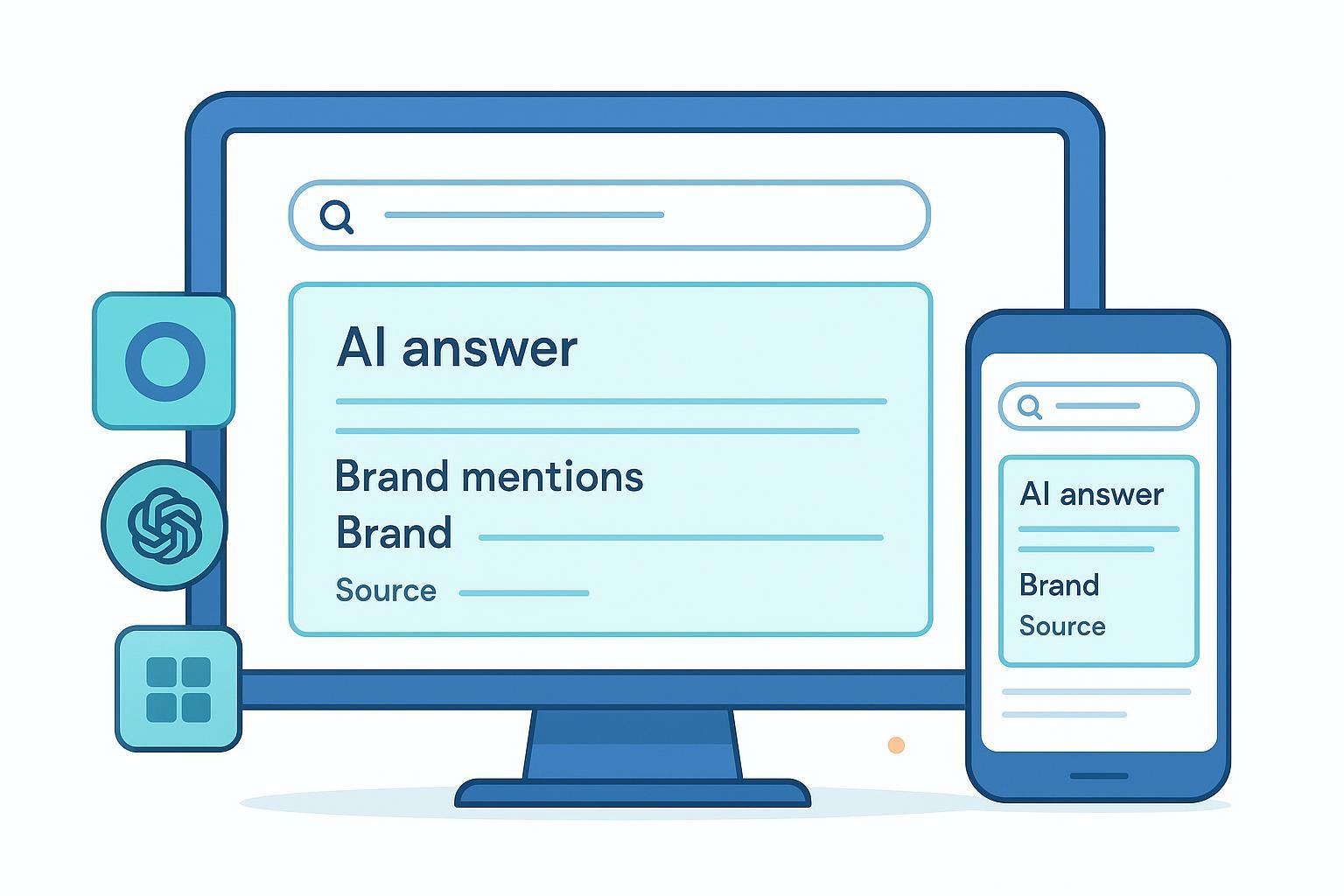
If your organic charts look flat despite ranking “well,” you’re not alone. Multiple studies show a sharp rise in answers that resolve inside AI and search results—no click required. In 2024, SparkToro and Similarweb reported that 58.5% of U.S. Google searches ended without a click, a pattern echoed in the EU at 59.7% according to the SparkToro team’s 2024 zero‑click study. By mid‑2025, Search Engine Land observed zero‑click rates rising further in the U.S., with March 2025 at 27.2% vs. 24.4% a year prior, as reported in their June 2025 analysis. When AI surfaces the answer, the click often disappears.
Success in this landscape looks different: your brand needs to be cited, visible, and represented accurately inside the AI answer itself. That’s the heart of GEO—Generative Engine Optimization.
GEO in One Minute: What It Is—and Isn’t
GEO focuses on how AI-driven answer engines select, synthesize, and attribute information. Traditional SEO aims to rank pages; GEO aims to earn passage-level inclusion and citation inside AI answers. You optimize for the snippet the model extracts, the authority signals it trusts, and the clarity that reduces misattribution.
Think of it this way: instead of optimizing a whole chapter to rank, you’re optimizing the exact paragraph the librarian will quote in a panel discussion—and making sure they say your name when they do.
Platform Nuances That Shape Your Tactics
Below is a compact, practitioner view of how major AI surfaces behave and what that means for GEO.
| Platform | How citations appear | Inclusion hints (observed/docs) | Measurement notes |
|---|---|---|---|
| Google AI Overviews / AI Mode | In‑answer sources, often 3–7; links to supporting pages | Quality + corroboration; passage relevance; E‑E‑A‑T emphasized in guidance per Google Search Central (2024–2025) | Track cited URL fragments in GA4; field methods documented by practitioners; visibility varies by query |
| Bing Copilot Search | Prominent, clickable citations; “Show all” source lists | Recency, clear modular content, authority; Microsoft highlights publisher support in Bing/Copilot blog (Nov 2025) | Use Bing Webmaster + Clarity referral patterns; monitor query cohorts over time |
| Perplexity | Citations displayed beneath answers; iterative grounding | Authoritative sources; question-aligned headings; see Perplexity docs (2025) | Build prompt panels; log citation frequency and position across runs |
| ChatGPT (Atlas / Deep Research) | Source connection improving; browsing and multi‑source retrieval | Ensure accessibility, metadata, and clear attribution; see OpenAI’s Atlas announcement (Oct 2025) | Track branded mentions qualitatively; monitor referral anomalies where links are present |
Content Engineering Best Practices
- Lead with questions your buyers and users actually ask. Use H2/H3 headings in question form, then give a crisp, self-contained answer in 2–4 sentences before elaborating.
- Write for passage extraction. Keep paragraphs tight; use descriptive subheads, simple tables where helpful, and restrained lists. If a single paragraph answers “what,” add a short follow-up that covers “how” or “when.”
- Add structured data where it genuinely clarifies meaning: FAQ, HowTo, Product, Article, Organization, LocalBusiness, and Author schema. Use it to delineate entities and steps—not to stuff.
- Strengthen E‑E‑A‑T on-page: clear author bios with credentials, cited sources, and explicit publication/update dates. Link to credible external references only when they add evidence.
- Use multimedia deliberately. For visually answerable topics, include an image or short clip with alt/captions that answer the question succinctly. Keep file sizes lean and markup clean.
Technical Signals and Access
Your content can’t be cited if it can’t be found, crawled, or trusted.
- Make crawler access explicit. Confirm Googlebot, Bingbot, and (where acceptable for your policy) GPTBot access in robots.txt. Ensure important pages aren’t blocked by fragile scripts or route guards.
- Improve performance and cleanliness. Fast, stable loads with minimal layout shift help both users and crawlers; they also reduce rendering errors that can hide content from retrieval systems.
- Keep content fresh—and show it. Add lightweight changelogs for evergreen pieces and refresh key facts on a set cadence. Recency isn’t officially a guarantee for Google AI Overviews, but recency signals are emphasized in Microsoft’s ecosystem.
- Align with knowledge panels and authority hubs. Ensure your Organization, Person (author), and Product entities are consistent across your site, social profiles, and reputable directories.
Platform-Specific Moves
- Google AI Overviews / AI Mode: Google’s guidance stresses high-quality corroborated sources. Industry observations suggest responses typically cite several pages and can pull from beyond position #1 when a passage is the best fit. Review Google Search Central’s “AI features and your website” (2024–2025) and validate your key answers are explicit, well‑sourced, and skimmable.
- Bing Copilot Search: Microsoft highlights support for publishers with clear, clickable citations. Build modular pages with scannable sections and current references; monitor referral patterns via Bing Webmaster and the signals described in Microsoft’s Copilot blog (Nov 2025).
- Perplexity: It grounds answers in live searches and shows citations per query. Make sure your headings tightly match question intent and that sources around your content corroborate key facts; technical docs such as Perplexity’s search guide (2025) outline how the system retrieves and displays sources.
- ChatGPT (Atlas / Deep Research): Atlas positions ChatGPT as a more retrieval‑connected browser. Ensure your metadata, page accessibility, and licensing signals are clear; see OpenAI’s Atlas announcement (Oct 2025) for context on the browsing experience.
How to Measure GEO in a Zero-Click World
If you can’t measure citations, you can’t manage them. Start with a defined query panel per platform, run on a fixed cadence, and compare against a competitive set.
- Visibility and citation rate: Track how often your brand appears and is linked inside AI answers across Google AI Overviews/Mode, Bing Copilot, Perplexity, and ChatGPT. Normalize by query count.
- LLM Share of Voice (SOV): Calculate your mentions in AI answers divided by total mentions across your competitor set for the same panel and time window.
- Sentiment: Score the tone of answers when your brand is referenced—positive, neutral, negative—and annotate examples.
- CTR and attribution: When links are present, use GA4 referrer patterns and known methods to detect AI Overview/Mode sessions; for Bing, correlate with Clarity and Bing Webmaster insights.
- Dashboards and rhythm: Consolidate these metrics in Looker/Tableau/Power BI. Set monthly baselines and review quarterly to catch directional shifts.
For a deeper metrics blueprint, see our internal guide on AI Search KPI Frameworks for Visibility, Sentiment, Conversion (2025).
Workflow Example: Monitoring with Geneo
Disclosure: Geneo is our product.
Here’s a compact, real-world monitoring loop many teams use to keep GEO efforts honest:
-
Build a cross-platform query panel. Include your priority informational and commercial questions for Google AI Overviews/Mode, Bing Copilot, Perplexity, and ChatGPT.
-
Track citations and sentiment weekly. Geneo aggregates where your brand is cited inside AI answers, logs the source URL, and classifies tone so you can see whether you’re earning positive, neutral, or negative treatment at a glance.
-
Compare SOV vs. competitors. Monitor your “LLM share of voice” across the panel and annotate content releases or updates to spot what moves the needle.
-
Iterate content. When you see missing citations or negative sentiment, update the exact passage on your page that answers the question. Add corroborating references and Schema where it clarifies meaning.
-
Review monthly, course-correct quarterly. Roll results into your dashboard, identify winning formats (e.g., short Q&A blocks with a supporting table), and standardize those patterns across your content library.
This loop turns GEO from a guessing game into a repeatable operating rhythm. It also makes post‑update analysis faster when major search changes land; see our take on the Google Algorithm Update (October 2025) for how to adapt your cadence.
Failure Modes and Fast Fixes
- Not being cited anywhere: Audit your top questions. Add a direct, two‑to‑four sentence answer up top, then provide supporting context. Ensure corroboration from credible third‑party sources.
- Misattribution or hallucinated facts: Maintain canonical facts on a single, crawlable URL; add clear titles, tables, and references so retrieval models can quote accurately. Monitor and request corrections where appropriate.
- Over-optimizing for AI at the expense of users: Keep pages useful when clicks do happen—clear CTAs, internal navigation, and helpful visuals. GEO is not an excuse to sacrifice user experience.
- Measurement gaps: Define panels, baselines, and a review cycle. If you skip this, you’re steering blind.
A Continuous Cycle: Publish, Monitor, Correct
GEO isn’t one-and-done. The teams that win run a cycle: publish focused, question-first assets; monitor citations, SOV, and sentiment; then correct by updating the exact passages AI engines extract. Ask yourself: which three passages deserve a rewrite this month, and what evidence will make them the most quotable on the web?
Over the next 30 days, pick 10–15 priority queries, ship passage‑perfect answers on pages that already earn impressions, and set up weekly citation checks. In 90 days, you’ll know which formats and sources your target engines prefer—and you’ll have the dashboards to prove it.
Looking for a faster way to operationalize this? Geneo monitors cross‑platform AI citations and sentiment so your team can prioritize the passages that win visibility. If you’d like a hands-on walkthrough, we can show how brands set up panels, track LLM share of voice, and shorten the revise‑and‑measure loop without adding headcount.