
GEO for Freelancers & Creators: Generative Engine Optimization Guide
Learn what Generative Engine Optimization (GEO) is, how it helps freelancers & creators get cited in AI answers, and actionable steps for better AI visibility.
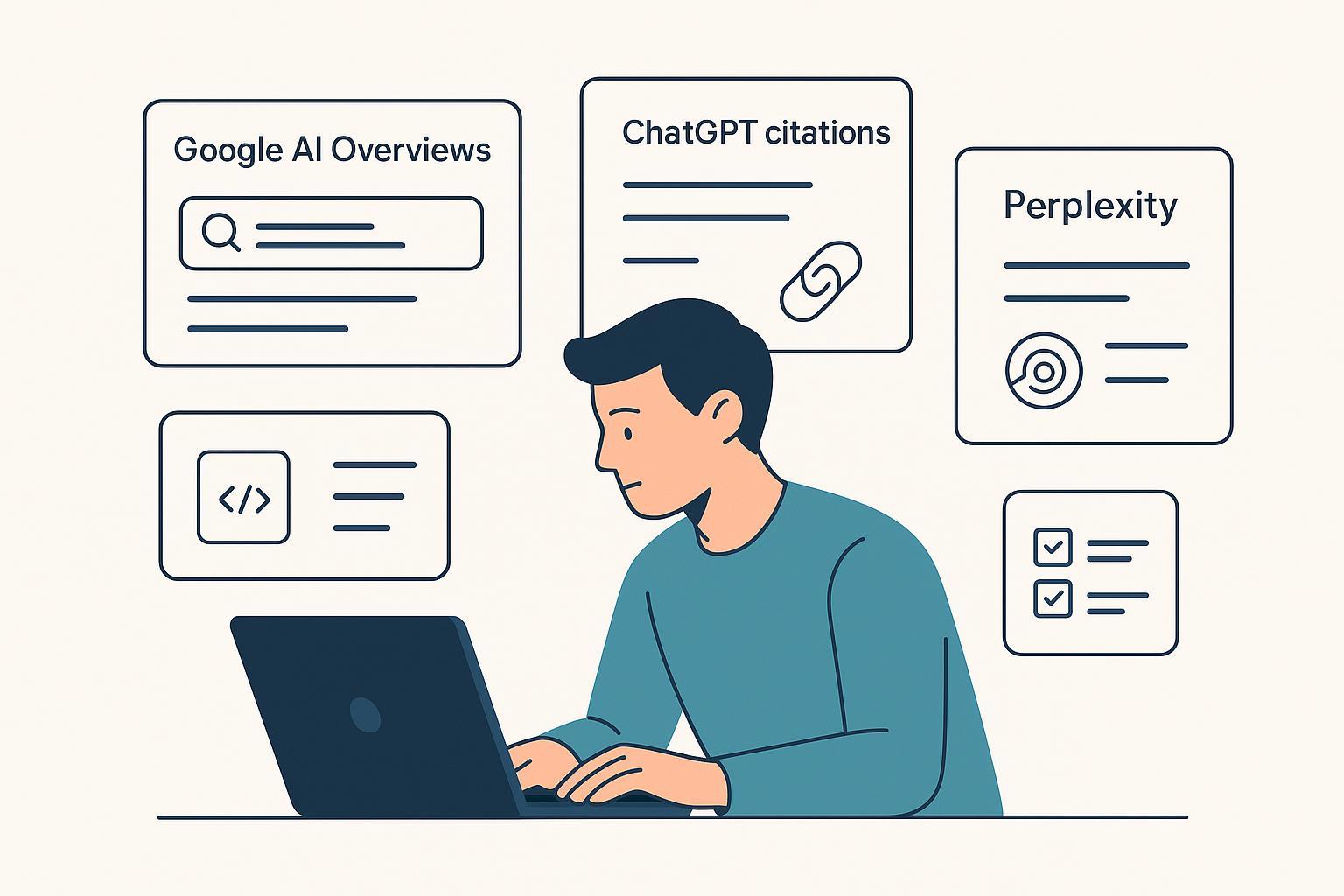
What’s the simplest way for a solo operator to show up in AI answers? Here’s the deal: Generative Engine Optimization (GEO) is the practice of making your content easy for AI systems—like Google’s AI Overviews, ChatGPT Search, and Perplexity—to understand, select, and cite in their responses. You still need solid SEO fundamentals, but your north star shifts toward visibility in generated answers and being named as a source.
According to industry explainers, GEO focuses on citation-friendly content patterns and entity clarity rather than only traditional rankings. For a primer, see Search Engine Land’s overview of what generative engine optimization is (context from 2024–2025 industry coverage).
GEO vs. SEO (and AEO): what actually changes for you
Think of GEO as an add-on mindset: it builds on SEO, borrows from Answer Engine Optimization (AEO), and re-centers success on whether AI experiences reference you. The table below summarizes the differences.
| Focus area | SEO (classic search) | AEO (answer features) | GEO (generative answers) |
|---|---|---|---|
| Primary target | Ranked web results | Featured snippets/knowledge answers | AI-generated responses (Overviews, assistants) |
| Core tactics | Keywords, backlinks, performance | Concise answers, FAQs, schema | Entity clarity, evidence, citation-ready content |
| Success metrics | Rankings, organic traffic | Snippet presence, no‑click impressions | AI citations and inclusion in generated answers |
| Solo‑operator implication | Build a fast, useful site | Structure direct answers and validate | Emphasize facts, sources, and clear identity |
For deeper comparisons, this guide on traditional SEO vs. GEO explains the trade‑offs for solo marketers.
How AI engines pick and cite sources (plain‑English)
- Google AI Overviews/AI Mode: Google retrieves relevant pages, synthesizes an overview, and attaches citations to verified passages when helpful. Eligibility depends on helpful, original content and clarity. Google’s site‑owner guidance in AI features documentation outlines principles and feature behavior.
- Perplexity: Perplexity runs a live web search, then presents synthesized answers with numbered inline citations. See the platform’s How Perplexity works for how sources are surfaced.
- ChatGPT Search: In supported experiences, answers include visible citations and a sources list to aid verification. OpenAI’s ChatGPT Search help explains the citation behavior.
Bottom line: clear facts, unique data, and well‑structured explanations increase the chance your work is selected and cited. If the AI can quote your line, point to your chart, or reference your method, you’re playing GEO the right way.
GEO quickstart for solo operators (5 steps)
-
Pick a citation‑ready asset
- Choose one page or piece of content where you can be the definitive source on a tight topic (e.g., “2025 day rates for motion designers,” “step‑by‑step podcast mic setup,” or “LinkedIn carousel design checklist”).
-
Structure your answer and evidence
- Write the clearest version of the answer first. Add a short glossary, supporting stats with links, quotes, and a simple visual (image or table). If you reference data, cite authoritative sources with descriptive anchors (e.g., a 2025 report or official docs).
-
Add E‑E‑A‑T and entity clarity
- Make your author identity unmistakable: a bio with credentials, an About/contact page, and consistent naming across platforms. Cross‑link your website, YouTube channel, and LinkedIn so AI systems can connect the dots.
-
Layer in lightweight structured data
- Use appropriate schema types (Article, Person, ProfilePage, HowTo, FAQ where relevant). Validate with Google’s tools and keep markup consistent. Google’s ProfilePage structured data documentation shows how to connect your personal brand to your content.
-
Distribute smartly and cross‑reference
- Publish your asset, then post supporting snippets and summaries on LinkedIn, your newsletter, and relevant communities. Reference the original page and use descriptive titles, captions, and alt text. Internally link related content so your “definitive source” stays central.
For a deeper walkthrough, see this step‑by‑step guide to optimizing content for AI citations.
Zero‑to‑one when you don’t have a website yet
No site? You can still practice GEO. Start with the profile or portfolio pages you control. Lay out a crisp niche statement, a short credentials block, and two or three standout pieces with descriptive titles that read like answers (“How to pick a lav mic for outdoor vlogs,” “Pricing template for a retainer project”). Use consistent naming and imagery across LinkedIn, YouTube, and your newsletter service, then link them together in the descriptions and bios. On platforms that allow it, add structured metadata or creator fields; when they don’t, use clear headings, captions, and timestamps. The goal is to make your identity and content easy to understand and cite, even before you own a domain.
Track, learn, and iterate (creator‑friendly)
- Manual sampling: Save 10–12 representative prompts and run them weekly in Google AI Overviews/AI Mode, Perplexity, and ChatGPT Search. Log whether you appear, which URL is cited, and the snippet context.
- Alerts and feeds: Set Google Alerts for your name, brand, and key topics; subscribe to authoritative industry feeds so you see the sources AI engines often pull.
- Dedicated AI visibility tools: Platforms can centralize cross‑engine mentions, citations, and sentiment in one place, saving time versus manual logging.
Disclosure: Geneo is our product. As a neutral example, tools like Geneo can be used to monitor citations across ChatGPT, Perplexity, and Google AI features, review sentiment, and keep a historical log you can compare over time.
If your mentions are consistently low, revisit entity clarity (consistent naming, linked profiles), expand original data and examples on your pages, and strengthen sourcing so your claims are easy to verify.
Mini example: from YouTube tutorial to AI citation
Imagine you’re a solo filmmaker who posted a “How to color‑grade S‑Log3 footage in 10 minutes” tutorial. You add a text companion page on your site with the exact step list, a LUT comparison table, and references to official camera docs. You embed the video, write an author bio with your credits, and link to your LinkedIn and portfolio. On YouTube, you update the description to include a short summary, time‑stamps, and a link back to the companion page. A week later, Perplexity answers a prompt about quick S‑Log3 color grading and cites your page because it contains the clearest, verifiable steps and sources. That’s GEO in action: your content is structured, attributable, and easy to cite.
FAQs
Q: How long does GEO take to show results? A: It varies by platform and topic competitiveness. Many creators see early signs (first citations or mentions) within a few weeks for niche topics. Broad topics take longer. Keep publishing and refining a small set of definitive pages.
Q: Do I still need traditional SEO? A: Yes. Good GEO builds on good SEO—fast pages, helpful content, clear site architecture. As Search Engine Land puts it, “good GEO is good SEO,” and you’ll benefit in both classic search and AI experiences.
Q: What about AI hallucinations misattributing my work? A: It happens. Reduce risk with explicit sourcing on your pages, unique data or visuals with labels, and consistent author identity. When you spot errors, update your content for clarity and consider filing feedback through platform channels.
Next steps
Pick one citation‑ready asset this week and run the 5‑step quickstart. Validate your schema, add a short author bio, and post supporting snippets on one social platform. Then set a weekly 30‑minute slot to sample prompts and log results. For more depth, read our overview of AI visibility and compare SEO vs GEO trade‑offs. If you’d rather centralize tracking, consider tools that monitor cross‑engine citations—Geneo is one option to explore without committing to heavy software.