
How Agencies Should Build GEO Departments (2025)
Discover authoritative best practices for agencies building GEO departments in 2025. Covers team design, technical playbooks, measurement, and AI visibility strategies.
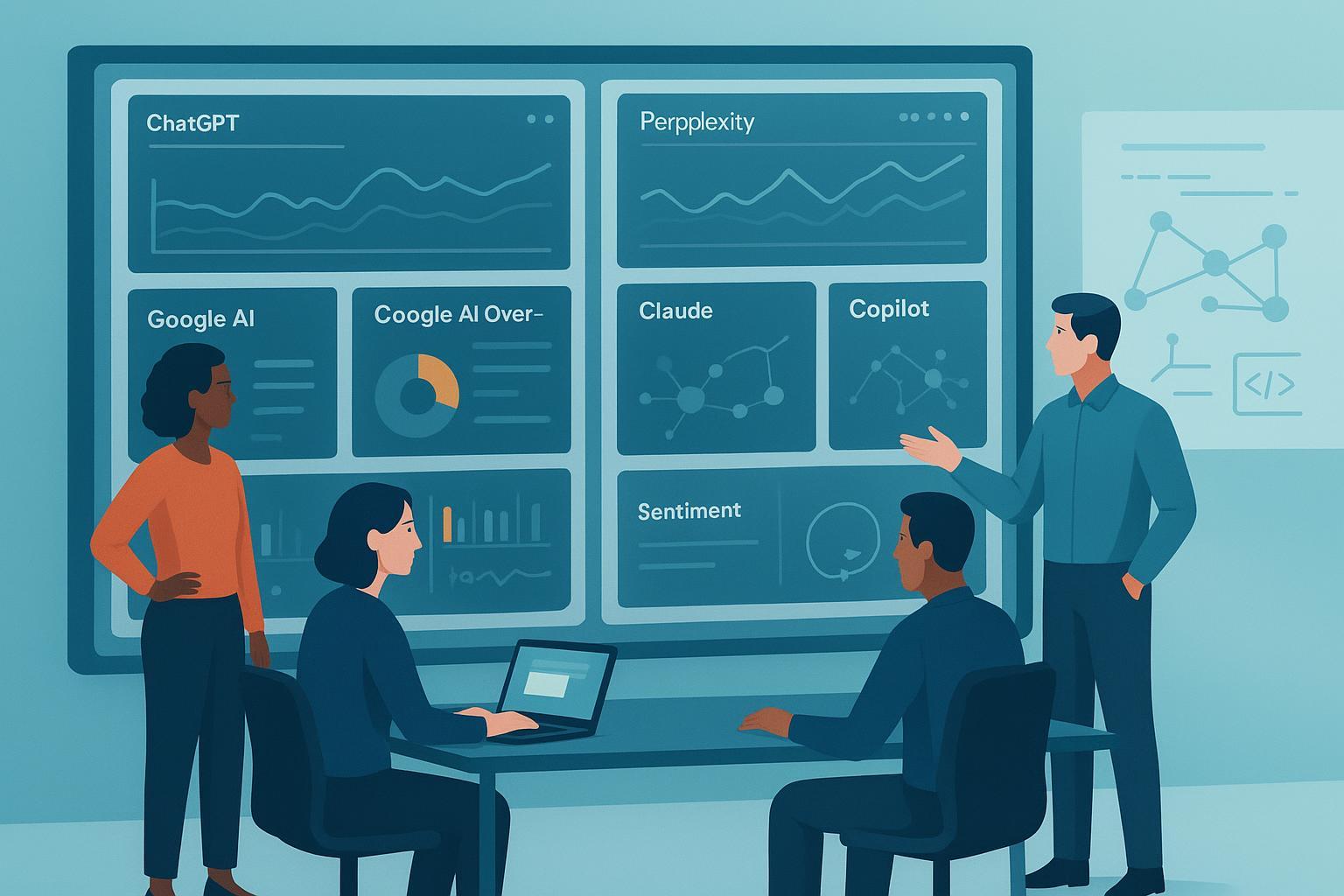
The ground under search has shifted. Executive teams are asking why organic growth is slowing while AI answers get longer and more confident. If you run an agency, the practical response isn’t a memo—it’s a department. A GEO (Generative Engine Optimization) unit gives you the people, processes, and measurement to win inclusion and citations across AI answers at scale. Why wait for traffic to erode further when you can build the capability now?
According to publisher research summarized by Digiday/DCN in 2025, AI Overviews have been linked to double‑digit declines in Google referral traffic for some cohorts, with studies noting a median drop around a quarter where exposure is high. See the context and caveats in their analysis: Google AI Overviews linked to a 25% drop in publisher referrals (2025). You don’t control rollout timelines, but you do control readiness.
GEO vs. classic SEO (fast clarity)
GEO optimizes for inclusion inside AI answers; classic SEO optimizes for ranking in link lists. The tactics overlap but diverge in emphasis: discrete, fact‑first passages; strong entity clarity; trustworthy authorship; and observable citations in AI systems.
If you need a primer to align your leadership team, this side‑by‑side explains the differences and where they meet: Traditional SEO vs GEO: 2025 Marketer’s Comparison. Use it to establish definitions before you rewire processes.
The minimum viable GEO department (MVG)
Start small, design for scale. An MVG sits as a center of excellence that partners with SEO, Content, PR, and Analytics. Here’s an org snapshot you can adapt for a 5–12 person agency unit.
| Role | Core responsibilities | Reports to |
|---|---|---|
| Head of GEO | Strategy, roadmap, client education, integration with SEO/PPC/content; quarterly governance | COO/Head of Digital |
| Technical SEO & Schema Lead | Structured data, entity mapping, site architecture, crawlability, CWV, internal linking | Head of GEO |
| Content Lead (AI‑ready) | Answerable passage design, source curation, editorial standards, E‑E‑A‑T enforcement | Head of GEO |
| Data Analyst (GEO) | AI inclusion tracking, citation share dashboards, AI‑referred traffic and conversion analysis | Head of GEO |
| Prompt & Citation Analyst | Prompt space research, inclusion testing, content briefs aligned to observed AI behavior | Content Lead |
| Digital PR/Authority Manager | Expert bylines, placements, reviewer network, brand entity consolidation | Head of GEO |
| Client Operations Manager | Scoping, SLAs, reporting cadences, cross‑team orchestration | COO/Client Services |
Two notes from the field: First, resist folding all of this into “SEO” by title—your teams will continue writing for blue links if you do. Second, the Prompt & Citation Analyst is not just a prompt writer; it’s a researcher who treats AI engines like markets with observable demand.
Your 90‑day build plan
A department is a system. Stand up the basics in 13 weeks, then iterate. In the first two weeks, define scope and governance. Approve the operational definition of GEO vs SEO; codify disclosure, fact‑checking, and expert‑review standards. Select one pilot client and a comparison cluster of prompts/queries. Establish baseline measures: AI inclusion rate and citation share of voice (SOV), plus current organic.
From weeks three to six, ship the technical backbone. Implement Organization/Person/Article schema, disambiguate entities (add sameAs and Wikidata/Wikipedia where appropriate), and fix crawl issues. Build an answerable‑passage inventory—short, factual blocks that directly address the top 30–50 prompts. Add author bios and expert review notes. Follow Google’s guidance on helpfulness and structure in Succeeding in AI search (Google Developers, 2025).
In weeks seven to nine, produce and promote. Publish updated content with clear summaries, steps, and tables where relevant; seed high‑quality outbound citations. Coordinate PR and expert bylines to reinforce author/entity authority. Track observed inclusion and citations across engines weekly.
Finally, weeks ten to thirteen focus on measurement and refinement. Report AI inclusion rate, citation SOV, sentiment of mentions, and AI‑referred conversions. Compare vs. baseline. Adjust briefs and schema based on missed prompts and citation gaps.
The technical playbook that moves inclusion and citations
-
Structured data and entity clarity: Use JSON‑LD for Organization, Person (authors), Article/FAQ/HowTo/Product as relevant. Validate with official tools and keep errors at zero. Map primary entities; add sameAs links to authoritative IDs. This reduces ambiguity and improves grounding signals.
-
Passage‑level answerability: Think of each key prompt as a “slot” you can fill with a crisp, verifiable paragraph. Lead with definitions, include steps or a short table when useful, and cite primary sources. It’s like prepping the exact puzzle piece AI engines need to snap into an answer.
-
E‑E‑A‑T in practice: Prominent author credentials, expert review notes, transparent sourcing. Maintain editorial policies and refresh dates. Engines don’t read policies as humans do, but they do read structured cues around people and provenance.
-
Quality and performance: Ensure crawlability, stable internal linking to topic hubs, and fast loads. These don’t “force” inclusion, but weak performance will make everything harder.
For overlap between AI answers and organic rankings in Google’s AI experiences, see the 2025 study from seoClarity that compared inclusion versus traditional ranks: AI Mode vs. organic overlap (seoClarity, 2025). Treat correlations as directional, not prescriptive.
Measurement and KPIs that matter
You need two lenses: AI visibility/quality and business impact.
- AI visibility and quality: Inclusion rate (percent of tracked prompts where you’re cited/mentioned), citation share of voice among sources in answers, and sentiment of mention (simple polarity on extracted text). For context and definitions, see What Is AI Visibility? Brand Exposure in AI Search Explained.
- Business impact: AI‑referred sessions, conversion rate, and assisted conversions by engine and prompt cluster. Some cohorts see stronger conversion from AI traffic; Seer documented cases and caveats in 6 learnings about how traffic from ChatGPT converts (2025). Build your own baseline.
Example metric workflow (neutral): Disclosure: Geneo is our product. We’ve used it to set up a dual dashboard—one for inclusion and citation SOV across Google AI Overviews/AI Mode, ChatGPT, Perplexity, Claude, and Copilot; another for LLM‑quality metrics (accuracy/groundedness samples) tied to a weekly QA. For deeper metric definitions, our team formalized a practical set in LLMO Metrics: Measuring Accuracy, Relevance, Personalization in AI. Use any stack that can replicate these signals; the point is consistency and transparency.
Workflow example: cross‑engine monitoring and iteration
Here’s how a single client pilot typically runs for us and partner agencies:
- Define a 50‑prompt cluster covering core commercial and informational intents. Baseline inclusion and citation SOV for the client and three competitors across engines.
- Publish 10–15 passage‑first updates, add missing schema, and secure 3–5 expert bylines. Track changes weekly and annotate interventions.
- In week 8, review missed prompts: Where are answers present but citations favor competitors? Update entities and passages, add a tabular comparison, and test two alternate intros.
Disclosure: Geneo is our product. In this workflow, we’ve used it as the cross‑engine monitor to (a) log prompt‑level inclusion, (b) store cited URLs and sentiment, and (c) visualize changes after specific interventions. You can replicate this with other tools; choose based on coverage and data export needs.
Governance, training, and change management
A GEO department succeeds when risk and rigor are baked in from day one.
-
Governance: Document a disclosure standard for AI‑assisted content and maintain an audit trail. Set escalation paths for hallucination risk and sensitive claims. Align with recognized frameworks where useful (for example, internal policies inspired by NIST’s AI RMF) without turning delivery into bureaucracy.
-
Editorial QA: Require authoritative sourcing and human review on anything that could materially impact users. Keep a living source list per topic, and schedule refreshes for time‑sensitive content.
-
Training: Build a role‑based curriculum—schema and entity mapping for technical staff; passage design and sourcing for editors; prompt analysis for researchers; privacy and compliance for all. Pair every training with a sandbox exercise and an artifact that enters the SOP.
-
Communication: Socialize wins and lessons in monthly show‑and‑tells. Consider internal “office hours” to help legacy SEO pods migrate briefs and metrics. For leadership context on planning for organic volatility, share How to Prepare for a 50% Organic Search Traffic Drop by 2028 so stakeholders understand why the shift matters.
Tooling: a neutral, test‑and‑verify stack
Pick tools for three jobs: monitoring AI visibility/citations, implementing/validating structured data, and content/quality analysis. Validate claims with a pilot before you standardize. For monitoring, compare multi‑engine trackers that surface inclusion and citation details for Google’s AI experiences and LLM answers. Coverage and fidelity vary; shortlist two or three and trial them against your prompt set. For structured data, use official validators (Google Rich Results Test, Schema Markup Validator). Treat schema as code—reviewed and tested before deployment. For content QA and performance, maintain your semantic analysis tools and CWV monitors. Don’t chase “secret AIO tags”—there aren’t any. Google’s 2025 guidance emphasizes helpfulness, originality, and structured clarity.
For further nuance on how AI inclusion overlaps with organic visibility inside Google’s AI experiences, keep an eye on ongoing studies and remember that overlap is not a guarantee of inclusion. Build the evidence inside your client base.
What leaders should do next
Pick one client cohort and run the 90‑day plan. Staff the MVG roles—even if some are fractional—and give the team a weekly cadence to ship, measure, and refine. Two questions to ask in your next leadership meeting: Which prompts matter most to revenue, and where do we fail to be cited today?
If your stakeholders need a fast definitional anchor before you reorg, point them to Traditional SEO vs GEO: 2025 Marketer’s Comparison. If you need to deepen the measurement side, align on shared definitions from What Is AI Visibility? and extend with LLMO Metrics. Then build your internal case series—eight to sixteen weeks per client, clear interventions, honest deltas.
One last reality check: most AI engines cite brand‑managed sources a lot of the time. Yext reported that 86% of citations in a 6.8M‑citation sample came from brand‑managed domains—treat it as a broad observational signal, not a guarantee: 86% of AI citations come from brand‑managed sources (Yext, 2025). Make your site the most precise, well‑structured, and trustworthy source on the topic, and your odds improve.