
GEO Best Practices for DTC E-commerce (2025): Practitioner Guide
Boost AI visibility and sales: actionable GEO best practices for DTC e-commerce, including structured data, product schema, and citation measurement (2025).
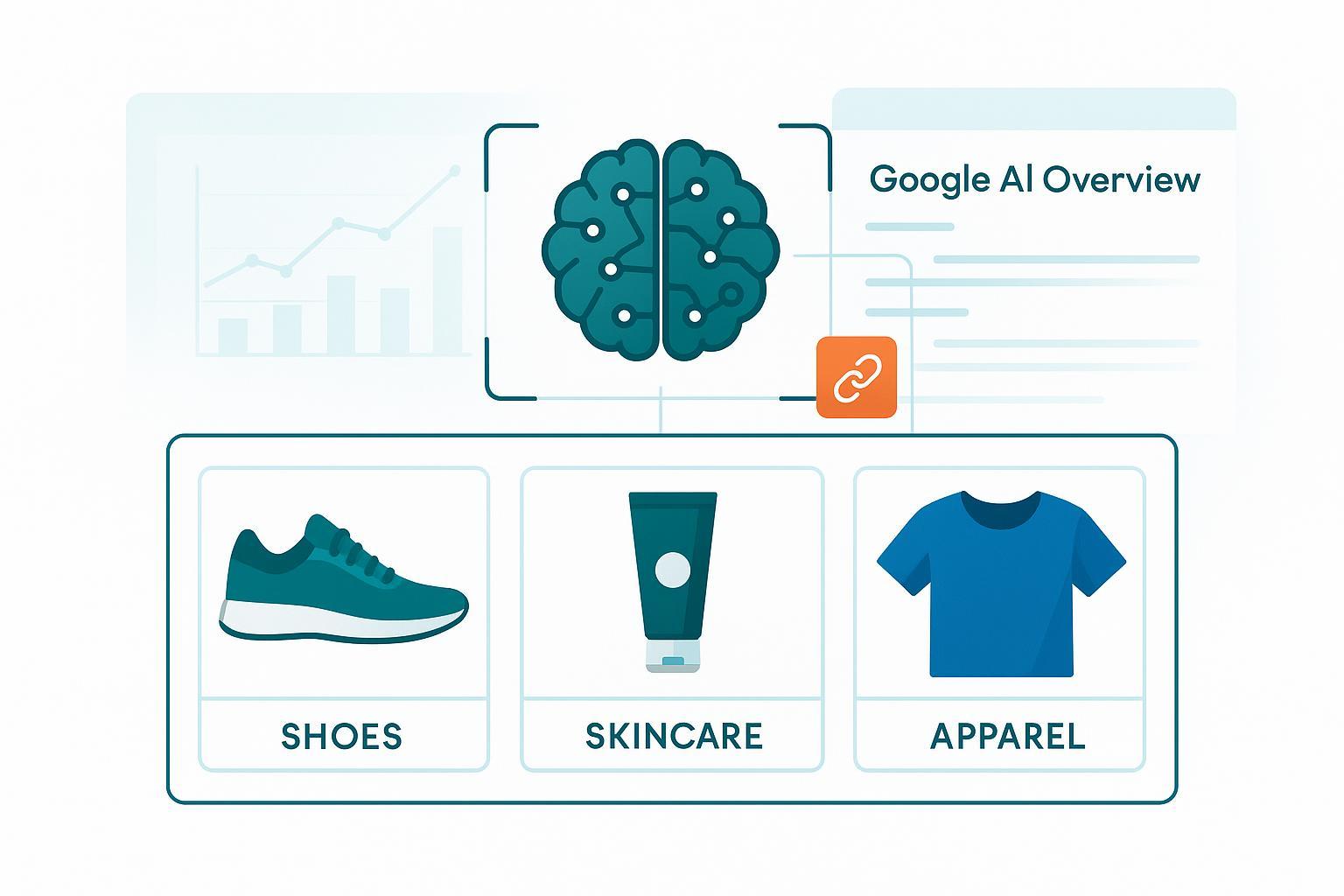
Direct-to-consumer brands don’t win attention by accident anymore. Google’s AI Overviews compress click opportunities, and large language models increasingly answer with citations right on the page. If your product pages aren’t machine-readable and citation-ready, you’re invisible in the very moments that matter. According to Google’s official guidance on AI features and your website, there’s no special markup for AI Overviews—eligibility relies on foundational SEO signals (indexing, helpfulness, policy compliance). That’s why GEO—Generative Engine Optimization—now needs to be a front‑line discipline in DTC.
What GEO Means for DTC
GEO is the practice of structuring content and signals so generative engines (Google AIO, ChatGPT Search, Perplexity, Copilot) can readily understand your products and confidently cite your pages. For DTC teams, that translates to three pillars: machine readability with clean HTML and JSON‑LD (Product, Offer, variants, reviews) rendered server‑side; entity clarity through precise brand, product identifiers (GTIN/MPN), variant relationships, and consistent naming; and citation readiness via authoritative, original product content with linkable assets—spec sheets, comparison tables, sizing guides, buyer FAQs, and transparent policies. Think of GEO as making your product page a storefront for humans and a truth‑packed data packet for machines.
The Evidence: CTR Compression and the Case for Citations
Independent multi‑client studies show that when AI Overviews appear, click‑through rates change significantly. Seer Interactive’s 2024–2025 cohort found organic CTR fell by roughly 61% on informational queries when AIO appeared; cited brands retained more relative clicks than non‑cited peers. See the September 2025 update in Seer Interactive’s AIO impact study. The takeaway is simple: you can’t fully control whether AIO shows, but you can work to be the citation when it does.
Meanwhile, D2C keeps growing. Insider Intelligence projects U.S. D2C e‑commerce to reach $239.75B in 2025, about 19.2% of retail e‑commerce, per eMarketer’s 2025 forecast. If discovery increasingly happens in generative interfaces, GEO is an essential part of your growth engine.
The DTC Product Page Blueprint
Your product page needs clarity and trust for humans—and structure and truth for machines. Start with a tight TL;DR that spells out who the product is for and the top spec highlights. Keep canonical specs like materials, sizing, and compatibility complete and consistent. Show variant choices clearly and sync availability with inventory so buyers don’t hit dead ends. Add the trust modules that reduce friction: verified reviews, buyer FAQs, shipping/returns, and warranty. Round it out with linkable assets—care guides, comparison charts, and how‑to content—that give generative engines more confidence and useful facts to quote.
On the data side, render JSON‑LD server‑side using Product, Offer, and ProductGroup/isVariantOf for variants. Populate identifiers (gtin8/12/13/14 or mpn) and brand/seller fields. Ensure Review and AggregateRating values match what users see, and only use FAQPage markup when visible Q&A exists. Validate with Google’s Rich Results Test and keep structured data in lockstep with your UI.
| Page element | Human goal | Machine signal | GEO impact |
|---|---|---|---|
| TL;DR highlights | Fast understanding | Clear key specs in text | Improves relevance and snippet quality |
| Variant selector | Easy choice | ProductGroup/isVariantOf relationships | Reduces ambiguity; supports accurate offers |
| Pricing/availability | Purchase confidence | Offer.price, priceCurrency, availability | Enables rich results; reliable citations |
| Reviews block | Social proof | Review + AggregateRating | Quality/experience signals; trust |
| FAQs | Objection handling | FAQPage (visible Q&A only) | Adds answerable facts; potential rich result |
| Policies (shipping/returns) | Reduce risk | Plain text + optional markup | Authoritativeness; reduces bounce |
Variants and Structured Data: How to Model It
Google’s guidance is clear: structured data must match visible content, and variants should be represented explicitly. See Product structured data and the 2024 update on product variants.
Here’s a compact JSON‑LD example for a DTC product with two color variants, each with its own Offer. Ensure this is server‑rendered and kept in sync with your UI.
{
    "@context": "https://schema.org",
    "@type": "ProductGroup",
    "name": "TrailRun 2.0 Running Shoe",
    "brand": {
      "@type": "Brand",
      "name": "Acme Athletics"
    },
    "variesBy": ["color", "size"],
    "category": "Footwear",
    "hasVariant": [
      {
        "@type": "Product",
        "name": "TrailRun 2.0 Running Shoe - Black",
        "isVariantOf": {
          "@type": "ProductGroup",
          "name": "TrailRun 2.0 Running Shoe"
        },
        "sku": "TR2-BLK-9",
        "gtin13": "1234567890123",
        "color": "Black",
        "size": "9",
        "offers": {
          "@type": "Offer",
          "price": "129.00",
          "priceCurrency": "USD",
          "availability": "https://schema.org/InStock",
          "offeredBy": {
            "@type": "Organization",
            "name": "Acme Athletics"
          }
        }
      },
      {
        "@type": "Product",
        "name": "TrailRun 2.0 Running Shoe - Blue",
        "isVariantOf": {
          "@type": "ProductGroup",
          "name": "TrailRun 2.0 Running Shoe"
        },
        "sku": "TR2-BLU-9",
        "gtin13": "1234567890124",
        "color": "Blue",
        "size": "9",
        "offers": {
          "@type": "Offer",
          "price": "129.00",
          "priceCurrency": "USD",
          "availability": "https://schema.org/OutOfStock",
          "offeredBy": {
            "@type": "Organization",
            "name": "Acme Athletics"
          }
        }
      }
    ],
    "review": {
      "@type": "Review",
      "author": {
        "@type": "Person",
        "name": "Jordan K."
      },
      "datePublished": "2025-08-17",
      "reviewBody": "Comfortable, grippy outsole; runs slightly narrow.",
      "reviewRating": {
        "@type": "Rating",
        "ratingValue": "4",
        "bestRating": "5"
      }
    },
    "aggregateRating": {
      "@type": "AggregateRating",
      "ratingValue": "4.6",
      "reviewCount": "287"
    }
  }
Review, FAQ, and Policy Integrity
Mark up only genuine reviews displayed on the page with author, datePublished, and reviewRating, and keep AggregateRating math consistent—see Google’s reviews guidance. Use FAQPage solely when visible Q&A exists with concise answers and quarterly updates—see FAQPage documentation. Shipping, returns, and warranty policies reduce friction and contribute to helpfulness and trust; keep them clear and accessible.
Measurement: Build a GEO‑Aware Analytics Stack
Because Google aggregates AI features under Web search in Search Console, you’ll need blended methods. Confirm eligibility with Google’s docs and set up robust tracking. Configure GA4 custom channel groups to classify AI referrers (chat.openai.com / chatgpt.com, perplexity.ai, claude.ai, gemini.google.com) using session_source/medium—see Google’s GA4 collection guide. Export queries/URLs from Search Console to monitor those likely to trigger AIO and annotate changes tied to content updates. Track LLM crawler agents (GPTBot, ClaudeBot, PerplexityBot) in server logs; pages frequently fetched by these bots often align with content that earns citations. Use an external AIO visibility tracker to estimate trigger rates and supporting link presence, and annotate dashboards with assumptions and caveats.
Blend KPIs across presence, engagement, and value: AIO presence rate, citation share, AI referral sessions, conversion rate from AI referrers, revenue per visit, and sentiment from LLM answers. For deeper context on AI user behavior and metrics, see Geneo’s resources on AI search user behavior in 2025 and LLMO metrics for accuracy and relevance.
Workflow: Run a Quarterly GEO Program
A consistent cadence keeps your catalog discoverable and your citations durable.
-
Audit & prioritize
- Crawlability, sitemaps, robots.txt, canonicalization.
- Product page gaps: TL;DR, specs, variants, policies, reviews, FAQs.
- Structured data integrity: Product/Offer/variants, identifiers, Review/AggregateRating, FAQPage.
-
Implement & validate
- Server‑render JSON‑LD; validate with Rich Results Test.
- Sync offers and availability with inventory systems.
- Write concise, authoritative FAQs and care guides.
-
Prompt & citation testing
- Test buyer‑intent prompts across ChatGPT Search, Perplexity, and Copilot; record whether your brand appears and is cited. OpenAI’s product note confirms source links in ChatGPT Search.
- Capture transcript links and attribution screenshots for change logs.
-
Measure & iterate
- Blend GSC, GA4, server logs, and external trackers; report quarterly.
- Refresh content seasonally; revisit variant mapping and identifiers.
Disclosure: Geneo is an AI search visibility monitoring platform. While not a DTC‑specific performance guarantee, it can help teams track multi‑surface brand mentions, citation presence in generative answers, and sentiment over time so you can operationalize the workflow above. Learn more at Geneo.
For mechanics behind why brands get cited, see Why ChatGPT mentions certain brands.
Team and Ops: Who Owns What
- Technical SEO/GEO lead: schema, crawlability, validation, bot log analysis.
- Content/product merchandising: TL;DR, specs, FAQs, care guides, reviews hygiene.
- Analytics: GA4 configuration, dashboards, KPI definitions, GSC exports.
- Engineering: server‑rendered JSON‑LD, inventory/offer sync, performance budgets.
- Legal/CS: review moderation policies, warranty/returns clarity.
Set governance: monthly schema checks, quarterly prompt/citation audits, and seasonal content refresh. Keep a change log tied to KPIs so you can attribute gains.
Final Word: Start with an Audit, Ship the Blueprint, Then Keep Going
Here’s the deal: you can’t control the entire AI interface, but you can make your catalog simple to parse and easy to cite. Start with a GEO audit, implement the product‑page blueprint and variant schema, then measure and iterate. When AI Overviews appear, make your pages the obvious choice for the citation. Ready to make your product pages both storefront and data packet? Let’s dig in.