
How Agencies Are Winning Clients with GEO (Generative Engine Optimization)
Discover GEO best practices for agencies in 2025—winning client visibility in AI answers, technical audits, KPI setups, multi-engine tracking, and actionable playbooks.
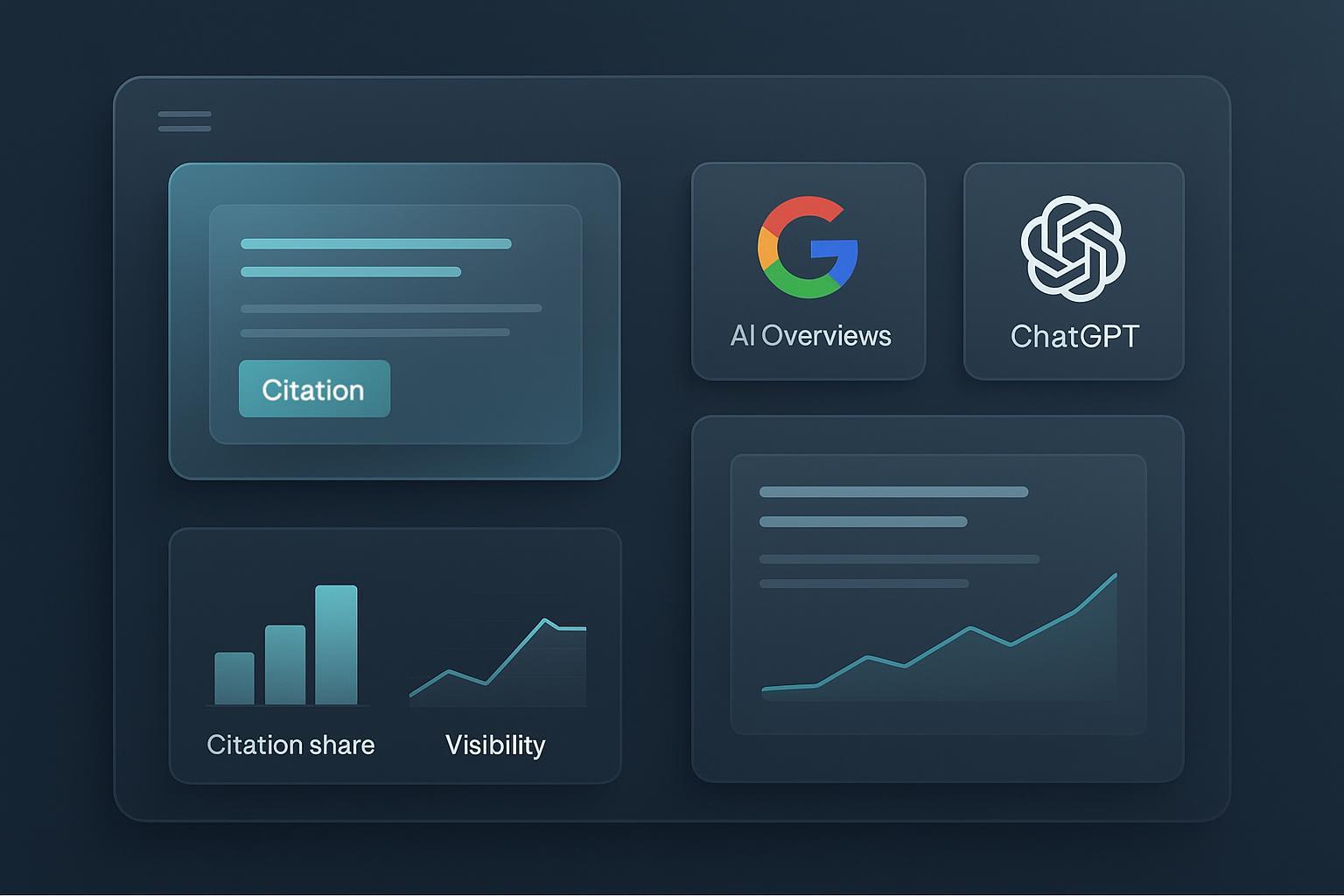
Clients aren’t just losing to competitors—they’re disappearing inside AI answers. When Google’s AI Overviews or ChatGPT summarize a topic, fewer people click through to the classic blue links. Multiple independent analyses through 2025 show meaningful click contraction when AI Overviews appear; for example, Search Engine Land summarized Seer Interactive’s 2025 update showing a 61% drop in organic CTR and 68% drop in paid CTR on impacted informational queries. The strategic takeaway: you win by earning citations and presence inside the AI result—not just by ranking beneath it.
GEO in one page: what’s different from SEO—and why clients care
GEO—Generative Engine Optimization—aims to make your content easy for AI systems to retrieve, interpret, and cite inside generated answers. It’s adjacent to SEO but not the same. Traditional SEO optimizes for rankings and clicks; GEO optimizes for citations and accurate inclusion in synthesized answers across engines like Google’s AI Overviews/Gemini, ChatGPT, and Perplexity. Authoritative explainers such as Search Engine Land’s GEO overview (2024) align on this shift from CTR to citation presence and answer quality. For a deeper side‑by‑side, see Traditional SEO vs GEO (Geneo): 2025 Marketer’s Comparison.
Why clients care is simple: AI modules often gate discovery. If your brand isn’t cited, it’s invisible at the moment of consideration. Conversely, when a brand is cited inside AI Overviews, Seer’s research indicates it captures materially more clicks than non‑cited brands on the same queries, reinforcing GEO as a growth lever.
The client‑winning GEO playbook for agencies
1) Run a GEO audit that reveals opportunity
Start with human language, not keywords. Build a prompt library from real customer questions, sales calls, help‑desk logs, and competitor reviews. Test these prompts across engines (Google AI Overviews/Gemini, ChatGPT variants with browsing, and Perplexity) and record:
- Answer Visibility Rate (do we appear at all?) and where
- Share of citations/mentions by engine and competitor
- Sentiment and accuracy (are facts right, neutral, or skewed?)
Pair that with a technical/site audit. Confirm crawlability and indexing. Add or repair schema.org for Article, FAQPage, HowTo, and Product where relevant. Strengthen entity clarity with mainEntity/about and sameAs links. Review robots.txt and AI crawler directives (e.g., Googlebot/Google‑Extended, GPTBot) per official documentation from Google Search Central’s robots.txt guide and OpenAI’s approach to data and AI (GPTBot/permissions). Consider an llms.txt file as an optional, forward‑looking index of your highest‑value resources—useful, but not yet a standard with guaranteed impact per balanced industry analysis from SERanking (2025).
Disclosure: Geneo is our product. Example workflow: agencies often use Geneo to centralize multi‑engine monitoring during the audit. You can track brand mentions and citations across Google AI Overviews, ChatGPT, and Perplexity, flag hallucinations and sentiment outliers, and benchmark competitors. That evidence—screens, trends, and gaps—becomes the spine of your pitch and your 90‑day roadmap.
2) Agree on GEO KPIs and dashboards clients can read
Executives don’t want a wall of prompts; they want a concise scorecard tied to outcomes. Define the metrics, the cadence, and why they matter. For deeper quality metrics of AI answers, see LLMO Metrics: Measure Accuracy, Relevance, and Personalization of AI Answers. Practitioner KPI syntheses, like Search Engine Land’s 2025 AI KPI overview, show convergence around visibility, share, quality, and speed‑to‑impact.
| KPI | What it means | Why it matters | Cadence |
|---|---|---|---|
| AI Citation Share | Percent of citations in tracked answers that credit your domain | Proves presence and authority inside AI results | Weekly trend, quarterly roll‑up |
| Answer Visibility Rate | Share of prompts where you appear at all in AI answers | Measures reach of your brand within synthesized results | Weekly |
| Sentiment & Accuracy | Polarity and factuality of mentions | Protects brand equity; reduces misinformation risk | Weekly monitoring; incident‑based |
| Time‑to‑Appearance | Days from content change to first appearance/citation | Indicates how quickly engines pick up updates | Track per change; monthly summary |
| Competitive SOV (AI) | Your share vs named competitors within the same answers | Frames market position inside AI, not just SERPs | Monthly |
3) Make content citation‑worthy (content + technical moves)
Think passage‑first. Put the clearest answer high on the page. Use semantic headings and give AI clean blocks it can lift without confusion. Include concise lists and a table where it helps disambiguate facts. Add authoritative outbound citations and author credentials with Person schema. Timestamp updates, maintain revision notes, and keep data fresh.
On the technical side, reinforce structure with schema.org (Article/FAQPage/HowTo/Product) and add entity linking via mainEntity/about and sameAs to reduce ambiguity. Maintain a crisp internal linking model around topic clusters so engines can map context. For AI access and governance, document your robots rules for Googlebot and any AI‑related tokens (Google‑Extended) and manage OpenAI’s GPTBot preferences per their stated approach to data and crawling. Treat llms.txt as a “treasure map,” not a silver bullet; balanced 2025 perspectives caution it’s optional and early.
4) Monitor multi‑engine and manage hallucinations
Set a cadence by engine. Google’s AI Overviews and Gemini deserve weekly checks on priority prompts. ChatGPT’s outputs vary more by retrieval mode; monitor with and without browsing. Perplexity is source‑forward, so it’s useful for auditing citation pathways.
Establish alerts and an incident workflow. When an inaccuracy appears, route it through triage: capture the prompt and answer, assess severity, update or clarify the relevant owned content, then consider outreach. Industry explainers document how to respond when AI Overviews are wrong—see SEO.com’s guidance on AIO errors and responses (2025). Keep a log for accountability across marketing, PR, and legal.
Also maintain crawler/opt‑out hygiene. Google and OpenAI provide canonical guidance on robots/permissions; some engines have incomplete or evolving policies. Track changes and document decisions so clients see you’re balancing reach with control.
5) Report like an executive: tie GEO outcomes to pipeline
Quarterly, tell a before/after story. Show baseline vs current Answer Visibility Rate by engine, AI Citation Share, sentiment/accuracy improvements, and the number and outcome of resolved hallucination incidents. Break out Competitive Share of Voice to show where you’re gaining ground. Add Time‑to‑Appearance metrics to prove operational speed. Link these to commercial indicators such as consideration‑stage conversion or assisted pipeline where possible.
For grounding and education, give stakeholders a primer on AI visibility and why it matters. If they want to compare tracking stacks, share a neutral tool comparison for AI brand visibility platforms to set expectations about capabilities and gaps.
Packaging GEO as a service: pricing, scope, and sales enablement
GEO sells best as a productized service with clear tiers:
- Audit & Roadmap: Prompt library, baseline visibility/citation/sentiment by engine, technical/site audit, 90‑day plan.
- Build & Enable: Content restructuring, schema/entity work, governance setup, crawler rules, optional llms.txt, dashboard build.
- Monitor & Improve: Weekly multi‑engine tracking, incident management, quarterly executive reports, and ongoing content experiments.
Set SLAs for response to misinformation incidents and define handoffs with content, PR, and legal. In proposals, reframe value from “rankings and clicks” to “citations, visibility inside AI answers, and accuracy.” Use simple language: “Our goal is to make your best content the obvious source AI engines cite when answering your prospects.”
Close: Turn AI uncertainty into client growth
Agencies that lead on GEO are winning competitive reviews because they can show where prospects are disappearing today—and exactly how to bring them back into view. If you want a monitoring backbone that supports this workflow across Google AI Overviews, ChatGPT, and Perplexity, consider trying Geneo for centralized tracking and reporting.