Geneo vs Top AEO Tools 2025: AI Search Visibility Comparison
Compare Geneo vs AthenaHQ, Profound, Semrush, Peec, BrightEdge, Goodie AI, and Relixir for AI search visibility in 2025. Review multi-engine coverage, white-label, and agency features.
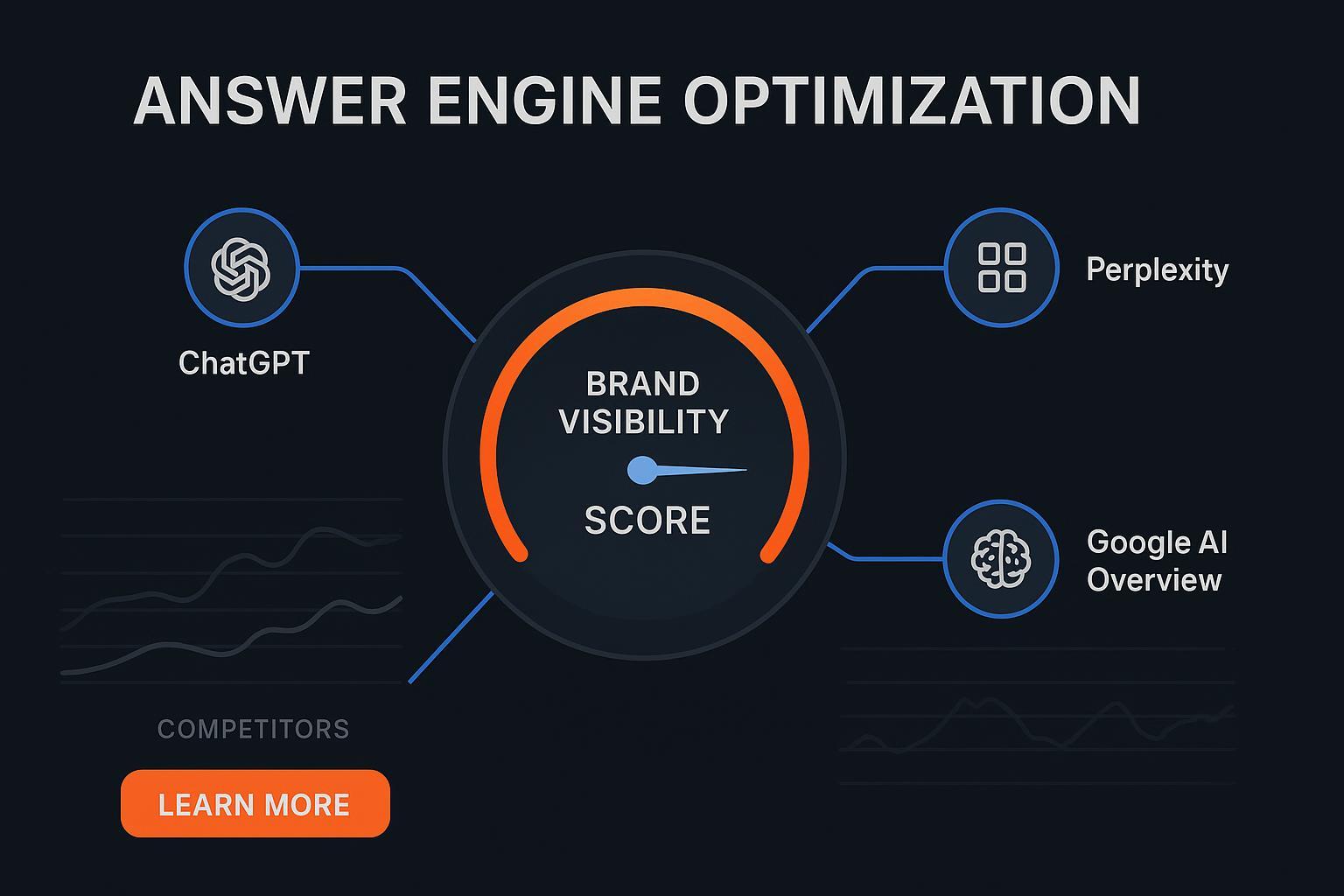
If you run an agency, how confident are you that clients show up inside AI answers—not just on Google’s blue links? Answer Engine Optimization (AEO), also known as Generative Engine Optimization (GEO), is about monitoring and improving visibility across AI-driven answer surfaces like ChatGPT, Perplexity, and Google AI Overviews. For a primer on GEO and why multi-engine monitoring matters, see the overview on Geneo’s homepage and the cross-engine context in this AI Overview tracking guide.
This comparison is built for agency leaders evaluating tools to add a scalable, evidence-backed service line in 2025. We group picks by real-world scenarios and, within each section, order vendors alphabetically. Pricing and feature claims are time-stamped as of 2025-12-17 and linked to authoritative sources.
Method highlights: We evaluate multi-engine coverage and refresh cadence, reporting/white-label maturity, decision accelerators (unified KPIs and actionable recommendations), cost predictability for multi-client portfolios, and integration/compliance signals. For the measurement basics behind accuracy, relevance, and sentiment, see LLMO metrics explained.
Quick comparison table
Tool | Primary coverage | Refresh cadence (public) | White-label/reporting | Optimization & workflows | Pricing (as of 2025-12-17) | Who it fits | Constraints/notes |
|---|---|---|---|---|---|---|---|
AthenaHQ | ChatGPT, Perplexity, Google AI Overviews/AI Mode; Gemini, Claude, Copilot, Grok | Credit-based runs; cadence depends on credits and engine count | Dashboards, BI connectors, SSO; agency-ready | Prompt analytics, sentiment, localization, CMS integrations | Lite ≈ $270–$295/mo; Growth ≈ $545+/mo; Enterprise custom source | Advanced teams, enterprise pilots | Credit consumption scales by engines; confirm plan limits |
BrightEdge Prism | AI Overviews + multiple LLMs (third-party summaries) | Approx. 48-hour updates (third-party) | Enterprise reporting within BrightEdge | Suite-integrated workflows | Custom enterprise pricing (confirm with vendor) | Large enterprises, global SEO | Official cadence list not public; verify in procurement |
Geneo | ChatGPT, Perplexity, Google AI Overviews | Daily change logs; real-time tracking language; historical trendlines | White-label + CNAME, client-ready dashboards agency page | Actionable recommendations; competitive analysis | Agency tiers via sales; short free trial/credits homepage | Agencies scaling 10–50 clients | Formal algorithm/API specs not public; confirm additional engines |
Goodie AI | ChatGPT, Perplexity, Gemini, Claude (vendor pages) | Not publicly enumerated | Reporting + Optimization Hub | Content writer, topic explorer, schema tips | Largely custom pricing (varies by tier) | Midmarket and enterprise | Limited recent vendor-neutral reviews; confirm integrations |
Peec AI | ChatGPT, Perplexity, AI Overviews; add-ons for Gemini, Claude, etc. | Daily (once every 24 hours) docs | Exports, Looker Studio | Mentions, visibility %, citations, sentiment | €89/€199; Enterprise €499+ pricing | SMBs, budget-conscious agencies | White-label maturity moderate; advanced features gated |
Profound | “10+ AI engines including ChatGPT” (vendor materials) | Enterprise-grade runs; cadence not fully public | SOC2/HIPAA claims; SSO; exports/API | Entity/KG operations, prompt simulation, dashboards | Custom enterprise pricing site | Enterprise SEO/knowledge teams | Details require demo; engine list not fully public |
Relixir | ChatGPT, Perplexity, Gemini; auto-publishing engine | Varies by tier/pilot; monitoring APIs | Governance/workflows; approvals | Automated content generation/publishing + monitoring | Monitoring tiers “near $99” (indicative); advanced pilots custom blog | Agencies and enterprises | Vendor-run performance claims; validate via pilot |
Semrush AI Visibility Toolkit | AI Overviews + LLM citations (ChatGPT/Perplexity/Gemini) | Daily/weekly/monthly patterns (toolkit KB) | Agency reporting within Semrush | Share of voice, sentiment, audit tools | ~$99/mo add-on per domain KB | Agencies already on Semrush | Per-domain cost stacks; plan limits vary |
Vendor capsules (alphabetical within sections)
BrightEdge Prism
Best for enterprises that already run BrightEdge at scale. Market reviews attribute Prism/AI Catalyst with AI Overviews and multiple LLMs, and note roughly 48‑hour data updates, though official cadence details aren’t fully public on brightedge.com. Expect suite-level reporting, enterprise analytics, and custom contracts. Pros: enterprise heft, integration into an established SEO stack. Constraints: verify engine list and update cadence directly; pricing is sales-led.
Geneo
Disclosure: Geneo is our product. Best for agencies that need multi-engine observability, client-ready reporting, and a unifying KPI. Geneo tracks ChatGPT, Perplexity, and Google AI Overviews, logs mentions/citations/sentiment, and maintains historical trendlines. The Brand Visibility Score (also called Geneo Score) rolls frequency, sentiment, and answer prominence into a single KPI—useful for stabilizing volatile AI surfaces across clients. Reporting is agency-first: white-label portals with CNAME, your logo/colors, and competitive dashboards. Recommendations move beyond raw data with schema/on‑page guidance informed by LLMO metrics. Pricing includes a short free trial and credits; agency tiers are available via Geneo’s homepage. Pros: agency-centric design, unified KPI, white-label + CNAME. Constraints: formal algorithm paper and public API spec are not published; confirm any additional engine coverage and per‑engine sampling cadence.
Goodie AI
Best for midmarket teams seeking monitoring plus optimization tooling in one place. Vendor materials list coverage for ChatGPT, Perplexity, Gemini, and Claude, alongside an Optimization Hub, content writer, and topic explorer. Reporting and guidance aim to shorten the path from diagnostics to content changes. Pricing is primarily custom; third‑party ranges vary. Pros: optimization workflows and writer built-in. Constraints: limited recent vendor-neutral reviews; integrations and governance need confirmation in demos.
Profound
Best for enterprise SEO and knowledge-graph‑oriented teams. Profound emphasizes entity/structured‑signals, prompt simulation, and cross‑engine visibility with dashboards for share of voice and sentiment. Compliance claims include SOC 2 Type II and HIPAA; exports/API and SSO are available. Pricing is custom, and key specifics (complete engine list, KG authoring UI) are typically covered in demos—start at tryprofound.com. Pros: enterprise governance, entity-first methodology. Constraints: many details are demo‑gated; verify cadence and engine coverage.
How to choose: three agency scenarios and budget notes
Rapid pilot for 3–5 clients (30–45 days): Pick a tool that sets up fast, has ready-made templates, and produces shareable reports. Daily or near-daily cadence helps you show progress quickly. You’ll also want a unifying KPI to stabilize volatility in AI answers. Geneo’s Brand Visibility Score and white‑label portals are designed for this pilot motion; Peec’s daily cadence and accessible pricing can also fit.
Scale-up to 20+ clients: Prioritize white-label maturity (CNAME), permissions, scheduled reporting, and a shared KPI that senior leaders can understand across accounts. Multi-engine depth with predictable unit economics matters: per-domain add-ons (e.g., Semrush) or credit models (e.g., AthenaHQ) can complicate budgets at scale unless you centralize plan limits and reporting templates.
Enterprise retainers and compliance-heavy accounts: Choose platforms with SSO/RBAC, audit trails, and published compliance claims. Profound and BrightEdge are oriented to enterprise needs; Relixir’s governance and approvals can also fit if you’re testing monitored automation. Always confirm cadence, engine lists, and data retention in procurement.
Think of it this way: your clients don’t care about the tool—they care about whether their brand is consistently visible, accurately cited, and compared fairly in AI answers. A single KPI they can trust goes a long way.
Why a unified KPI matters (and how to show it)
AI surfaces are volatile: one day you’re cited in ChatGPT, the next day a competitor grabs the mention. A unified KPI such as Geneo’s Brand Visibility Score brings frequency, sentiment, and answer prominence together, giving leaders a stable anchor for weekly or monthly reporting. To illustrate multi‑engine variance and the value of trendlines, see a real query report example in this monitoring snapshot and broader cross‑engine realities in this AIO tracking explainer.
Next step: Download the AEO/GEO framework checklist and join the trial
If you want to pressure-test AEO/GEO operations quickly, start with a shared framework your team and clients can rally around. Download the checklist and use a 30–45 day pilot to validate reporting cadence, KPI buy‑in, and multi‑engine coverage. You can explore Geneo’s approach to multi-engine monitoring and white‑label portals on Geneo’s homepage and the agency page, then join the trial to see how the Brand Visibility Score streamlines client reporting.
Prefer to keep reading? Ground your measurement model with LLMO metrics for accuracy, relevance, and personalization and review cross‑engine nuances in the AI Overview tracking guide.