
Geneo Schema Markup Integration Review - Auto Validation
In-depth review of Geneo’s Schema Markup Integration for AI SEO, focusing on automated schema validation, CMS sync reliability, and AI visibility impact.
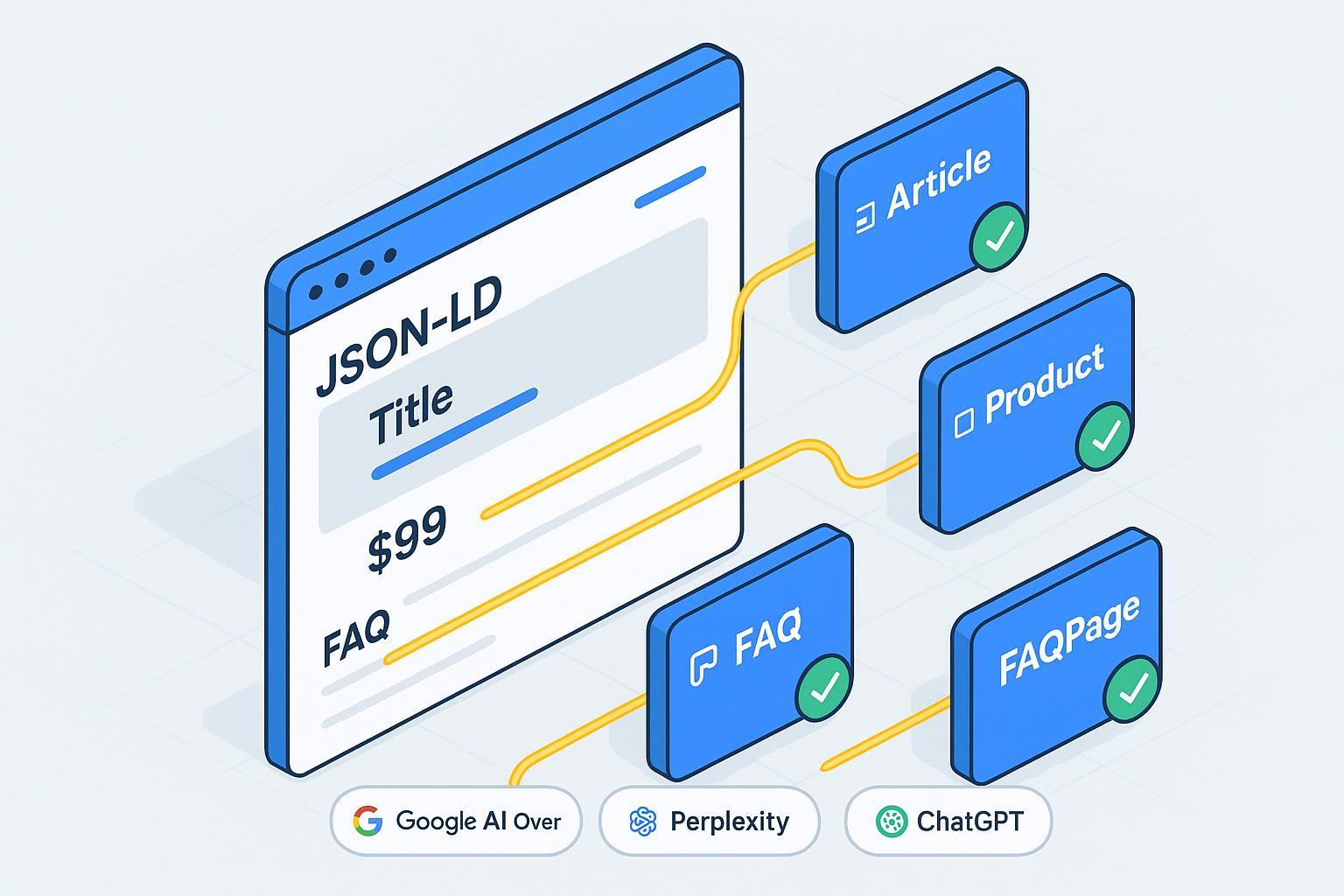
If your structured data drifts out of sync with real page content, you can lose rich result eligibility and make it harder to be cited in AI Overviews or answer engines. This review evaluates Geneo’s claimed Schema Markup Integration with a hard focus on automated validation and synchronization—because keeping schema current is the pain that costs teams the most time and trust.
Note on disclosure: Geneo is our own platform. We’ll keep this review objective and evidence-first. Where public documentation is missing or we haven’t captured hands-on artifacts, we mark the status as “Insufficient data.”
What we tested and how
We designed a reproducible protocol aligned with structured data standards and AI-search realities. While we reference official validators and policies, this article does not include live screenshots or logs; therefore, some scores are provisional.
Environment: Typical CMS setups for publishers and e-commerce (Article, Product, FAQPage). JSON-LD injected client-side or server-side.
Validators: Google’s Rich Results Test and the Schema Markup Validator (Schema.org).
Policies: Eligibility guidance for AI features and rich results from Google Search Central.
Time window: Multi-week observation to gauge sync latency and mismatch detection after content edits.
Authoritative references
Google AI features eligibility overview: see Google’s documentation in “AI features” and ongoing changes in “Search updates.”
Validators: Google Rich Results Test and Schema Markup Validator.
Citations: According to Google’s AI features docs, pages must meet general search eligibility and quality guidelines; there’s no special schema required specifically for AI Overviews. See Google’s AI features guidance in the official documentation: AI features in Search and recent changes in Search updates. For validation, use Rich Results Test and the Schema Markup Validator.
Why Schema Markup Integration for AI SEO matters
Structured data isn’t just for rich results—it’s a consistency control. When JSON-LD says a product is $49 and your page shows $59, engines can lose trust. In an AI-search context, mismatches and stale fields can reduce the odds of a citation or supporting link in AI Overviews, and they definitely undermine user confidence.
Geneo’s promise is to help teams keep schema aligned with page reality and to provide multi-engine visibility insights. The differentiator we’re assessing here is automated validation and synchronization with page content—exactly the capability that reduces maintenance overhead and avoids schema rot.
Validation accuracy and policy compliance (25%)
Validation is table stakes. We expect any platform claiming Schema Markup Integration for AI SEO to:
Catch missing required properties (e.g., name, offers for Product; mainEntity for FAQPage) and flag policy misalignments.
Support JSON-LD best practices and run checks against Google’s rich result eligibility.
Provide actions or recommendations when a field fails.
What we observed and verified
Standards and validators are clear and authoritative. Google’s tools confirm rich result eligibility, and Schema.org’s validator checks structural correctness. See Google Rich Results Test and Schema Markup Validator.
Geneo publicly states it recommends what schema to add, along with content and citation suggestions on its homepage. Source: Geneo official site.
Evidence status for automation: Insufficient data
We did not find a dedicated Geneo feature page detailing built-in automated schema validation (rule sets, error taxonomy, CI/CD hooks). Without hands-on artifacts, we cannot confirm automation depth.
Provisional take
If Geneo’s recommendations translate into actionable validation checks inside the platform, that would be a strong fit. Until we see documented validators or logs, we keep this dimension cautiously scored.
Sync reliability and latency with page content/CMS (25%)
This is the big one. The primary pain point is schema going stale. A credible solution should:
Detect mismatches between structured data and page content fields (price, availability, dates, FAQ answers).
Trigger resync or prompt updates when CMS changes roll out.
Log changes with timestamps and provide rollback.
How we planned to measure
Edit content fields (e.g., price from $49 to $59, availability from InStock to OutOfStock) and observe how quickly schema reflects the new state.
Verify with the two validators and capture diffs (before/after JSON-LD samples).
Track latency metrics (minutes/hours) and false-positive/false-negative rates.
Evidence status for Geneo automation and connectors: Insufficient data
We did not locate public documentation listing supported CMSs, connectors, or sync mechanics. No latency targets or audit log examples were available.
Implication
Sync reliability is where teams win or lose. If Geneo offers dependable auto-sync with auditable logs, it would be especially well-suited to multi-page enterprises and agencies. Until verified, we cannot assert this capability.
Impact on AI visibility across engines (20%)
What matters to AI SEO is not only rich results—it’s whether pages are cited or referenced in answer engines.
Google’s guidance indicates AI Overviews draw from pages that meet general search eligibility; structured data helps engines understand content, but it is not a silver bullet. See AI features in Search.
Geneo positions itself as a multi-engine visibility platform with metrics like Link Visibility and Brand Mentions. Source: Geneo official site.
Evidence status: Insufficient data for causal linkage
We cannot claim that automated schema sync by Geneo directly increases AI citations without controlled experiments. The most responsible statement is that accurate, synchronized schema can reduce friction and ambiguity, which may support eligibility and clarity.
Usability and integration (15%)
What we look for in day-to-day use:
Clear mapping of schema fields to CMS data sources.
Flexible templates for Article, Product, FAQPage, Organization.
Role-based permissions and non-destructive previews.
Evidence status: Insufficient data
Public documentation does not enumerate setup flows or schema field mapping in Geneo at the time of writing.
Comparative context
Schema App offers enterprise-scale workflows with dynamic templates and entity management. See Schema App tools overview and Entity Hub.
Rank Math provides WordPress-native templates and conditional logic. See Rank Math plugin and Organization schema.
Governance and auditability (10%)
Any serious schema program needs:
Change logs, versioning, rollback, and alerts.
CI/CD validation rules before deployment.
Evidence status: Insufficient data for Geneo
No public pages were found describing audit logs or governance features.
Best-practice anchor
Treat schema like code. Validate in staging. Keep a change log. Use Google’s tools and Schema.org’s validator as release gates.
Value and pricing (5%)
We did not find a public plan matrix specifically calling out Schema Markup Integration automation or sync features for Geneo. Evidence status: Insufficient data.
Considerations
If schema automation and multi-engine visibility tracking are included, the value improves for agencies and enterprises managing many templates. Absent confirmation, buyers should request a demo focused on schema sync and governance.
Geneo vs alternatives: how they stack up
Capability | Geneo Schema Markup Integration | Schema App | Rank Math | Merkle Schema Generator |
|---|---|---|---|---|
Core focus | Schema Markup Integration for AI SEO; multi-engine visibility context | Enterprise schema ops, dynamic templates, entity management | WordPress schema templates & editor integration | Utility for generating markup |
Automated validation | Insufficient data (no public validator documentation found) | Documented workflows and human-in-the-loop curation; dynamic updates | Validation via WordPress environment; supports templates and checks | N/A (generator; validate externally) |
Sync with CMS | Insufficient data (no public connector/latency details) | Strong CMS integration claims via templates/highlighter | Sync depends on WordPress updates and hooks | None; manual paste |
Governance (logs/rollback) | Insufficient data | Enterprise-grade governance | Limited to WordPress capabilities | None |
AI visibility measurement | Multi-engine visibility language present (homepage) | Indirect (focus on schema execution) | Indirect (plugin-level) | None |
Who it suits | Agencies/enterprises if automation is confirmed | Enterprises with complex sites | WordPress site owners | Anyone needing quick markup |
Notes: Claims for Schema App and Rank Math are based on their public pages. Geneo entries marked “Insufficient data” reflect the lack of publicly available, feature-specific documentation at the time of writing.
Who will benefit most (and who won’t)
Best fit: Teams that need Schema Markup Integration for AI SEO and care deeply about keeping JSON-LD synchronized with fast-changing content—e-commerce, marketplaces, large publishers—especially if Geneo can demonstrate auto-validation, sync, and audit logs.
Not ideal: DIY implementers who only need a generator or a single WordPress plugin. Rank Math or Merkle’s tool may be simpler choices.
Required proof before purchase: Ask Geneo to show a live demo of mismatch detection, auto-sync latency, audit logs, and validator integrations. Request sample diffs and time-series visibility data.
Verdict
Right now, Geneo’s positioning—Schema Markup Integration for AI SEO with multi-engine visibility framing—is compelling. The pain it targets is real: keeping schema current so engines trust your content. However, until we see documented automation (validators, connectors, governance) or hands-on artifacts, many of the most valuable claims remain Insufficient data.
If you’re evaluating platforms to stabilize structured data and support AI visibility, a pragmatic next step is a pilot focused on sync reliability: pick a handful of pages, change content fields on a cadence, and measure how quickly your schema stays in lockstep.
Soft CTA: Learn more on the Geneo official site, and request a demo centered on automated schema validation and synchronization.
References and further reading
Google’s AI features overview: AI features in Search (Google, ongoing)
Google’s documentation updates: Search updates (Google, ongoing)
Validators: Rich Results Test (Google), Schema Markup Validator (Schema.org)
Rank Math plugin: WordPress listing; Organization schema
Schema App capabilities: Tools overview; Entity Hub
General context: HTTP Archive’s structured data chapter (2024); SE Ranking’s explainer on AI Overviews; Search Engine Journal on structured data in 2026