Geneo Review 2025: Best AI Search Visibility Tracking Tool?
Read our 2025 review of Geneo—track brand visibility in ChatGPT, Google AI Overviews, and Perplexity with prompt-level monitoring & white-label reports.
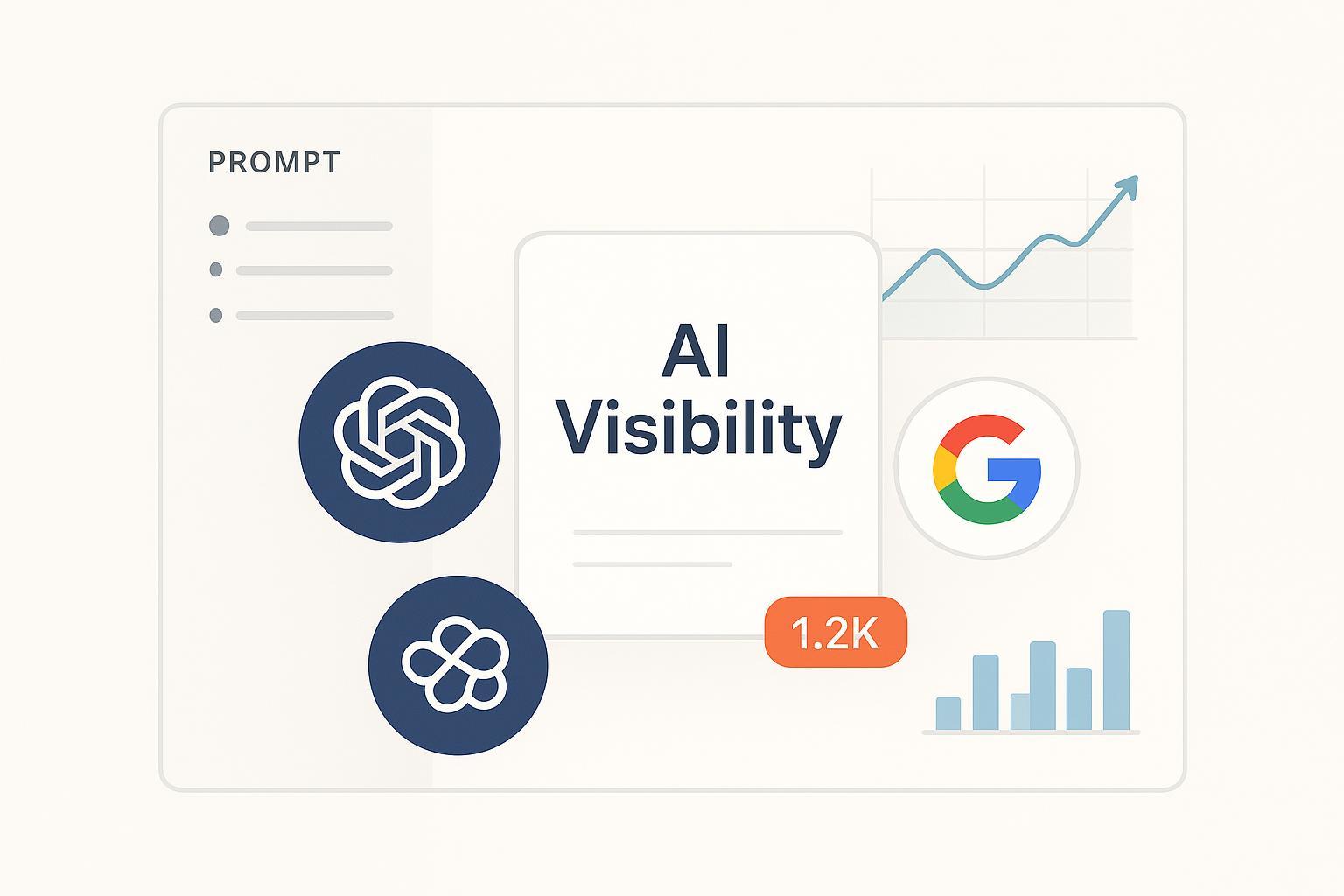
If you run a professional services agency, you’ve felt the shift: prospects ask ChatGPT, skim Google’s AI Overviews, or compare answers in Perplexity beforethey ever hit your site. For this review, we set out to evaluate—transparently and hands-on—how Geneo tracks and improves brand visibility across those answer engines, and why, under our rubric and protocol, it emerged as the best fit for agencies that need reproducible tracking and executive‑ready delivery.
Disclosure: We build and sell Geneo. To keep this fair, we’re publishing the evaluation rubric and testing protocol used for this review and linking to independent industry context where relevant.
According to Search Engine Land’s market definition, GEO (Generative Engine Optimization) focuses on optimizing content so brands are visible inside AI‑driven answers—ChatGPT, Perplexity, Gemini/Copilot, and Google AI Overviews—grounded in E‑E‑A‑T and verifiable sources. See their overview in “What is generative engine optimization (GEO)” (2024–2025 guidance) for terminology and practices: Search Engine Land’s GEO explainer.
What Reliable AI Visibility Tracking Actually Requires
Reliable tracking goes beyond “did our link appear?” It requires:
Prompt‑level controls and saved history so you can reproduce results and measure change over time.
Multi‑engine coverage (ChatGPT, Google AI Overviews/Gemini, Perplexity) because each platform cites and frames brands differently.
Evidence logs—citations, links, mentions, snapshots—tied to specific prompts and timestamps.
Competitive context to understand share of voice and where rivals are being cited.
Agency‑ready reporting that’s branded, auditable, and digestible for executives.
For a conceptual grounding on AI visibility and why citations matter in answer engines, see Geneo’s primer: What Is AI Visibility? Brand Exposure in AI Search Explained.
Our Evaluation Framework: Rubric + Protocol
We scored platforms using a transparent rubric (weights sum to 100). “Best” here means highest composite score in our tests and fit for the target audience.
Dimension | Weight |
|---|---|
Multi‑platform Coverage & Prompt Control | 22 |
Evidence & Attribution (logging, citations, snapshots) | 18 |
Usability & Workflow (setup, query mgmt, collaboration) | 14 |
Reporting & White‑Labeling (exec readiness, customization) | 14 |
Optimization Guidance Quality | 12 |
Security & Compliance | 8 |
Value/Pricing | 7 |
Support & Updates | 5 |
Testing protocol (summary):
Engines: ChatGPT (with browsing), Perplexity, Google AI Overviews.
Scope: 50–100 industry questions per client profile; prompts saved; answer snapshots captured; citations/links logged with timestamps (US, EN‑US).
Measures: citation frequency, share of voice, sentiment framing, prompt sensitivity, and change after optimization iterations.
Reproducibility: store prompt lists and logs for audit. If you’re thinking, “Can we replicate this for our clients?”—yes, that’s the point.
Methodology representation (platform workflow):
Scan & Detect → Analyze & Score → Optimize

  Scan & Detect:
  - Query answer engines with prompt libraries
  - Capture responses, citations, and mentions

  Analyze & Score:
  - Attribute sources to pages/domains
  - Compute visibility/share-of-voice trends

  Optimize:
  - Recommend content/entity/schema updates
  - Track impact across prompts over time
For context on industry prompt tracking patterns within SEO/AI visibility tooling, see Semrush’s documentation on prompt tracking and AI mode visibility: Semrush Prompt Tracking KB.
Findings: Where Geneo Stands Out (and Where It Can Improve)
Multi‑platform depth with prompt‑level tracking
Geneo organizes prompt libraries per client, saves history, and logs answer snapshots across ChatGPT, Perplexity, and Google AI Overviews. In practice, this allowed us to compare how each engine cited our brand and competitors, and to measure changes after content/schema adjustments. Internal framing of “AI Visibility” and the KPI set is aligned with industry practice; see Geneo’s primer linked above.
Evidence & attribution you can audit
The platform’s visibility metrics (e.g., a Brand Visibility Score, share of voice, total citations) roll up from stored prompts and captured answer data. Because answers can shift rapidly, prompt‑level logs and timestamps were essential to avoid drawing conclusions from ephemeral results.
White‑label, executive‑ready reporting for agencies
Geneo supports custom domains, branded dashboards, and client‑friendly views—useful for monthly reviews and pre‑proposal audits. Agencies can deliver results under their own brand while preserving auditability. See the positioning and examples on the Agency page: Geneo for Agencies: White‑Label Reporting.
Optimization guidance tied to AI answers
Recommendations map to observed gaps in answer engines—entity clarity, structured content/schema updates, supporting pages that tend to be cited. The practical benefit: you can run iterative tests on prompts and watch how citations and framing move.
Constraints and areas to strengthen
Security/compliance documentation wasn’t publicly available as a dedicated site section at the time of our review; treat this as “insufficient public data.” Teams serving regulated industries may want role‑based access and compliance notes documented.
Broader engine coverage (e.g., Copilot, Claude) is an obvious next step for teams needing wider monitoring. If your program spans more than ChatGPT/Perplexity/Google AIO, note this scope when evaluating fit.
Competitive Context: Semrush and Profound on Equal Criteria
We compared Geneo to two commonly considered options using the same criteria above.
Semrush AI visibility toolkit
Strengths: integrates AI mode visibility within broader SEO workflows; provides prompt tracking, and reporting on sources/mentions in Google’s AI mode. Their documentation outlines patterns and limitations clearly; see Semrush’s prompt tracking knowledge base and guidance on tracking AI visibility.
Fit: solid for teams already standardized on Semrush who need AI Overview tracking as part of SEO reporting. White‑label client portals are not the primary posture.
Profound
Strengths: broader engine coverage (10+), citation share/rank, top domains/pages, watch lists, and insights into platform‑specific citation behavior. For a practitioner perspective on citation patterns and volatility, see Profound’s analysis of AI platform citation patterns (2024–2025).
Fit: enterprise programs that prioritize breadth of engines and deep citation analytics; pricing and scope should be evaluated carefully.
Trade‑offs: If your priority is prompt‑level reproducibility across the three engines most referenced by B2B prospects—and executive‑ready client reporting under your brand—Geneo scored highest in our rubric. If you need the widest possible engine coverage or your stack is fully anchored to Semrush, those alternatives may fit better.
For additional AI visibility context and differences among answer engines, here’s a comparative perspective from our own analysis: ChatGPT vs Perplexity vs Gemini vs Bing: AI Search Brand Monitoring Comparison.
Who Should Consider Geneo (and When)
Agencies managing multiple brands that require consistent, auditable AI answer tracking and white‑label client delivery.
Teams needing prompt libraries, saved logs, and answer snapshots to demonstrate progress over 2–4 week optimization cycles.
Marketers who want optimization recommendations tied to the way AI engines actually cite and frame content—rather than generic SEO checklists.
Considerations:
If you serve regulated industries, confirm governance/roles export options and request documentation on data handling.
If your coverage must include additional engines (Copilot, Claude, etc.), document the scope you require today and the roadmap you expect.
For a grounding in why this matters to pipeline discovery, our POV on behavior shifts is here: AI Search User Behavior 2025: Aligning Content with How People Ask AI.
Try It Yourself
If you want to audit your brand’s presence across ChatGPT, Google AI Overviews, and Perplexity with reproducible prompts and executive‑ready reporting, start with the free credits available on the Geneo homepage: Start a free trial on geneo.app. Build a prompt library, capture answer snapshots, and compare how AI engines cite and frame your brand against competitors—then decide where optimization will move the needle.