
How Geneo Revolutionizes AI Search Optimization in 2025
Discover 2025’s best practices for AI search optimization. Learn how Geneo helps agencies counter traffic loss from AI answer pages and restore brand visibility.
How Geneo Revolutionizes AI Search Optimization Techniques in 2025
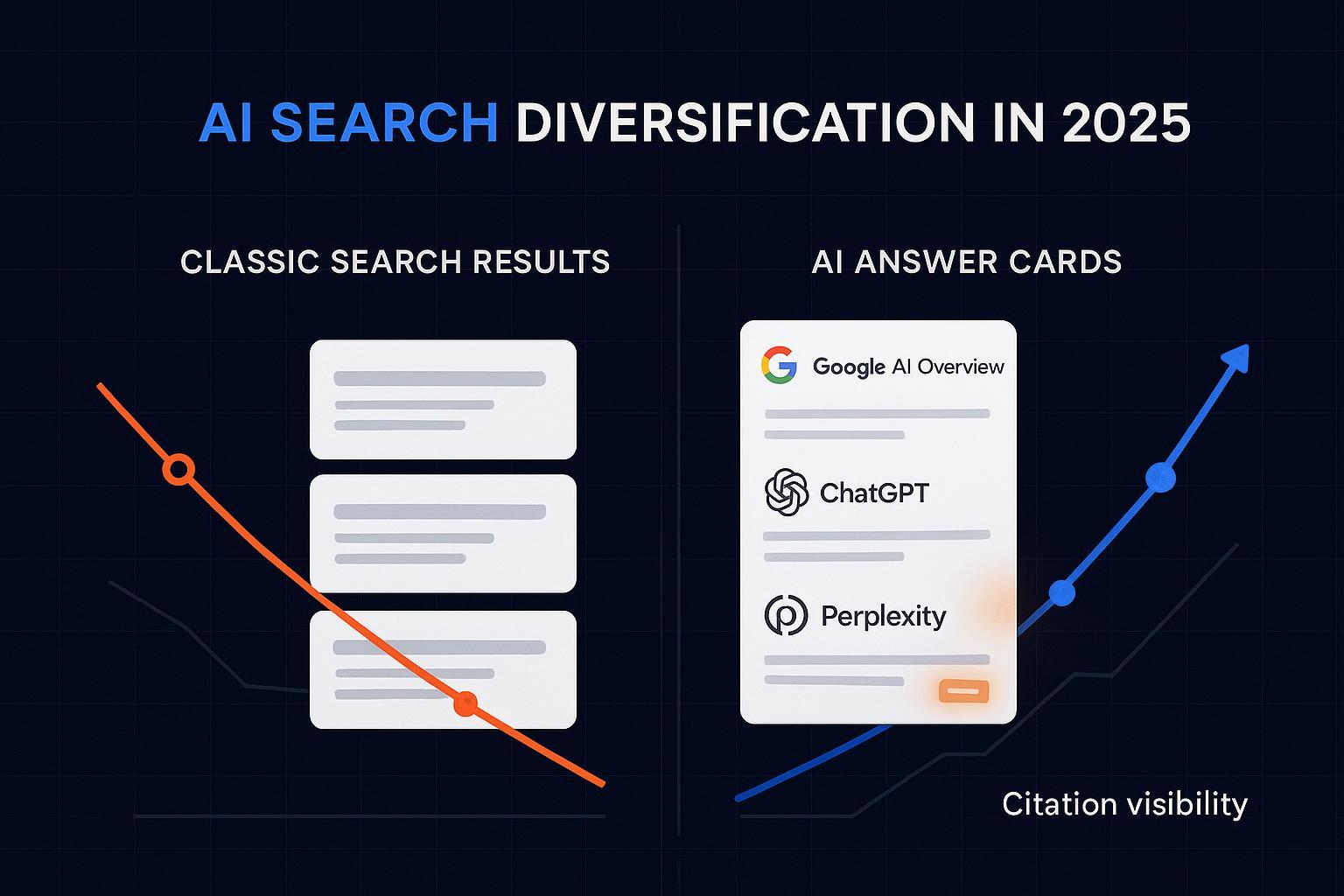
If you lead an agency, you’ve felt it: informational queries that once fed your funnel now stall at AI answer pages. CTR slides, reports look leaner, and retainers get questioned. Here’s the deal—AI citations have become the new “position zero.” When your brand is named and linked inside an AI answer, you claw back clicks, trust, and pipeline even as overall CTR drops.
The reality of answer‑page diversion
Independent 2025 analyses all point to a structural shift. Seer Interactive’s September 2025 update (3,119 informational queries; 42 organizations) found organic CTR fell about 61% (1.76% → 0.61%) and paid CTR about 68% when AI Overviews were present; cited brands saw roughly +35% organic and +91% paid clicks vs. non‑cited peers. Pew Research Center’s July 2025 read concluded users shown an AI summary were less likely to click links at all, with high “end rates” and minimal engagement with summary links—classic zero‑click behavior per Pew’s 2025 analysis of Google AI summaries.
Other cohorts show different magnitudes, but the direction is the same. eMarketer, citing Ahrefs, reported a ~34.5% position‑one CTR decline for AI Overview keywords (2024→2025), while Semrush noted fluctuating prevalence through 2025 (Dec 2025 analysis of >10M keywords). BrightEdge observed AI search referrals growing quickly yet still <1% of total referrals—organic search remains the main conversion driver, per Search Engine Land’s coverage of BrightEdge’s Sept 2025 report. The takeaway: expect suppressed clicks on info queries, but treat AI citations as your offset lever.
From classic SEO to GEO/AEO—what changes in measurement
Classic KPIs—rankings, clicks, impressions—matter, but they no longer tell the whole story. Agencies need an “AI visibility” lens: how often your content is cited, how prominently you’re recommended, and what sentiment surrounds your brand in AI answers. If you’re new to the concept, start with this explainer on AI Visibility and brand exposure in AI search.
Dimension | Classic SEO KPIs | GEO/AEO (AI Visibility) KPIs |
|---|---|---|
Discovery | Rankings, impressions | Citation frequency across engines; share of voice within answers |
Engagement | CTR, time on page | Recommendation prominence (e.g., “top pick”), snippet position within answers |
Reputation | Backlinks, brand mentions | Sentiment of mentions; language used around brand |
Attribution | Conversions, assisted conversions | Assisted conversions from AI referrals; “How did you hear about us?” signals |
Change tracking | Ranking movements | Answer inclusion change logs by topic/prompt; engine‑specific inclusion cadence |
Best‑practice playbook agencies can run now
Think of your pages like well‑labeled “answer modules.” The clearer the answer, the easier it is for AI engines to cite you.
Technical eligibility: ensure crawlability (HTTP 200, indexable), server‑side rendered HTML for core content, mobile performance, clean canonicalization, HTTPS.
Structure for extraction: place short, direct answers up top; add FAQs/HowTos, lists, tables; keep paragraphs tight; match structured data (FAQPage, HowTo, Article) to visible copy.
Authority & provenance: publish unique data, expert bylines, dated references; add external citations so engines—and users—can verify.
Multi‑engine monitoring & attribution: track weekly inclusion across Google AI Overviews/AI Mode, Bing Copilot, ChatGPT, and Perplexity; tag campaigns; capture “How did you hear about us?” in forms.
Iterate: build prompt/topic taxonomies, test 20–30 variants per high‑value theme, and refresh content cadence.
For official platform pointers, see Google’s 2025 guidance on succeeding in AI Search and Microsoft’s advice on optimizing content for inclusion in AI search answers (Oct 2025).
Example integration—Geneo in your operating cadence
Disclosure: Geneo is our product.
Use Geneo as the control panel for your AI visibility program—an agency‑first platform that tracks citations, sentiment, and competitive gaps across ChatGPT, Perplexity, and Google AI Overviews/AI Mode. In practice, Geneo consolidates:
Multi‑engine monitoring with topic/prompt taxonomies and weekly inclusion logs.
A Brand Visibility Score that blends citation frequency, sentiment, and recommendation prominence.
Competitive benchmarking to reveal which rivals are being cited and where.
White‑label reporting and custom domains (CNAME) so client dashboards carry your brand.
Actionable recommendations mapped to engine‑specific patterns—turning evidence into edits your team can ship.
This is an example integration to streamline auditing and reporting—not a performance guarantee. The value is speed, clarity, and client‑ready narrative when AI answer pages are siphoning clicks.
Leadership operating rhythm and governance
Agencies that adapt quickly treat GEO/AEO like a product function. Set your cadence:
Weekly: monitor inclusion deltas by topic; log content changes; test prompt variants; update priority lists.
Monthly: review citation share of voice, recommendation prominence, sentiment patterns; initiate PR/DF coverage if expertise gaps persist.
Quarterly: report AI visibility KPIs alongside organic outcomes, including assisted conversions and visibility lifts. Map wins and losses to specific editorial and technical changes.
Make it a cross‑team program: Leadership sets KPIs and the operating cadence; SEO owners run audits, structure, and measurement; Client Services turns dashboards into renewal narratives. For behavior patterns and refresh cycles, see AI Search User Behavior in 2025, and for mitigation planning, review our agency playbook for preparing for major organic traffic drops.
Next steps
Start Free Analysis to establish your AI visibility baseline across Google AI Overviews/AI Mode, ChatGPT, and Perplexity. Quantify citation frequency, sentiment, and recommendation prominence, then prioritize the pages and prompts most likely to restore pipeline in 2025.