Geneo 2026 Review: Earlier Cross-Engine Tone Drift Detection for Agencies
Discover Geneo’s 2026 update for agencies: faster cross-engine brand tone drift detection, alignment scoring, automated alerts, and white-label reporting across ChatGPT, Google AI Overview, and Perplexity.
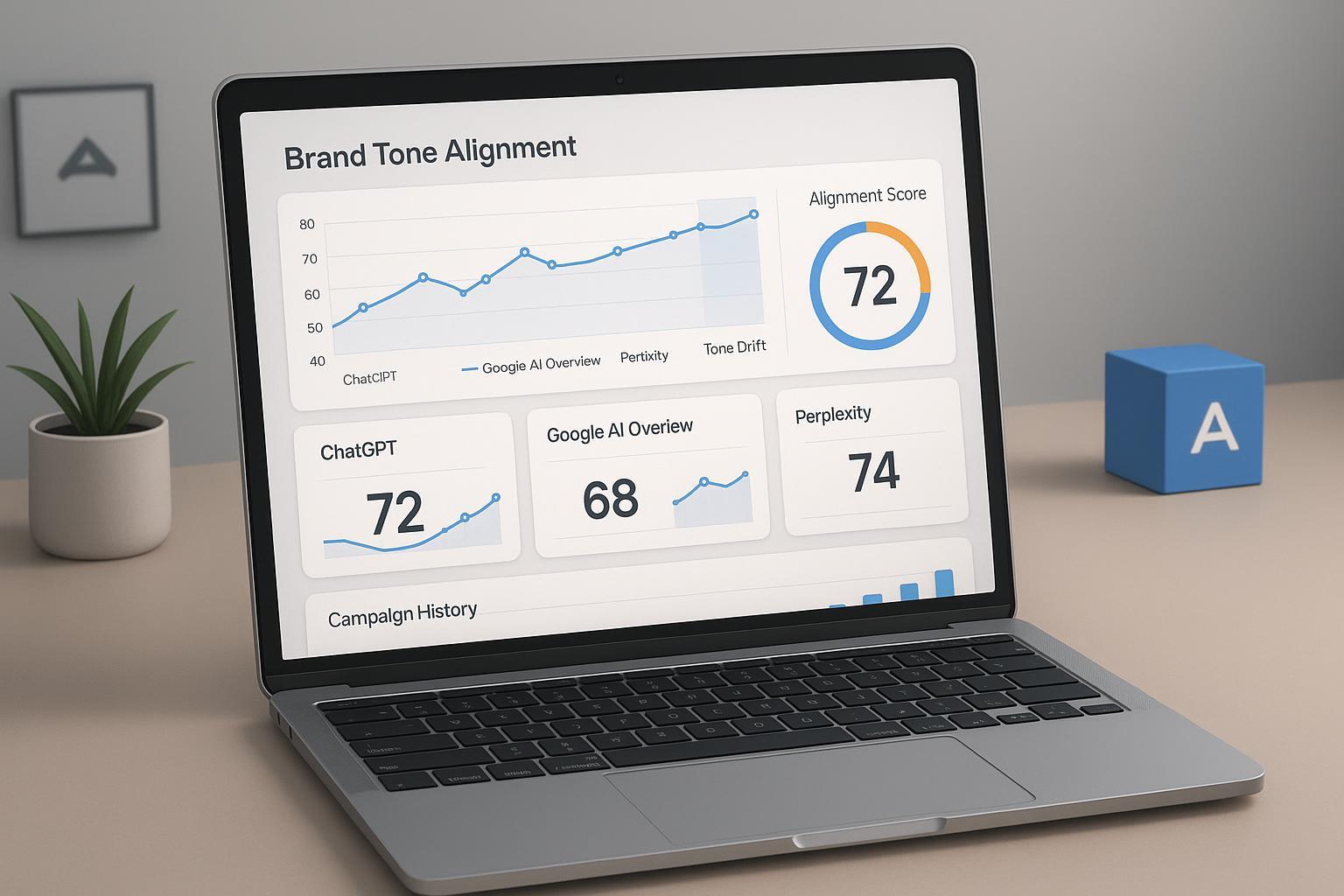
If your brand sounds confident on ChatGPT but oddly cautious in Google’s AI Overviews, you’ve got a tone problem. This review covers Geneo’s 2026 updates aimed at detecting that cross‑engine tone drift earlier—and making it manageable for agencies running multi‑client programs. Conflict of interest disclosure: this is a first‑party evaluation of Geneo. We’ll stay objective, cite authoritative sources, outline our testing protocol, and mark gaps as Insufficient data.
GEO vs. SEO—and why tone alignment matters in AI answers
Traditional SEO tunes pages for web search rankings. Generative Engine Optimization (GEO) focuses on how AI systems synthesize and present answers. For a deeper primer on GEO vs SEO, see Geneo’s overview in the Traditional SEO vs GEO comparison.
Tone alignment isn’t just sentiment. Sentiment flags positive/neutral/negative attitudes, while tone reflects style and stance—formal vs conversational, authoritative vs tentative, brand‑voice consistency vs drift. Because AI engines draw from different sources and patterns, answers to the same question can sound different across platforms. Google documents how AI features like AI Overviews and AI Mode surface diverse sources and are logged in Search Console, which expands what marketers must monitor beyond classic rankings. See Google’s AI features guidance (Search Central, 2025). Independent research shows answers vary by platform; for instance, Yext’s 2025 cohort found distinct citation profiles between Google/Gemini, ChatGPT, and Perplexity, shaping recommendations and tone. Reference: Yext’s “Same Search, Different Results” (2025).
What’s new in Geneo (2026)
Geneo’s update centers on earlier drift detection across ChatGPT, Perplexity, and Google AI Overviews. The intent is to flag misalignment fast enough for agencies to investigate and correct before campaigns go off‑voice.
Cross‑Engine Tone Alignment Score (proposed): a normalized index intended to compare style, sentiment, and stance against brand guidelines per engine. Trend views target rolling windows (e.g., 7/30/90 days) with confidence ranges.
Alerting and collaboration: threshold‑based notifications, assignable tasks, and remediation notes designed for multi‑client teams.
Historical reporting: campaign/stage filters and exportable charts, with white‑label outputs on a custom domain for agency stakeholders.
Note: some specifics—formal taxonomy, exact weighting, and threshold defaults—are not publicly documented. We mark these as Insufficient data until demo or docs confirm them.
Methodology & evidence (testing protocol)
We followed a practical cadence based on Geneo’s published operations guidance: weekly monitoring for alerts/drift, monthly reporting, and quarterly prompt‑set revisions. See Geneo’s recommended practices in AI traffic tracking best practices (2025).
Prompt sets and sampling windows: reproducible question banks aligned to brand guidelines; rotating windows to reduce bias.
Normalization intent: consolidate cross‑engine observations into comparable views; visibility normalization is documented, but formal tone normalization remains pending.
Auditability: prompt/version logs and change notes; confidence intervals for tone trends are not yet publicly described.
Where documentation or demo artifacts were unavailable, we label Insufficient data.
Agency anchor use case: white‑label tone governance across clients
Agencies need a practical way to spot tone drift across engines and present fixes without drowning in screenshots. Geneo’s white‑label capability (custom domain, branded dashboards, client seats) is built for this. See the Agency page for white‑label reporting.
A workable multi‑client flow looks like this:
Establish per‑client prompt banks reflecting brand voice standards and common buyer‑journey questions.
Track answers across ChatGPT, Google AI Overviews, and Perplexity; review weekly deltas for suspected tone drift (e.g., increasingly tentative language in one engine).
Configure alerts that route to the right account owners; attach remediation notes (content tweaks, prompt adjustments, citation checks).
Publish monthly white‑label reports with campaign/stage annotations; export charts for stakeholder review.
Run quarterly audits to re‑baseline tone and update prompt sets.
That flow isn’t flashy, but it’s reliable—and it helps agencies deliver consistent voice during launches or high‑visibility periods.
Parity comparison: Profound, Peec AI, and a DIY stack
Below is a compact view of how Geneo’s update positions against typical alternatives. Notes reflect publicly available information; where specifics aren’t documented, we mark Insufficient data.
Solution | Engines covered | Tone tracking clarity | Alerts/workflows | Reporting & white‑label |
|---|---|---|---|---|
Geneo | ChatGPT, Google AI Overviews, Perplexity | Proposed alignment score; taxonomy details Insufficient data | Threshold alerts; assignable tasks; remediation notes (details Insufficient data) | Historical trends; campaign/stage filters; white‑label on custom domain |
Profound | Broad multi‑engine; enterprise focus | Mentions sentiment/context; formal tone taxonomy Insufficient data | Workflows and enterprise governance | Strong analytics; enterprise exports; white‑label varies by tier |
Peec AI | Multi‑platform; quick onboarding | Sentiment and visibility; tone alignment methodology Insufficient data | Basic alerts; collaboration features vary | Reports and dashboards; white‑label options depend on plan |
DIY stack (BI + prompt testing) | Depends on setup | Whatever you design; comparability hard | Custom, but labor‑intensive | Custom reporting; no native white‑label unless built |
For more parity context, see Geneo’s analyses: Profound review with alternatives (2025) and Profound vs. Peec AI for agencies (2025).
Evaluation rubric and current status
We score readiness across seven dimensions. Where hands‑on or documentation is lacking, items are marked Insufficient data.
Measurement fidelity and reproducibility (25): weekly/monthly/quarterly cadence guidance and prompt logging are clear; formal tone normalization and confidence intervals are Insufficient data.
Cross‑engine comparability (20): multi‑engine coverage is documented; the transparent tone alignment score definition is Insufficient data.
Alerting and workflows (15): references exist to threshold alerts, tasks, and remediation notes; details (defaults, routing rules) are Insufficient data.
Reporting and visualization (15): historical trends, campaign/stage filters, exports, and white‑label are documented; strong for agency scenarios.
Coverage and ecosystem (10): coverage for ChatGPT, Google AI Overviews, and Perplexity is clear; sampling frequency per engine is partially documented; citation mechanics vary by engine.
Usability and onboarding (10): agency‑friendly setup (custom domain, branding, client seats) appears straightforward.
Privacy, security, compliance (5): general security measures noted; RBAC/audit trails/certifications are Insufficient data.
Overall: strong direction for agencies seeking earlier tone drift detection and white‑label governance, with methodology transparency still emerging.
Gaps and roadmap
For industry‑grade tone alignment, buyers will want:
A published tone taxonomy and weighting scheme (style, sentiment, stance) with examples.
A documented cross‑engine alignment formula and normalization, including confidence intervals.
Clear alert thresholds tied specifically to tone drift, plus recommended remediation playbooks.
RBAC specifics, audit trails, and data provenance; certifications where applicable.
From a process standpoint, agencies should pilot with a small client set, gather weekly drift logs, and align internal SLAs around alert response and remediation.
Who should adopt now—and who should wait
Adopt now if:
You run multi‑client programs and need earlier detection of tone drift across ChatGPT, Google AI Overviews, and Perplexity.
You value white‑label reporting on a custom domain and consolidated historical views by campaign/stage.
Consider waiting for more detail if:
You require a published, formal tone alignment methodology with confidence intervals and certified governance controls.
Closing
The 2026 Geneo update moves agencies toward earlier, practical tone drift detection across major AI engines, paired with white‑label reporting workflows that clients actually understand. For platform details and demos, visit the official Geneo site.