Fixing Weak Entity Signals: A 2025 Case Study and Playbook for SEO and AI Search
Learn 2025 best practices for diagnosing, repairing, and monitoring weak entity signals in SEO and AI search. Improve Knowledge Graph authority and AI visibility. Actionable workflows, metrics, and case evidence.
A B2B brand came to us with a paradox: high-quality content, decent backlinks, yet slipping citations in AI answers and inconsistent brand panels. If algorithms can’t confidently pin down who you are, what you do, and how your content ties together, they hedge—your visibility drifts. That’s the heart of weak entity signals, and in 2025, it’s where many otherwise strong sites stall.
What Weak Entity Signals Look Like in 2025
Weak entity signals show up as mismatched Organization schema, multiple brand-name variants across pages, author bios without consistent Person markup, and missing or low-quality sameAs links to authoritative profiles. Sometimes the logo and site name differ between markup and UI. Other times, off-site corroboration is thin or contradictory, so systems can’t reconcile identity. None of these issues alone doom performance, but together they erode trust—especially as AI experiences lean on structured understanding and the Knowledge Graph. Google’s overview of AI features clarifies that results draw on a custom model plus core ranking systems with knowledge sources and structured understanding; schema supports comprehension but isn’t a ticket to inclusion (see Google’s guidance in the AI features and your website hub and the Intro to structured data). And while E-E-A-T frames how quality is assessed, it isn’t a single ranking factor; it’s a lens for experience, expertise, authority, and trust per the Search Quality Evaluator Guidelines (2025).
The Diagnostic Case Audit
We audited a mid-market SaaS site that had lost AI citations for key problem-solution queries. First, on-site schema: we found two competing Organization blocks with different @id values, inconsistent site names, and author pages missing Person entities. Next, off-site corroboration: social bios and Crunchbase weren’t aligned; there was no Wikidata entry, and industry directory entries varied by region. Knowledge Graph proximity was weak—no consolidated brand panel. Finally, we set an AI/LLM visibility baseline across major assistants: share-of-answer for 50 intent-led prompts, citation frequency, and sentiment. For how we quantify answer quality beyond counts, we reference our internal rubric based on LLM evaluation principles described in our guide to LLMO metrics for accuracy, relevance, and grounded citations.
To make decisions, we used a simple scoring framework. It isn’t a “ranking score”—it’s a prioritization tool for remediation and progress tracking.
| Dimension | Definition (short) | Before (0–5) | After (0–5) |
|---|---|---|---|
| Identity completeness | Org/Person, sameAs, logo, site name consistent and valid | 2 | 5 |
| Authorship integrity | Bylines, bios, credentials, Person schema aligned | 1 | 4 |
| Corroboration strength | Quality of external profiles/mentions and consistency | 2 | 4 |
| KG proximity | Presence/disambiguation in knowledge bases | 1 | 3 |
| AI visibility | Share-of-answer, citations, sentiment baseline | 2 | 4 |
The deltas above guided what we fixed first.
The Remediation Playbook We Used
We started by normalizing identity. One canonical Organization entity sitewide with a stable @id, consistent name, logo, and site name aligned with visible UI. We consolidated brand variants used across regions and documented an internal naming policy so new pages can’t drift. Authorship came next: each writer received a bio hub with Person schema, credentials, and sameAs to verified profiles; bylines now match schema exactly.
Schema deployment followed. Besides Organization and Person, we standardized Article and FAQ markup where content supported it and validated with Rich Results Test. We resisted the temptation to over-mark up—every field in schema mirrors what’s visible on the page.
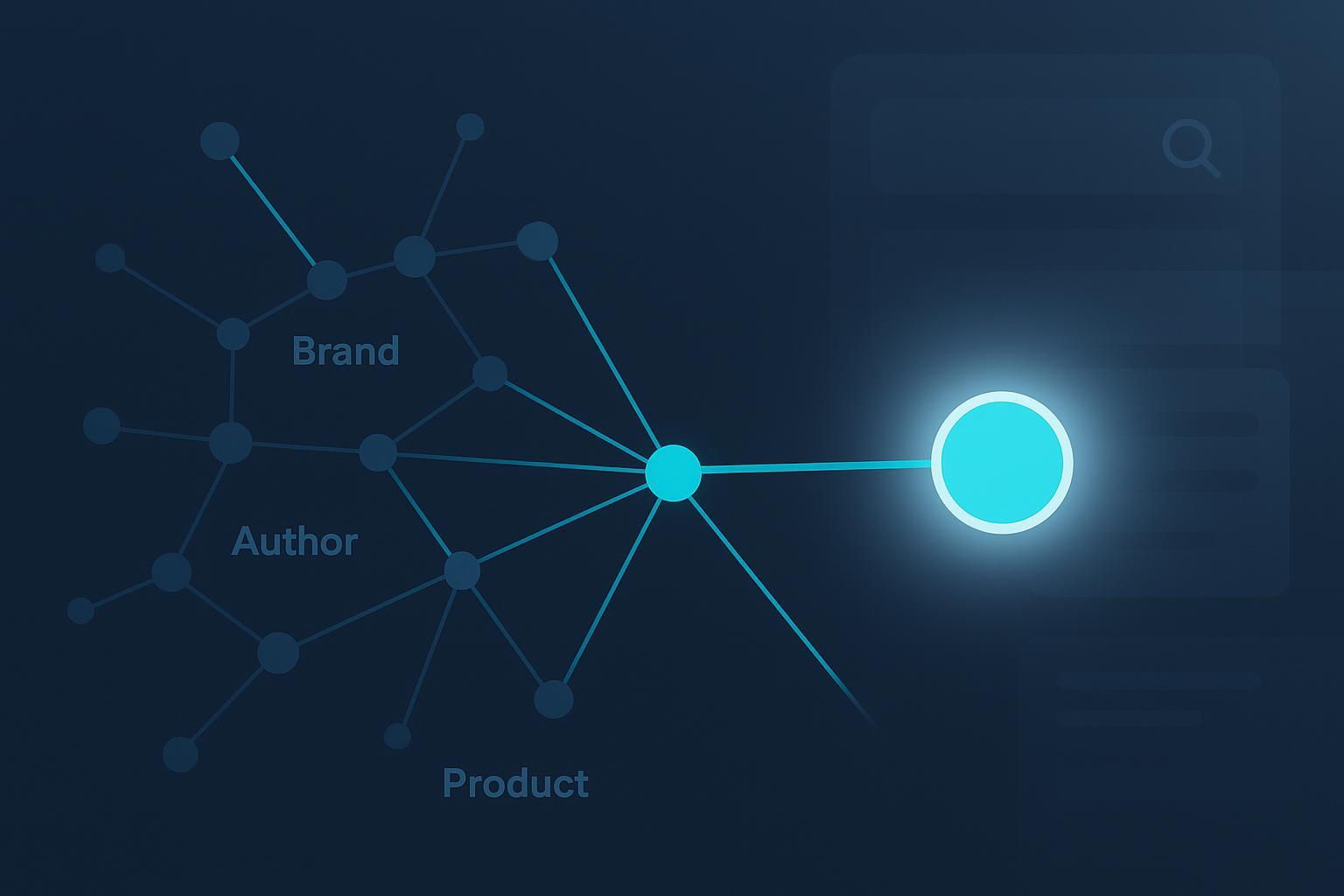
Then we mapped entities and content clusters. Think of it like a transit map: the brand is the hub, product lines are major lines, and key problems, use cases, and audiences are stops. We created hub-and-spoke clusters with crisp internal anchors that state relationships without keyword stuffing. This clarified how our topics relate, which helps systems connect the dots.
Off-site corroboration and PR were essential. We aligned high-quality social, updated Crunchbase, pursued industry directory placements, and secured a few relevant trade interviews to give third-party confirmations. For knowledge bases, we prepared a compliant Wikidata item (where eligible) and added precise sameAs links on-site. For ambiguous brand terms, we published an “About” section that disambiguates common confusions.
Finally, we optimized for AI answer readiness. Pages now open with concise, factual summaries; FAQs address common prompts; stats cite primary sources; and we keep facts updated. We measured changes in LLM citations and share-of-answer monthly and annotated content updates so we can tie outcomes to specific interventions.
Our compact tool stack for this project included:
- Google’s validation tools (Rich Results Test) and Schema Markup Validator for schema health
- Editorial CMS checks plus link consistency scripts for internal anchors
- LLM/AI visibility tracking tools to measure share-of-answer and citation frequency across platforms
What Changed: Evidence from Real-World Cases
Our SaaS client’s internal metrics showed meaningful lifts in AI citations and a steadier brand panel after the above fixes, alongside modest gains in organic clicks. Attribution is never single-threaded, so we compare with public evidence. In one recent program, Xponent21 reported substantial organic growth and strong assistant rankings after reinforcing entities and topical authority; see their AI SEO case study (2025) for methods and results. For knowledge context, Search Engine Land’s primer on the Knowledge Graph and how Google connects entities explains why consistent identity and corroboration increase the odds that systems reconcile who you are across the web.
Methodologically, we treat LLM visibility like a channel: define a query set, monitor share-of-answer and citation frequency, and weight sources by authority. Industry tools describe similar approaches to quantifying “LLM share-of-voice”; see the overview from SearchAtlas on LLM Visibility methodology. These measures aren’t official ranking metrics, but they’re practical for tracking whether your fixes translate into more frequent and favorable mentions.
Monitoring with Geneo (Workflow Example)
Disclosure: Geneo is our product. We use it to monitor multi-platform AI visibility so we can iterate faster. The workflow is straightforward: define a query set tied to your entity map; track brand mentions, linked citations, and sentiment across ChatGPT, Perplexity, and Google’s AI experiences; review historical answers to see when and why citations change; and annotate content or schema updates so you can connect actions to outcomes. When the system shows entity drift—say, a new social profile appears without sameAs—Geneo flags it so the team can correct the signal before it snowballs.
Pitfalls to Avoid
- Linking sameAs to low-quality or unofficial profiles, which muddies identity consolidation
- Running multiple Organization schema blocks with variant names or shifting @id values
- Omitting or contradicting author identity between bylines and Person schema
- Over-marking pages with schema that doesn’t match visible content
- Allowing brand-name variants to proliferate across markets and subdomains without a policy
Next Steps
If your metrics hint at entity weakness—erratic brand panels, thinning AI citations, or fluctuating authorship signals—start with a compact audit and score where you stand. Align Organization and Person entities, reconcile sameAs, and reinforce your content clusters with precise internal anchors. For broader context on how algorithm shifts can surface entity weaknesses, review our October 2025 Google update case study. Then set up monthly AI visibility tracking so you can see whether fixes stick. Ready to test your entity signals against an AI query set? Define your top 50 prompts and benchmark citations this week—then iterate from there.
References and primary guidance cited in this article include Google’s AI features and your website hub, the Intro to structured data, the Search Quality Evaluator Guidelines (2025), Search Engine Land’s Knowledge Graph guide, the Xponent21 AI SEO case study (2025), and the SearchAtlas LLM Visibility methodology.