
Why E-E-A-T Matters in AI Search: Latest 2025 Insights & Trends
Explore why E-E-A-T is essential for AI search visibility in 2025, with data on Google AI Overviews, expert tips, and practical frameworks. Learn how to qualify for citations now.
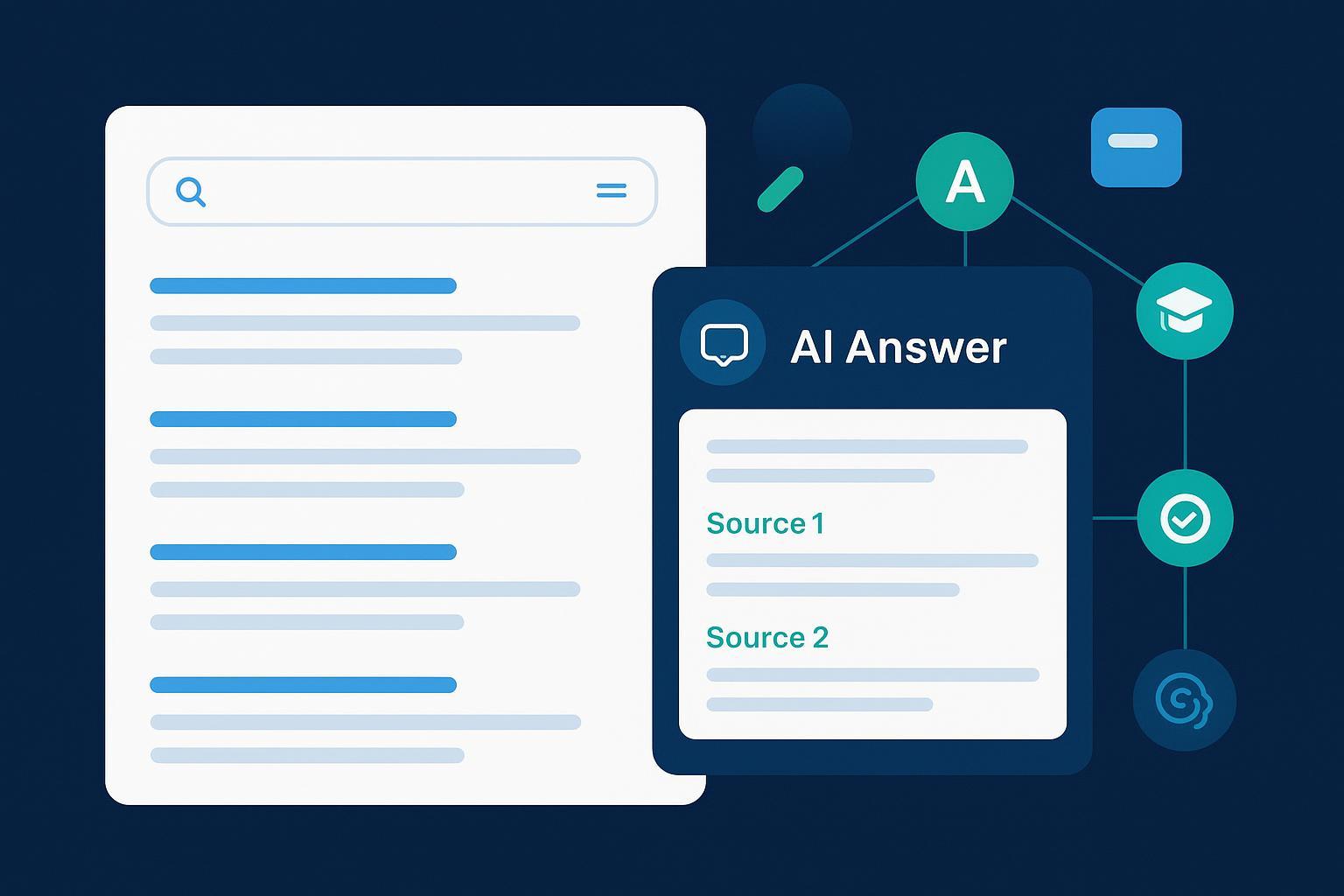
If classic SEO was about outranking competitors, AI search is about being selected as a source. That’s a different game. Google’s AI Overviews, ChatGPT Search, and Perplexity don’t just list pages; they synthesize answers and surface a handful of citations. In that selection layer, E‑E‑A‑T (Experience, Expertise, Authoritativeness, Trustworthiness) moves from “nice to have” to eligibility criteria.
Think of it this way: answer engines are curators. They need sources with clear provenance, accountable authorship, and demonstrated experience they can safely quote. That’s exactly what E‑E‑A‑T formalizes—and why it’s even more decisive as AI systems mediate more queries.
The selection layer: what E‑E‑A‑T governs in AI answers
Google’s Search Quality Rater Guidelines situate Trust as the core of page quality, with experience, expertise, and authoritativeness reinforcing it. The latest public PDF outlines how raters evaluate these signals to assess content quality and reliability; while raters don’t set rankings, the guidelines reflect what Google aims to reward in its systems. See Google’s official document in the current PDF of the Search Quality Rater Guidelines for the canonical definitions and emphasis on trust: the Search Quality Rater Guidelines (Google, current PDF). For site owners, Google’s foundational advice continues to stress people‑first content and clear quality signals in the SEO Starter Guide (Google Search Central).
On the product side, Google began rolling out AI Overviews broadly in the U.S. in May 2024 and expanded to 100+ countries later that year. Google’s official announcements describe AI Overviews as summaries “with links to the web” that point users to deeper reading, underscoring the importance of reliable citations. See the May 2024 U.S. rollout and the October 2024 global expansion on The Keyword: Generative AI in Search (May 14, 2024) and AI Overviews in 100+ countries (Oct 28, 2024).
Across engines, citation behaviors share a common thread—transparency and links back to sources—but the presentation differs.
| Engine | How citations appear | Official reference |
|---|---|---|
| ChatGPT Search | Sources panel below answers; opens sidebar with links | Introducing ChatGPT Search (OpenAI, 2024) |
| Perplexity | Inline footnote‑style citations; “Focus” modes for source types | Getting started with Perplexity (product hub) |
| Copilot/Bing | Linked citations; some views expose underlying web query context | Microsoft Tech Community note (Nov 2024) |
| Gemini | Grounding with Google Search; responses can attach citations | Gemini API grounding with Google Search (docs) |
Bottom line: the bar to be cited is higher than the bar to be crawled. E‑E‑A‑T is how you clear it.
Demonstrated experience beats generic text: a practical checklist
AI answers favor sources with verifiable, first‑hand work over generic summaries. If you publish reviews, tutorials, or decision guides, show your homework in ways machines and humans can verify. Start by upgrading your top evergreen pages with method notes, raw artifacts (photos/video), and concise disclosures. Specify what you tested, how you measured, sample sizes, date ranges, and any limitations. Use precise claims with in‑line citations to primary sources and avoid sweeping generalizations. Disclose conflicts and incentives (free units, affiliate relationships, sponsorships). For regulated topics (health, finance, legal), require SME review and list the reviewer’s credentials. Capturing context and edge cases—who the guidance is for, when it may not apply, and known trade‑offs—makes your content safer to cite.
Trust scaffolding and machine‑readable signals
Even the best research can be overlooked if engines can’t map the people and entities behind it. Trust has an architecture. Use clear bylines and robust author pages with credentials, experience areas, and affiliations; link author entities consistently by name across the site. Add editorial review notes (“Reviewed by [Name], [Credentials] on [Date]”) where appropriate and briefly state what was verified. Maintain visible references and a corrections/change‑log policy, and make ownership and responsibility pages easy to find (About, Contact, editorial standards). Implement structured data—Person and Organization for author/brand entities; Article, Review, or MedicalWebPage types where relevant—and keep names, job titles, and sameAs links consistent to help engines disambiguate. When trust elements are both visible and machine‑readable, your content becomes a safer pick for an AI summary.
Measure what matters: AI visibility and sentiment across engines
Shift your dashboards from pure rankings to AI visibility. Track how often your pages appear in Google’s AI Overviews, the quality of those citations, and the mix of sources cited alongside you (editorial, institutional, brand). SE Ranking’s 2024 panels documented how AI Overview presence fluctuated by month and niche, offering a sense of volatility and source patterns; see their methodology and coverage updates in SE Ranking’s AI Overviews research (2024).
Extend monitoring to ChatGPT Search and Perplexity. Review visibility in 7–14 day windows to separate meaningful changes from daily noise, and annotate swings with relevant content or technical updates. Record sentiment in AI answers—positive, neutral, or negative—where your brand or recommendations are mentioned. Audit author entity coverage to confirm that key authors and SMEs are consistently represented across your top URLs.
If you’re formalizing a program, you may find this overview helpful for terminology and scope: Geneo — Generative Engine Optimization for AI Visibility. For readers exploring prompt‑level tracking and how engines attribute sources, this breakdown is a useful companion: Peec AI Review 2025: Prompt‑Level Search Visibility. And if you’re deciding where to invest across engines, see this side‑by‑side platform discussion: AI Search Monitoring Comparison: ChatGPT vs Perplexity vs Gemini vs Bing.
A note on traffic: multiple third‑party analyses suggest clicks decline when AI Overviews appear, with mitigation for sites cited within the overview. Treat these as directional rather than universal—effects vary by query and niche. For example, Search Engine Land summarized industry findings on CTR shifts in late 2025, pointing to notable declines where AI Overviews are present: coverage on AI Overviews driving CTR drops (Nov 2025).
YMYL guardrails and risk management
For “Your Money or Your Life” topics, the cost of ambiguous authorship or uncorroborated claims is steep. Tighten your bar. Require subject‑matter expert bylines or reviewer sign‑off and list credentials plainly. Corroborate with two independent primary sources wherever possible and summarize where sources agree and differ. Use conservative language and avoid prescriptive recommendations without context (“may,” “consider,” specific scenarios). Isolate commercial elements from guidance (ads, affiliate boxes) so they don’t overshadow the advice, and set a visible review cadence—medical/legal pages often need quarterly or event‑triggered updates. These steps aren’t just compliance theater—they give answer engines the clarity they need to safely cite you.
Micro‑workflow example: cross‑engine monitoring in practice
Here’s the deal: you don’t need an enterprise rebuild to start learning. A simple weekly loop surfaces what engines think you’re best at and where trust is thin. Define 25–50 representative prompts across 3–5 topic clusters; capture which engines show answers and whether you’re cited; log the other sources cited alongside you; note sentiment and any phrasing that suggests gaps (e.g., “limited evidence,” “some users report…”). Compare weeks and annotate swings with content or technical changes. You can do this manually with spreadsheets and screen captures. If you prefer a consolidated log across engines with historical comparisons, tools can help. Disclosure: Geneo is our product; it supports cross‑engine mention/citation tracking, sentiment tagging, and query history so teams can review what changed and why. Keep it neutral: whichever workflow you pick, the measurement rhythm matters more than the tool brand.
Change‑log: fast‑moving facts to monitor (Updated on 2025‑11‑20)
AI Overviews coverage rates fluctuate by month and query class; studies through late 2024 reported ranges roughly in the high single digits to high teens across panels. Re‑check the latest panels for your niche (see SE Ranking research linked above). Google continues to iterate on core and spam systems—revisit Google’s guidance after each notable update cycle via Core updates overview (Search Central). Finally, UI and citation behavior in ChatGPT, Perplexity, Copilot, and Gemini evolve; confirm current citation panels and link behaviors in their official posts/docs linked in this article before making process changes.
Closing: what to do next
If AI search is curating answers, your job is to be the source curators trust. Invest in demonstrated experience (evidence, methods, disclosures), build visible and machine‑readable trust scaffolding, and measure AI visibility like a product metric. Start with a 10‑page E‑E‑A‑T upgrade, then stand up a 14‑day monitoring cadence across engines. When you’re ready to centralize the logs and sentiment trails, consider adding a tool to reduce manual lift—Geneo can help, but choose what fits your stack and governance.
Ready to make your content safer to cite? Upgrade one high‑impact page this week—method notes, reviewer credentials, and a clean references section—then watch how often it starts showing up in AI answers.