
How to Build Authority Signals for AI Search Engines (2025 Best Practices)
Discover actionable 2025 best practices to build authority signals for AI search engines like Google AIO, ChatGPT, and Perplexity. Boost brand visibility, structure data, and measure citation impact.
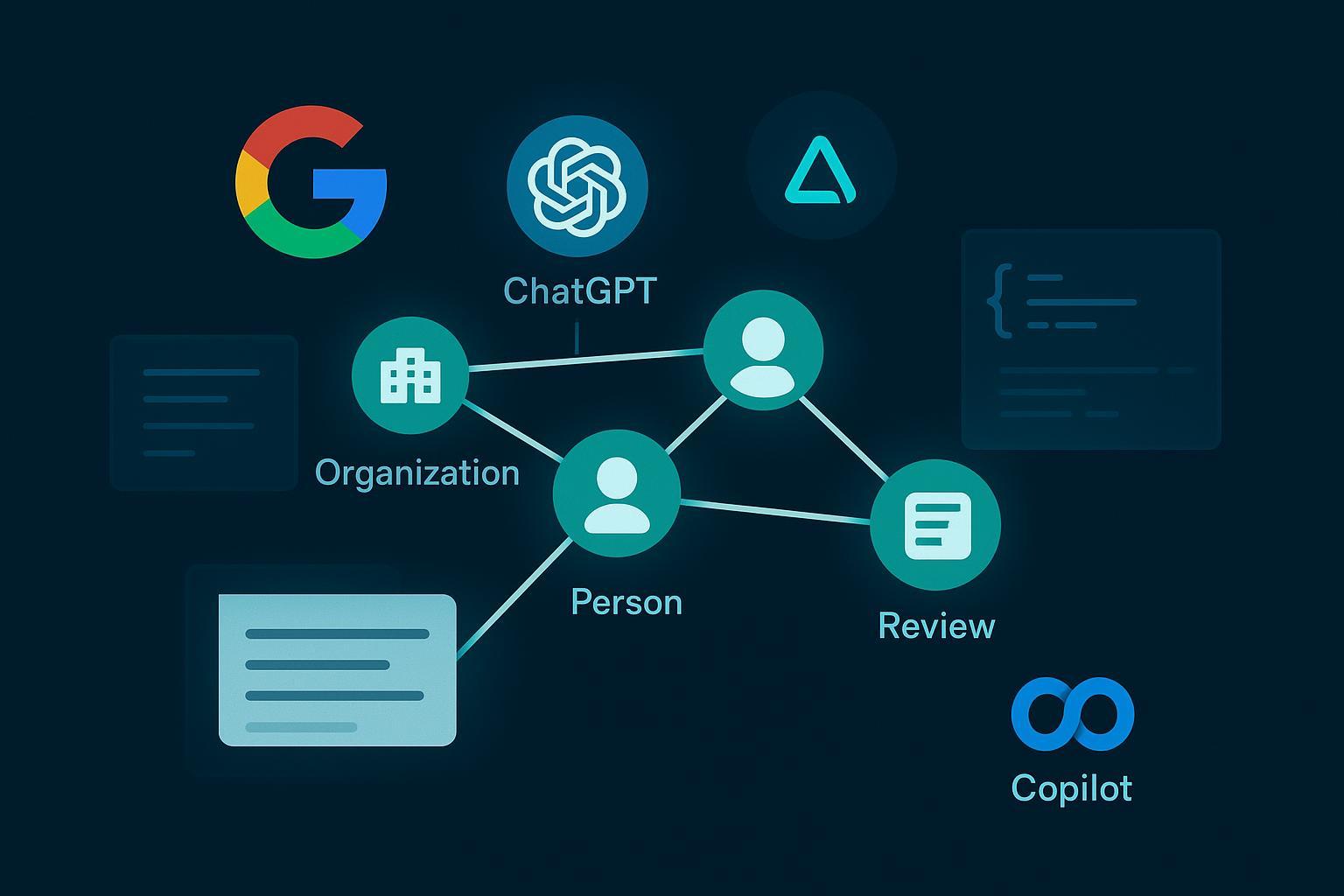
AI answers are winning more attention at the exact moment users are growing both curious and cautious. In 2025, Pew reports that Americans who’ve seen AI summaries in search mostly find them useful, yet many worry about accuracy, which raises the bar for visible trust and provenance in every answer. See Pew’s context on usefulness and trust in its 2025 short read, Americans’ mixed feelings about AI summaries in search results. That tension is your opportunity: when your brand looks verifiable, consistent, and expert, AI engines are more likely to cite you.
This playbook shows how to build authority signals that modern AI search engines can detect and reward—grounded in current guidance from Google, OpenAI, and Microsoft, plus practical workflows and measurement.
1) Build your entity backbone (the technical identity layer)
Think of your brand’s authority like a well-labeled exhibit: if every artifact (site pages, bios, profiles) references the same identity, AI systems can confidently place you in the story.
Define stable entities on-site with JSON-LD. Use Organization for your brand and Person for real authors. Maintain a stable @id for each, and connect them with sameAs to authoritative profiles (LinkedIn, Crunchbase, ORCID/Wikipedia where appropriate). Google reiterates structured data fundamentals and snippet eligibility in its 2025 documentation on AI features and your website. Normalize names and facts across the web. Ensure consistent naming and, for local entities, NAP data. Align company and author profiles (speaker pages, conference bios, knowledge bases) to disambiguate identity. Validate continuously. Use Google’s Rich Results Test and Search Console to confirm that required/recommended properties match visible content.
A minimal, extensible pattern (trim or expand properties as needed):
{
    "@context": "https://schema.org",
    "@graph": [
      {
        "@type": "Organization",
        "@id": "https://www.example.com/#org",
        "name": "Example Inc.",
        "url": "https://www.example.com/",
        "logo": "https://www.example.com/logo.png",
        "sameAs": [
          "https://www.linkedin.com/company/example",
          "https://www.crunchbase.com/organization/example"
        ]
      },
      {
        "@type": "Person",
        "@id": "https://www.example.com/#author-jdoe",
        "name": "Jane Doe",
        "url": "https://www.example.com/authors/jane-doe/",
        "affiliation": { "@id": "https://www.example.com/#org" },
        "sameAs": [
          "https://www.linkedin.com/in/jane-doe/",
          "https://orcid.org/0000-0000-0000-0000"
        ]
      }
    ]
  }
If you’re new to AI search visibility concepts, see the primer What Is AI Visibility? Brand Exposure in AI Search Explained for background on exposure and citations.
2) Content architecture and provenance that LLMs can trust
Authority isn’t only who you are; it’s how you communicate. Large language models favor pages that look sourced, current, and task-ready.
Make content modular and scannable, combining succinct definitions, step-by-step procedures, and clearly labeled references. Use semantic headings, a helpful table where it adds clarity, and FAQs only when they serve the reader. Show provenance and expertise by publishing visible author credentials, first-hand experience, and last updated dates. Cite original research and primary sources in-line. Google’s March 2024 guidance continues to reward people-first, helpful content—an essential prerequisite for AI inclusion. Avoid self-serving review markup; use Review/AggregateRating schema cautiously and match real, third-party reviews when applicable.
Want a broader glossary of AI search terms used here? Check out Decoding GEO, GSVO, GSO, AIO, LLMO: New AI SEO Terms.
3) Off-site proof: earned authority engines will cite
AI answer engines gravitate to sources that already look credible across the web. Focus your efforts where they compound. Earn digital PR that travels with expert quotes and op-eds on reputable publications, then mirror those achievements on speaker pages and conference bios that match your on-site author data. Awards, certifications, and peer-reviewed venues further corroborate expertise. Strengthen independent review ecosystems with transparent moderation and, for local businesses, maintain consistent directories and a well-managed Google Business Profile. As you execute, watch whether those wins start appearing as supporting links in AI answers and how their frequency shifts relative to peers.
4) Platform readiness: what each engine expects in practice
Google AI Overviews/AI Mode: Google states there are no extra technical requirements beyond being indexed and eligible for a Search snippet, and it stresses helpful, people-first content. Google also notes “query fan-out,” where multiple related searches help surface a broader set of helpful links. See Google’s 2025 guidance in AI Features and Your Website and its overview of AI Mode.
ChatGPT Search: OpenAI’s announcement explains that ChatGPT provides answers with links to relevant web sources. Multiple analytics posts observed that ChatGPT adds UTM parameters to outbound links, improving referral attribution—valuable for tracking. See OpenAI’s Introducing ChatGPT Search and, for observed tracking behavior, PPC Land’s note on UTM parameters in 2025.
Perplexity: It presents inline citations and research modes but offers little public detail on inclusion criteria. Optimize for clarity, evidence, and originality; expect citations when your content is demonstrably useful and well-sourced.
Microsoft Bing/Copilot: Microsoft emphasizes visible citations and transparency in how queries and sources show up, which favors clearly structured, authoritative pages. See the Copilot team’s 2025 blog on bringing the best of AI search to Copilot.
5) Measure what matters: KPIs, targets, and a simple benchmark table
There’s no single standard for AI authority metrics yet, but consistent measurement beats guesswork. Start with AI Share of Voice (the percentage of relevant AI answers that cite or mention your brand), citation rate and quality (linked vs. unlinked mentions and the prominence of your pages), sentiment (how engines describe you), and platform mix (how citations distribute across Google AIO, ChatGPT, Perplexity, and Copilot). For a content planning perspective, see Search Engine Land’s 2025 piece on an AI search content organizing framework.
Two directional maturity bands you can adapt by sector:
| KPI | Emerging Program (Quarter 1–2) | Mature Program (Quarter 3–4) |
|---|---|---|
| AI SOV (priority topics) | 3–8% | 12–25% |
| Citation Rate (linked vs. mentioned) | 30–45% linked | 55–75% linked |
| Sentiment (positive/neutral/negative) | >70% positive/neutral | >85% positive/neutral |
| Platform Mix Concentration (top platform share) | ≤70% on one platform | ≤50% on one platform |
| Weekly Coverage Volatility (±) | ±15% | ±7% |
Remember, these are directional ranges, not hard standards—they’re meant to help you set targets and detect progress or risk.
6) Monitoring and improving authority signals (practical workflow)
Here’s a weekly loop that teams actually use: map your queries by intent cluster for each platform (cover head, mid, and long-tail questions your buyers ask), track SOV, citation rate/quality, sentiment, and platform mix by topic, set alerts for sudden drops (e.g., SOV down >10% week over week) and new competitor encroachment, investigate changes (did a competitor publish new evidence? did you ship an update without refreshing documentation?), then close gaps with fresh, cited content and structured data. Finally, attribute outcomes: in analytics, watch branded search and assisted conversions after citation spikes. When available, tag referrals from AI engines—some practitioners observe UTM parameters on ChatGPT links—to gauge downstream impact.
Example tool-assisted workflow (disclosure inside):
Disclosure: Geneo is our product.
Objective: Monitor brand mentions, citations, and sentiment across AI engines to catch opportunities and issues fast. How teams use it: create a query map for priority topics; track AI SOV by engine; flag new/changed citations; compare your supporting-link presence vs. competitors; and queue actions (fresh evidence, schema updates, PR pitches). Because some platforms (like ChatGPT) have been observed to add UTM tags to links, users also validate referral lift when those links appear. Why it helps: a consolidated view reduces manual checking across engines and keeps authority improvements tied to measurable actions rather than anecdotes.
If you want to dig deeper into the broader methodology behind generative engine optimization, see the high-level explainer Decoding GEO, GSVO, GSO, AIO, LLMO: New AI SEO Terms.
7) Sector plays in brief
SaaS teams should prove practitioner expertise with implementation guides that include real logs, config snippets, and performance baselines. Add security and compliance statements aligned to enterprise buyers, and pursue quotes in developer or product-led communities to build off-site proof.
Healthcare brands need rigorous author bios (licenses, affiliations), citations to peer-reviewed sources, and precise, non-ambiguous claims. Keep entity alignment spotless across directories and professional profiles to reduce the risk of misattribution in AI answers.
Local businesses win by nailing NAP consistency, cultivating independent reviews, and publishing owner or technician bios with qualifications. Use LocalBusiness schema accurately and keep service pages detailed and current.
8) What’s next: your 2026 watch list
- Richer provenance signals: Expect more weight on explicit citations, author verification, and clearer update histories. Are your pages already showing that trail?
- Entity consolidation: As engines connect the dots, profiles and directories that once felt optional will tip decisions. Keep every profile consistent—and cross-linked.
- UX clarity for citations: Engines emphasizing clickable sources and transparent query trails reward content that’s well-structured and easy to quote. Don’t make them hunt.
If you want ongoing deep dives and tutorials, visit the Geneo Blog—Expert Insights on Generative Engine Optimization.
Selected sources and context
- Google explains eligibility and best practices for AI features on websites in AI Features and Your Website (2025), and discusses AI Mode in its 2025 blog AI in Search: Going beyond information to intelligence.
- OpenAI outlines how ChatGPT Search returns answers with links in Introducing ChatGPT Search (2024; updated 2025). Practitioners have observed UTM parameters on ChatGPT outbound links; one example is PPC Land’s 2025 note ChatGPT adds UTM parameters to more links for better analytics tracking.
- Microsoft underlines citation prominence and transparency in its 2025 post Bringing the best of AI search to Copilot.
- For planning content to match AI behavior, see Search Engine Land’s 2025 AI search content organizing framework.
- For public sentiment context, Pew’s 2025 short read Americans have mixed feelings about AI summaries in search results outlines usefulness and trust patterns.