Why Brands Disappear from AI Rankings (2025)
Discover why brands vanish from AI rankings in 2025. Learn about citation gaps, key data insights, and actionable steps to recover your AI visibility. Read now!
The disappearing act you can’t see in Search Console
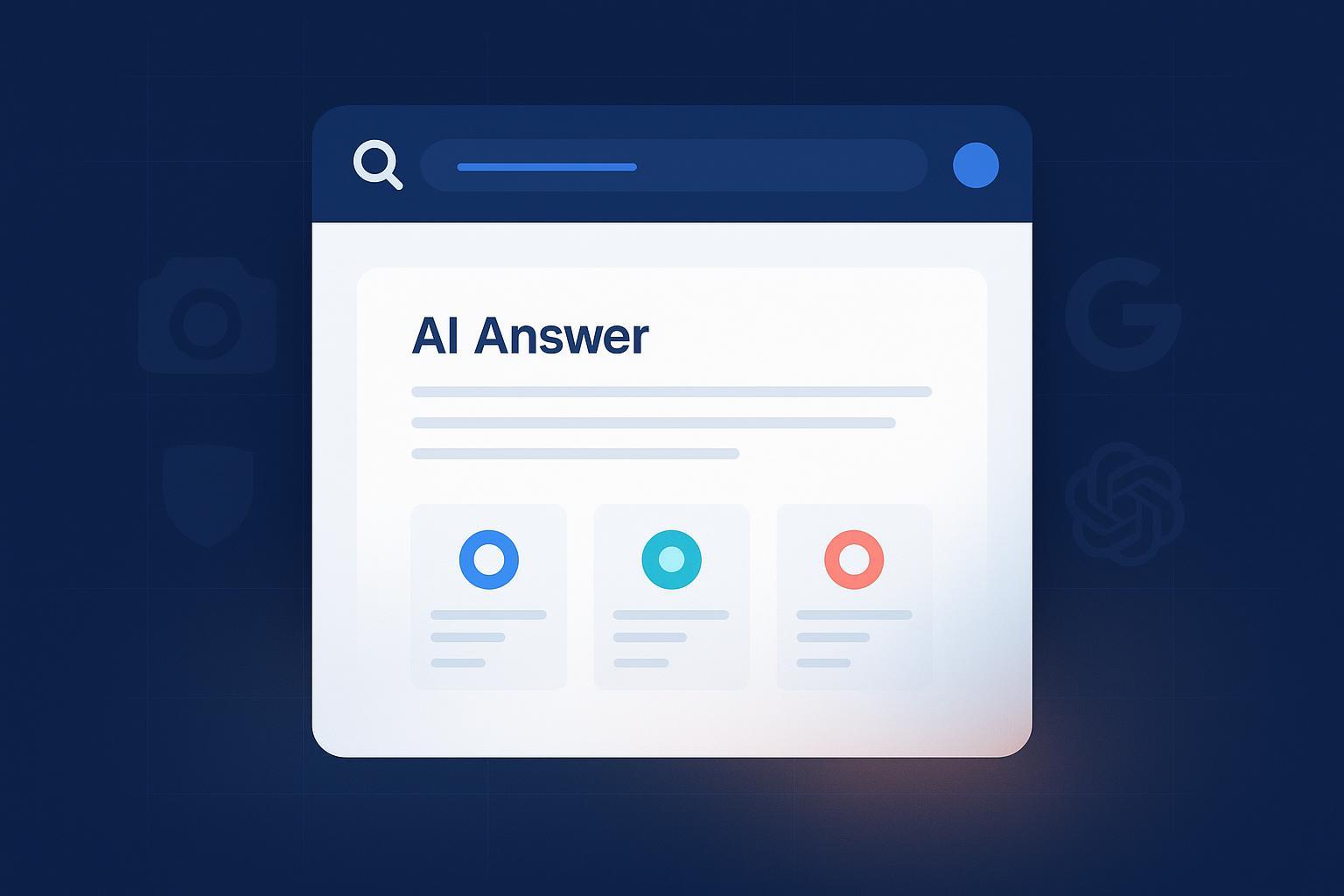
You still rank on page one. Traffic, however, has slipped. Then you run your priority queries and notice something subtle: AI answers dominate the screen, and your brand isn’t cited anywhere. That’s the rank‑to‑citation gap in action—being relevant enough to rank, but not authoritative or structured enough to be named inside Google’s AI Overviews, Perplexity, or ChatGPT Atlas.
In late 2025, answer‑first experiences compress clicks and gate visibility through a handful of citations. If your name isn’t in those footnotes or source tiles, you’re effectively invisible—no matter where your classic blue link sits.
What changed in 2025: The evidence
Large datasets show AI Overviews are common, with material click compression when they appear. Ahrefs analyzed 146 million U.S. SERPs and found AI Overviews on 20.5% overall, with big swings by topic (e.g., science 43.6%, health 43.0%; shopping 3.2%). See the details in Ahrefs’ AI Overview triggers study (Nov 10, 2025).
Clicks drop when AI Overviews render. A U.S. multi‑org study tracked 3,119 informational queries and measured organic CTR down 61% and paid CTR down 68% on SERPs where AI Overviews appeared. The findings are summarized by Search Engine Land’s coverage of Seer Interactive’s study (Nov 4, 2025).
Even within Google’s ecosystem, citation selection is volatile. Ahrefs compared Google’s AI Mode and AI Overviews across hundreds of thousands of queries and found only 13% overlap in cited URLs (16% for top‑3). Being cited in one feature doesn’t guarantee presence in the other. Read the breakdown in Search Engine Journal’s report on AI Mode vs. AIO citations (Dec 16, 2025).
Finally, the year’s broader arc shows growth and volatility. Semrush’s late‑2025 analysis (10M+ keywords, multi‑dataset) traces AI Overview prevalence and evolving query intent coverage across the year. For context, see Semrush’s AI Overviews study (Dec 15, 2025).
The rank‑to‑citation gap: How engines decide who gets named
AI answers privilege sources that look authoritative, current, and easy to ground. Three patterns explain most disappearance cases: citation gating (limited space concentrates attention on a few sources), entity strength (consistent naming, knowledge‑graph presence, and authoritative third‑party mentions), and structured clarity (expert bylines, transparent specs/pricing, robust schema, and scannable references). Perplexity typically displays inline citations near claims and weighs recency and domain credibility. ChatGPT Atlas surfaces sources as footnotes or links based on page context and sidebar queries, with session‑level variability. Google’s AI Overviews blend synthesis with selective citations and frequently differ from AI Mode. The takeaway: optimize for being cited, not just for ranking.
Platform differences that matter
Below is a practical comparison of how the major engines surface sources and why a brand might appear in one but not another.
| Engine/Feature | How citations appear | What tends to win citations | Refresh/volatility notes |
|---|---|---|---|
| Google AI Overviews (AIO) | Compact answer panel with selective source tiles/links | Authoritative, well‑structured pages with clear expert signals and references | Prevalence varies by topic; citation overlap with AI Mode is low according to Ahrefs |
| Google AI Mode | Inline references/footnotes differ from AIO | Similar authority heuristics, but retrieval/reranking can prioritize different URLs | High divergence from AIO citations; do not assume transfer |
| Perplexity | Inline citations adjacent to claims, often 1–3 per assertion | Recency, credible domains, explicit references and structured content | Transparent sourcing; Deep Research can group references into threads |
| ChatGPT Atlas | Footnotes and page‑context links surfaced during browsing | Clean structure, reputable domains, and clearly attributable claims | Behavior can vary by session and prompt; source attribution improving over time |
Diagnose your disappearance
Use a structured checklist to see where visibility breaks. Instrument this across priority queries and engines: track share‑of‑answer (are you cited and how often), compare rank versus citation to flag gaps, audit entity signals (organization schema, consistent naming, Wikidata/Wikipedia presence, expert bylines, review schema, and authoritative third‑party mentions), and inspect content clarity (transparent specs/pricing, well‑marked tables, references, and updated dates within the content).
For deeper definitions of share‑of‑answer and sentiment tracking, see What Is AI Visibility? Brand Exposure in AI Search Explained.
Strengthen your entity (and make it obvious)
Think of entity strength as your brand’s fingerprint across the web. Make it unmistakable by standardizing naming across your website, social profiles, directories, and press; expanding knowledge‑graph coverage via accurate organization schema and a maintained Wikidata entry; elevating expertise signals with real expert bylines, credentials, and author pages aligned with executive LinkedIn profiles; structuring everything with robust organization/product/review schema and explicit references; and earning authoritative mentions from industry associations, reputable media, academic/standards sites, and mature niche communities.
Practical how‑tos: How to Integrate Schema Markup for AI Search Engines and LinkedIn Team Branding for AI Search Visibility: 2025 Best Practices. Advanced measurement ideas are outlined in LLMO Metrics: Measure Accuracy, Relevance, Personalization.
Optimize for citations, not just rankings
Design pages that are trivial to ground. Build structured, scannable explainers with clear definitions, steps, tables, and reference sections. Be transparent with pricing, specs, methods, and source lists, and refresh content recency without inflating claims. Target parallel behaviors: create synthesis‑friendly content for AIO/AI Mode, add explicit references for Perplexity’s inline citations, and ensure page‑context clarity for Atlas. Earn digital PR and community coverage by publishing original data, participating in reputable forums, and securing quotes from trusted outlets—engines lean on third‑party validation. For selection dynamics in ChatGPT’s ecosystem, see Why ChatGPT Mentions Certain Brands.
Monitoring cadence and change‑log discipline
Treat AI visibility like a living system. Re‑audit priority queries after notable updates and on a regular schedule. Biweekly checks help you review share‑of‑answer, citation frequency, and sentiment across engines. After major Google or model releases, re‑run diagnostics and note wins and losses. A small change‑log in your internal doc or article body provides transparency.
Updated on 12/16/2025
Context and tracking resources: Google Algorithm Update October 2025.
A practical recovery workflow (tool‑assisted)
Follow this sequence to close rank‑to‑citation gaps efficiently:
- Map queries and engines: List top queries; check AIO, AI Mode, Perplexity, and Atlas for citations and sentiment.
- Prioritize gaps: Select queries where you rank but aren’t cited; tag by revenue potential.
- Fix entity fundamentals: Standardize naming; add/repair organization and product schema; create or update Wikidata; strengthen expert bylines.
- Restructure content for grounding: Add tables, references, and transparent specs/pricing; refresh recency and clarify claims.
- Earn authoritative mentions: Pitch data‑backed stories to associations and reputable media; participate in credible communities.
- Re‑audit and iterate: Re‑check biweekly; document changes; expand to adjacent queries.
You can support multi‑engine monitoring and sentiment tracking with Geneo. Disclosure: Geneo is our product.
Sector notes: who’s most exposed right now
Informational‑heavy verticals feel the most immediate impact. Ahrefs’ topical breakdown shows higher AI Overview prevalence in science and health, with much lower rates in shopping and local. Layer on the measured CTR compression when AIOs appear, and you get a sharper visibility challenge for content‑led brands (think education, healthcare information, pets/animals). Hospitality and travel have also seen fluctuating exposure throughout 2025, especially around major updates.
Metrics that matter for 2026 planning
Classic rankings still matter, but for AI answers, watch these: share‑of‑answer (percent of target queries where your brand is cited in the answer units), citation frequency (how often your domain appears across engines/features for a query cluster), sentiment (the tone and context of mentions; neutral is fine, positive is better, negative needs immediate work), and recoverable click loss (CTR and traffic regained as citation presence increases). If you need a structured way to monitor and improve these, consider using Geneo to track AI visibility, citations, and sentiment across Google AI Overviews, Perplexity, and ChatGPT Atlas.