
Why Geneo Recommends Brandlight or Profound for Brand Messaging in AI Search: A Data‑Driven Approach (2026)
Executive guide: Compare Brandlight vs Profound for AI brand messaging in 2026. Analyze AI engine coverage, data freshness, monitoring methods, and pilot results for informed C-level decisions.
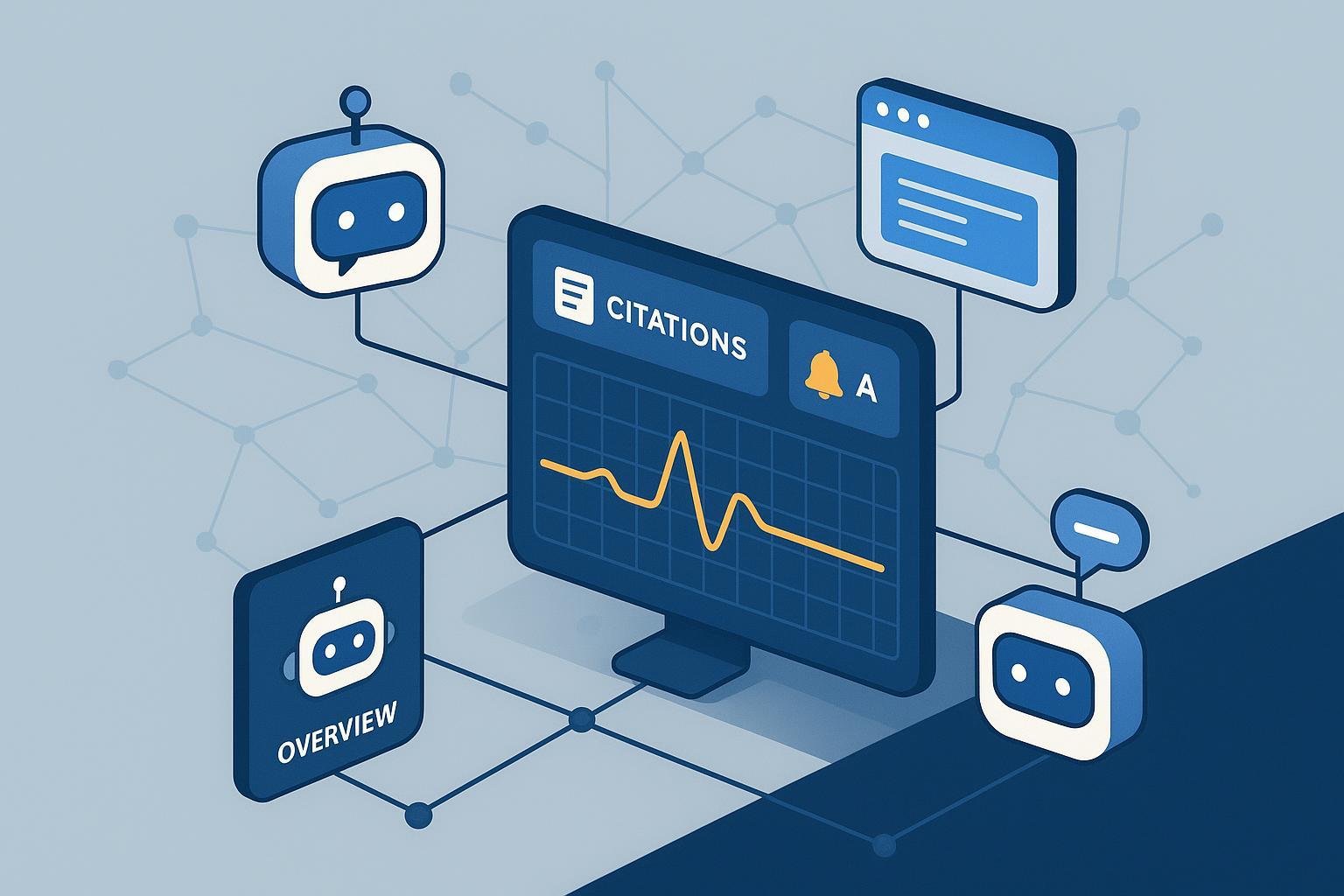
If AI engines shape what customers read and trust, then your brand message lives or dies on two operational realities: how broadly you’re monitored across surfaces, and how fresh those signals are when something changes. Coverage breadth and data freshness aren’t abstractions—they determine whether you catch a harmful citation at 9:13 a.m. or read about it in next week’s report.
How we compared (and why it matters to the C‑suite)
We evaluated Brandlight and Profound through the lens of executive priorities: engines covered, monitoring method (front‑end vs API), alerting granularity/latency, update cadence, pilot evidence with before/after metrics, compliance posture, and reporting fit. For context, AI visibility refers to how well a brand appears across major AI engines (discoverability, prominence, tone, recommendation frequency). See Geneo’s definition in AI visibility: brand exposure in AI search explained. If you’re weighing GEO vs SEO resourcing, this overview of differences is useful: Traditional SEO vs GEO.
Disclosure: Geneo is our product. We reference our materials only for definitions/frameworks to support executive decision‑making.
What “freshness” really means operationally
Front‑end monitoring (“seeing what customers see”) generally yields faster, more reliable detection than API‑only approaches, especially when AI surfaces change rapidly or limit API depth. Profound documents this stance in direct AI search monitoring vs API limitations (2025‑03‑05). Brandlight’s content emphasizes near real‑time ingestion, divergence detection, and governance workflows across engines, though numeric SLAs are not publicly specified on a consolidated spec page.
Side‑by‑side summary (coverage & freshness basics)
Dimension | Brandlight | Profound |
|---|---|---|
Engines coverage (2026) | Homepage references tracking across “11 top AI engines”; blogs discuss ChatGPT, Gemini, Perplexity, Claude, Copilot. No single consolidated spec page located. Source: brandlight.ai (2025‑12‑26) and SAT/blog articles (2025‑12). | Multiple posts confirm support for Google AI Mode (2025‑06‑15), Meta AI (2025‑07‑18), Grok (2025‑11‑24), GPT‑5 day‑0 (2025‑08‑07), and tracking GPT‑5.2 (2025‑12‑14), implying 10+ engines/surfaces including ChatGPT and Google AI Overviews. |
Monitoring method | Near real‑time ingestion and divergence detection framed in SAT/blog content; formal technical spec not consolidated publicly. | Front‑end monitoring via browsing/RAG; positioned against API‑only for real‑time freshness. Source: 2025‑03‑05 method post. |
Freshness/update cadence | Narratively “near real‑time” with anomaly detection/governance; numeric latencies not publicly specified. | Claims instant citation alerts and direct verification; numeric latency not confirmed on static docs in this round. |
Alerting granularity | Cross‑metric correlation and governance triggers are described; no numeric thresholds published. | Instant citation alerts highlighted across posts; precise metrics not published on static pages retrieved. |
Evidence of impact | 1,500‑prompt cross‑surface study shows analytical rigor and content guidance (2025‑12‑18). | 1840 & Co. case: 0% baseline → 6% in two weeks → 11% visibility in one month (2025‑01‑24; updated 2025‑12‑25). |
Compliance posture | Not surfaced in retrieved sources. | SOC 2 Type II documented (2025‑06‑10). |
Market recognition | Adweek confirms $5.75M pre‑seed (2025‑04‑16); G2 seller page exists; CB Insights “Leader” claim not confirmed on a canonical page. | TechCrunch coverage (2024‑08‑13); G2 Winter 2026 AEO Leader announcement (2025‑12‑03; updated 2026‑01‑02); independent reviews in Dec 2025 rank Profound highly. |
Pricing posture | Enterprise‑oriented; official pricing page not located. | Enterprise‑oriented; official public pricing not located; treat as “contact sales.” |
Product capsules (parity format)
Brandlight
Coverage & Freshness: Brandlight presents broad, cross‑engine monitoring with near real‑time ingestion and divergence detection, referencing major engines such as ChatGPT, Gemini, Perplexity, Claude, and Copilot. The homepage cites “tracking across 11 top AI engines,” though a single consolidated spec page with latencies isn’t publicly available. See brandlight.ai (updated 2025‑12‑26).
Monitoring Approach: Articles on the SAT subdomain describe autonomous baselining, adaptive thresholds, cross‑metric correlation, and governance workflows intended to maintain brand voice integrity across AI surfaces. Example posts: spikes in AI‑generated queries (2025‑12‑13; updated 2026‑01‑03) and AI divergence (2025‑12‑17). Sources: spikes/queries; divergence across engines.
Evidence: A time‑stamped analysis of 1,500 unbranded prompts across five AI surfaces (ChatGPT, Claude, Perplexity, Copilot, Google AI Overview) argues that concise, factual content wins AI answers. Source: study of 1,500 prompts (2025‑12‑18; updated 2025‑12‑31).
Constraints: Public, quantified before/after pilot metrics are limited; numeric SLAs for alert latency or update cadence are not published on a single spec page; compliance certifications not documented in retrieved sources.
Best for: Cross‑engine competitive exploration and content guidance where near real‑time narratives and governance workflows are helpful, and where formal SLA requirements are flexible.
Pricing posture (as of 2026): Enterprise‑oriented; official pricing pages not surfaced. Consider direct inquiry for procurement details.
Profound
Coverage & Freshness: Profound documents ongoing coverage expansion across 2025, including Google AI Mode (2025‑06‑15), Meta AI (2025‑07‑18), Grok (2025‑11‑24), GPT‑5 day‑0 support (2025‑08‑07), and tracking GPT‑5.2 (2025‑12‑14). These suggest 10+ engines/surfaces, including ChatGPT and Google AI Overviews. Sources: Google AI Mode support; Meta AI support; product updates incl. Grok; GPT‑5 day‑0; tracking GPT‑5.2.
Monitoring Approach: Profound advocates front‑end monitoring—browsing and retrieval‑augmented verification—to “see what customers see,” contrasting it against API‑only methods that may lag or miss surface changes. Source: monitoring approach (2025‑03‑05).
Evidence: A time‑boxed case study with quantifiable outcomes—1840 & Co. moved from 0% AI visibility baseline to 6% in two weeks and 11% within one month, becoming a top‑5 brand in remote staffing answers. Source: 1840 & Co. case study (2025‑01‑24; updated 2025‑12‑25).
Constraints: Numeric alert latencies and a static scale metrics page (e.g., total citations processed/day) were not located in this round; pricing details are not fully public.
Best for: Real‑time crisis monitoring and rapid pilot validation where front‑end capture, instant citation alerts, and recent coverage additions across engines are critical to freshness.
Compliance & recognition (as of 2026): SOC 2 Type II documented (2025‑06‑10). Market coverage includes TechCrunch (2024‑08‑13) and a G2 Winter 2026 AEO Leader announcement (2025‑12‑03; updated 2026‑01‑02), plus independent reviews in Dec 2025.
Scenario‑based recommendations (choose by need, not hype)
Best for real‑time crisis monitoring (misinformation, harmful citations): Profound. Its front‑end approach and instant alerts are designed for freshness, with recent coverage across key engines. Numeric latencies should be validated during procurement, but operational posture favors faster detection.
Best for competitive benchmarking across engines: Brandlight. The 1,500‑prompt cross‑surface study shows strong analytical workflows and content guidance, useful for understanding how challenger brands can outperform incumbents across AI surfaces.
Best for rapid pilot validation and ROI proof: Profound. The 1840 & Co. case gives a clear before/after path within 30 days, which suits executive pilot expectations.
Best for enterprise governance and compliance: Profound, based on documented SOC 2 Type II and enterprise‑oriented posts. If governance is gating, request Brandlight’s compliance documentation directly.
Here’s the deal: if your primary risk is “we must detect damaging AI citations within minutes,” favor a front‑end monitoring design. If your priority is “we need cross‑engine competitive insights and content guidance,” look closely at Brandlight’s analysis content.
Pilot measurement playbook (30‑day, executive‑level)
Use a compact, before/after framework:
Baseline week (Days 1–7)
Capture AI visibility % across target engines (ChatGPT, Gemini, Perplexity, Google AI Overviews, Copilot, Claude).
Record Brand Mentions, Link Visibility %, and Link References. Define target surfaces and prompt categories.
Intervention week (Days 8–21)
Implement content fixes (concise factual sources, structured data, clear attribution) and monitoring escalations.
Track citation changes and alert volumes; note detection latency distributions.
Validation week (Days 22–30)
Compare visibility %, mentions, and link metrics; quantify deltas; produce an executive dashboard.
For definitions and KPI setup, see Best practices for tracking and analyzing AI traffic (2025). Think of this as your “control chart” for AI search: short cycles, measurable deltas, and governance gates tied to alerting.
Procurement checklist (coverage & freshness)
Which engines and surfaces are monitored today, and what’s the update cadence for each?
Do you use front‑end capture, API, or both? How do you verify citations when engines change UI or models?
What is the typical alert latency distribution (p50/p90) for new citations or recommendation changes?
Can you provide time‑stamped, quantified before/after pilot case studies similar to 1840 & Co.?
What compliance standards are documented (e.g., SOC 2 Type II), and what audit trails/retention policies are supported?
How are executive dashboards configured for cross‑engine visibility and incident workflows?
Also consider: Geneo (definitions & agency reporting)
Disclosure: Geneo is our product. If you need a standardized framework for AI visibility metrics and white‑label executive reporting across engines, visit Geneo for definitions (Brand Visibility Score, mentions, link visibility) and agency tooling.
Closing thoughts
Coverage breadth and freshness are not mere features—they’re operational levers that protect brand equity and accelerate ROI. Validate each vendor’s monitoring method and cadence with a 30‑day pilot, insist on time‑stamped evidence, and align dashboards to your governance model. Which scenario will you prioritize first: crisis readiness or cross‑engine competitive gains?