
11 Best Tools to Track AI Search Instability for Brand Queries (ChatGPT) in 2025
Discover 11 leading tools for monitoring ChatGPT brand-query instability in 2025. Compare volatility metrics and boost your agency's reporting—see actionable picks now.
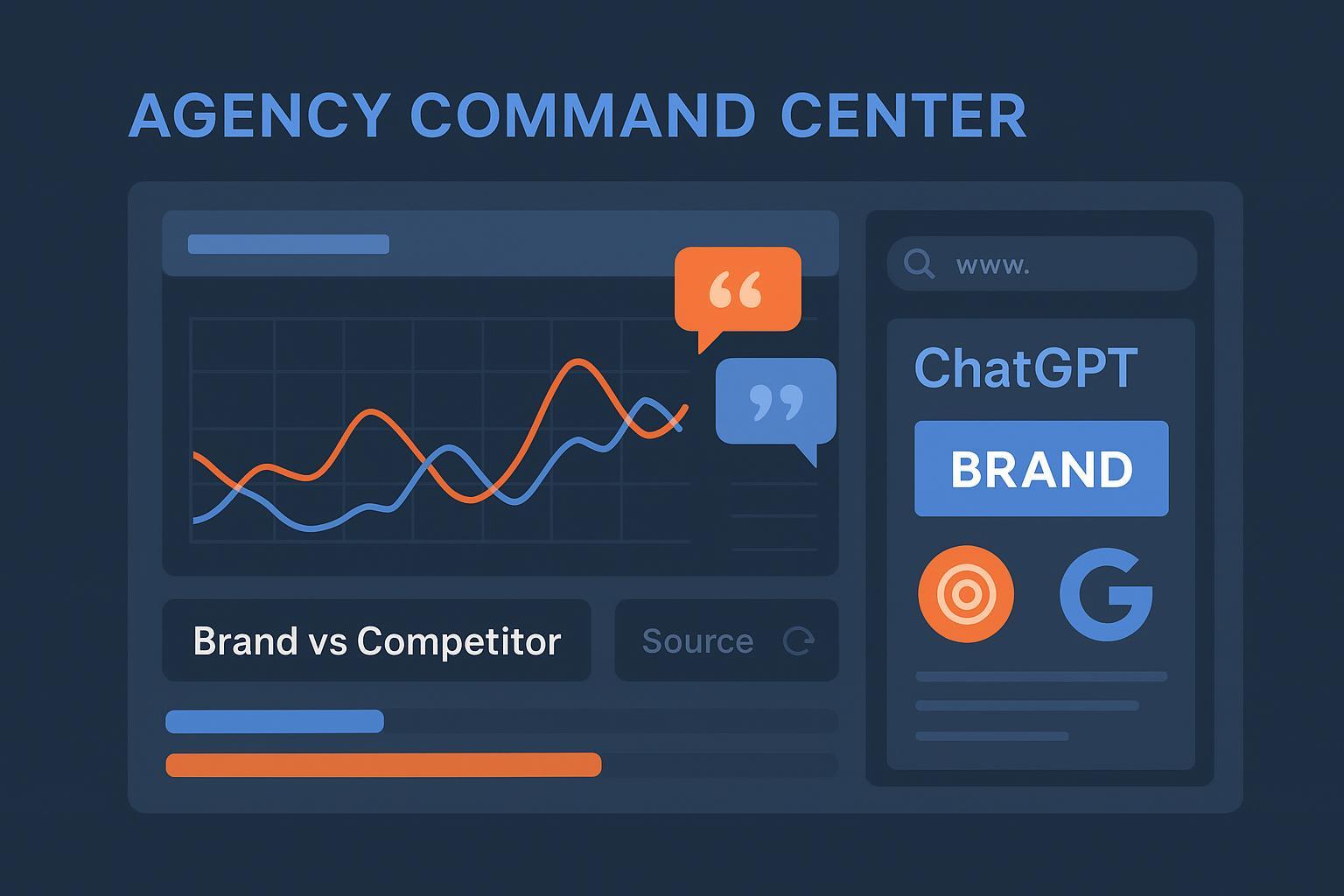
Leading Tools to Track AI Search Instability for Brand Queries (ChatGPT Focus) in 2025
Monitoring how ChatGPT answers shift for your brand terms isn’t a nice‑to‑have; it’s a retention tactic. When brand and “Brand vs Competitor” queries wobble, your narrative in AI answers can flip overnight—citations rotate, links disappear, and new domains capture attention. Industry roundups show active vendor development and volatility signals are now table stakes for agencies. For a concise market view, see the comparative overview in Search Influence’s AI SEO Tracking Tools analysis (2025), then use the measurement framework below to standardize your decisions.
The measurement framework for brand‑query instability (ChatGPT)
Before you shortlist vendors, align on what “instability” means and how you’ll measure it on brand queries. We use these reproducible metrics:
URL consistency (%): Across repeated runs for the same prompt set, what fraction of answers cite the same URL(s)? Lower consistency means higher volatility.
Citation churn rate: How many new or removed cited domains appear per interval (e.g., daily or weekly)? Complements consistency.
Share of answer: How often your brand’s domain appears among cited sources for a prompt set. This is part of broader AI visibility; see our definition in AI visibility explained.
Semantic drift: How much the text of the answer changes over time, measured via embeddings or content diffs.
Hallucination flags: Unsupported claims about your brand, incorrect or 404 citations, or contradictions with authoritative sources.
Presence frequency: How often ChatGPT returns an answer with citations for the query and how often that presence toggles.
Tip: For brand terms, include at least three prompt variants (brand + product, brand vs competitor, brand reviews) and run them over a 14‑day window to capture weekday/weekend dynamics. Think of instability like weather: you don’t judge a climate from a single afternoon.
How we chose (transparent criteria and weights)
To keep this list auditable, we applied equal criteria and public documentation wherever possible. We prioritized ChatGPT tracking, but noted cross‑engine coverage when relevant.
Capability match to brand‑query instability (coverage, citation extraction, hallucination detection): 30%
Evidence quality and transparency (feature docs, third‑party validation, data exports): 20%
Update frequency and reliability (daily/weekly cadence, uptime): 15%
Usability for agencies (white‑label, multi‑client reporting): 15%
Ecosystem/compatibility (APIs, exports, integrations): 10%
Value/price band and limits: 10%
Data sources included official product pages and help docs published in 2024–2025, plus selected practitioner analyses. Pricing and features are subject to change; verify on vendor sites before procurement.
The leading tools, grouped by strengths
Geneo — Best for agency white‑label cross‑engine reporting
Disclosure: Geneo is our product. Geneo — AI visibility monitoring across ChatGPT, Perplexity and Google AI Overview. Geneo is built for agencies: multi‑platform visibility monitoring, a Brand Visibility Score, competitive views, and white‑label client reports on a custom domain. For ChatGPT brand queries, Geneo helps track share of answer, citation churn, URL health signals, and instability metrics like URL consistency and semantic drift with actionable optimization recommendations. It’s designed to make volatility intelligible and presentable in client‑ready dashboards.
Best for: Growth‑focused agencies that need repeatable, client‑ready reporting across accounts.
Not for: Teams requiring bespoke research‑grade pipelines or open APIs for custom metrics.
Compliance notes: Use platform workflows and avoid disallowed scraping; configure sampling windows per client.
Other options (in brief)
If you need a specific niche capability beyond agency‑grade reporting, these categories can help frame a shortlist:
Enterprise suites with existing SEO stacks: Useful when your team is already standardized on a large platform and wants prompt tracking folded into existing dashboards.
Budget daily trackers: Simple daily prompt monitoring for a fixed set of brand queries when cost is the primary constraint.
Retail/commerce specialists: Optimizes ChatGPT Shopping placement and retail‑specific visibility for marketplaces and brands.
API‑first enterprise stacks: For teams building custom pipelines with deep crawler/bot analytics.
Evaluate any alternative case‑by‑case and verify cadence, export options, and ToS‑aligned data collection with vendor sales before procurement.
Comparison snapshot (Geneo at a glance)
Tool | Engines | Cadence | Exports/API | Notable strength |
|---|---|---|---|---|
Geneo | ChatGPT, Perplexity, Google AI Overview | Scheduled | White‑label reports | Agency‑first cross‑engine reporting |
Operational guidance for agencies
Set refresh cadences and thresholds by query type. For brand terms and “Brand vs Competitor,” daily captures with weekly rollups strike the right balance. As guardrails: alert when URL consistency falls below 60%, when citation churn exceeds two new domains per week for a key prompt, or when hallucination flags include unsupported claims or 404 citations.
Translate instability into client‑friendly stories. Show before/after snapshots, annotate which domains rotated into citations, and explain how share of answer changed. Package these views in white‑label dashboards—see Geneo for agencies—and tie changes to actions: publish or update authoritative pages, improve documentation, and add structured data that LLMs can safely cite.
Finally, make compliance routine. Avoid scraping restricted interfaces; prefer official connectors and documented workflows. Document your sampling windows, prompt variants, and alert thresholds in every client engagement.
FAQ
How should we pick brand prompts and windows? Start with 10–20 prompts covering your top brand intents: brand + product, brand vs competitor, brand reviews, and support/documentation queries. Run them daily over 14–28 days to capture volatility patterns and compute URL consistency, citation churn, and share of answer across time windows.
How do we explain volatility and business impact to clients? Use instability metrics and trend lines. If share of answer drops or new domains dominate citations, show the answer text drift and the specific pages that lost presence. Then outline corrective actions—new or updated authoritative content, clear spec sheets, and FAQs—to reclaim visibility.
Next steps
Align on metrics and thresholds for brand queries.
Choose a tool that fits your cadence, evidence needs, and reporting workflows.
Stand up dashboards and alerts, and schedule monthly reviews of instability.
Build a small “methods appendix” for every client to keep measurement transparent.
When you’re ready to operationalize cross‑engine, agency‑grade reporting with client‑friendly dashboards, take a look at Geneo.