
AI Search Visibility Playbook 2026 — Geneo
Executive GEO playbook for marketers: 90‑day strategies, monitoring and measurement to boost brand citations across ChatGPT, Perplexity, and Google AI Overviews.
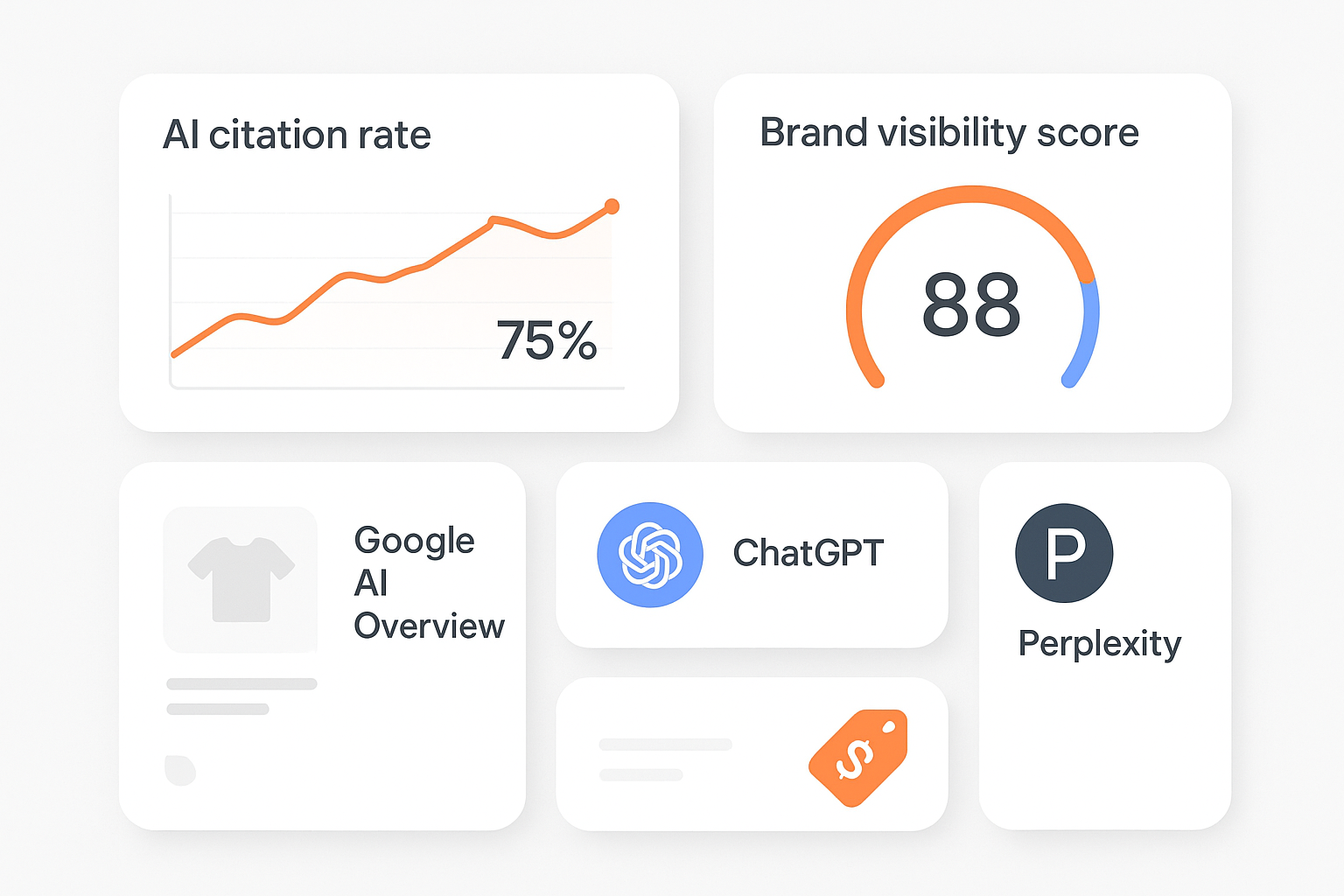
If your product pages and buying guides are being summarized by AI without credit, you’re not alone. The goal of this playbook is clear and measurable: increase your brand’s inclusion and citations across Google AI Overviews, ChatGPT, and Perplexity so your expertise shows up where shoppers make decisions. We focus on the signals large language models and AI engines actually use, provide an executive 90‑day plan, and show how to monitor, attribute, and improve over time.
Key takeaways
Treat AI search visibility as a measurable KPI alongside SEO and brand
Strengthen extractable content and structured data so engines can cite you
Align your entity signals and references across your site and the open web
Monitor weekly across platforms, then optimize based on gaps you can verify
Tie visibility lifts to assisted conversions using defensible attribution
A quick primer on GEO and why it matters
Generative Engine Optimization focuses on how AI engines select, synthesize, and cite sources. Unlike classic SEO, AI surfaces favor answer‑ready copy, strong entity integrity, and machine‑readable structure. You can’t count on referral clicks from zero‑click experiences like AI Overviews, but you can improve the odds your brand is named and your site is cited. Think of GEO as optimizing for inclusion and trust rather than just rankings.
The signals AI engines rely on
Across platforms, five signals consistently correlate with inclusion and citations:
Authority and trust demonstrated through expert bios, original data, and third‑party validation. For example, Google continues to emphasize E‑E‑A‑T in documentation and updates for merchant and product experiences. See Google’s recent structured data and merchant guidance in Search documentation updates.
Extractability of answers in 50–120‑word summaries supported by clear headings and verifiable facts. Perplexity is explicitly citation‑first, attaching sources to synthesized answers as described in How Perplexity works and cites sources.
Structured data for products and policies including Product, Offer, and return details at the Organization level. Guidance on return policies and related schema changes is covered in Google clarifies structured data for returns and loyalty.
Freshness with clear update dates in content, changelogs for guides, and revisable facts that engines can verify.
Canonical clarity including clean URLs, variant handling with
isVariantOf, and server‑rendered markup validated in Rich Results tests.
Raise AI search visibility with a 90‑day playbook
Phase one assess and stabilize
Begin by auditing what engines can see. Sample high‑intent queries weekly on Google AI Overviews, ChatGPT with Deep Research, and Perplexity. Capture whether your brand is mentioned and whether your site is cited. Reconcile entity signals by aligning your Organization schema with authoritative references and sameAs links to Wikidata or Wikipedia entries. Strengthen essential structured data for products, offers, certifications, and return policies, validating in Google’s Rich Results tests. Target a baseline visibility scorecard that tracks brand mentions, citations, and inclusion rate by platform.
Success threshold for phase one: establish a consistent sampling cadence and close critical schema gaps for your top 50 products or buying guides.
Phase two build answer‑ready content
Rewrite priority pages to surface extractable 50–120‑word summaries that answer buyer questions directly. Add data‑backed comparisons and clear headings so engines can lift coherent snippets. Include expert bios and references to original research where possible. Consolidate FAQs using concise Q‑A blocks with internal links to deeper sections. Ensure fresh timestamps and changelog notes for iterative updates. The aim is to make your content the most reliable and easy‑to‑cite source in the category.
Success threshold for phase two: top queries show your brand named and at least one of your pages cited in Perplexity and ChatGPT Deep Research for half of your sampled topics.
Phase three monitor, optimize, attribute
Continue weekly sampling and trend inclusion rates by platform. Where your brand is absent, inspect competing citations to identify the attributes you lack—structured properties, recent data, or clearer summaries—and adjust. Configure GA4 data‑driven attribution and CRM stitching so you can correlate visibility lifts with assisted conversions, branded search growth, and pipeline changes. Use defensible proxies and avoid over‑claiming; zero‑click surfaces will never provide perfect tracking, but consistent visibility trends paired with conversion assists tell a reliable story.
Success threshold for phase three: month‑over‑month lift in citation rate and visible assisted conversions tied to content you updated.
AI citation audit checklist
Sample five to ten buyer queries per category on each platform and record whether your brand is named and whether your site is cited
Validate Organization and Product schema with sameAs links and distinct URLs for variants using
isVariantOfAdd or revise a 50–120‑word summary that answers the core question with verifiable facts and an internal link to supporting detail
Ensure return policies and merchant details are machine‑readable and consistent across site and external references
Example schema snippet for a product variant:
{
    "@context": "https://schema.org",
    "@type": "Product",
    "name": "Ultra Soft Cotton Sheets Queen",
    "sku": "USCS-QUEEN",
    "isVariantOf": {
      "@type": "ProductGroup",
      "name": "Ultra Soft Cotton Sheets",
      "variationTheme": "Size"
    },
    "brand": {
      "@type": "Brand",
      "name": "BrandName"
    },
    "offers": {
      "@type": "Offer",
      "price": "99.00",
      "priceCurrency": "USD",
      "availability": "https://schema.org/InStock"
    }
  }
Monitoring and tooling to sustain AI search visibility
Set a weekly cadence to query platforms with consistent buyer‑intent prompts. On Perplexity, use citation‑rich modes like Pro Search or Deep Research. With ChatGPT, enable Deep Research so sources are cited. For Google, watch AI Overviews and AI Mode for brand mentions across evaluation queries; expect limited referral traffic but measurable inclusion.
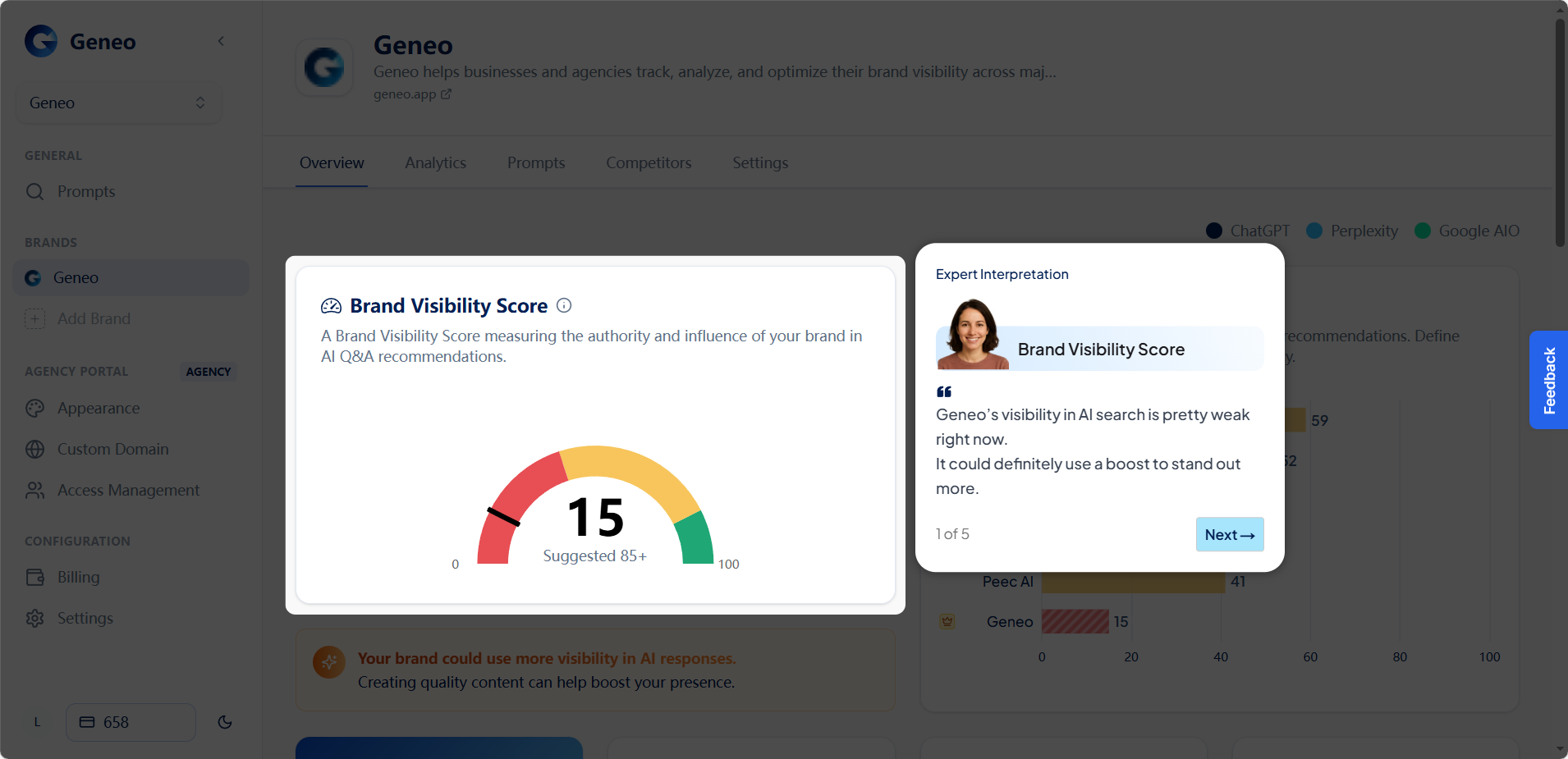
Disclosure: Geneo is our product. A practical way to operationalize this workflow is to use a GEO dashboard that samples queries across engines and trends the results by platform. Geneo’s three‑step model—Scan and Detect, Analyze and Score, Optimize—tracks brand mentions and link citations, then rolls them into a 0–100 Brand Visibility Score. The score reflects visibility percentage, mentions, link visibility, and link reference counts across ChatGPT, Perplexity, and Google AI Overviews. See the Geneo homepage for the model overview and the agency page for visibility scoring context.
Practical monitoring tips:
Sample weekly and expand to new query variants as your catalog grows
Flag drops in inclusion rate and correlate with content or schema changes
Set alert thresholds when platform‑specific visibility declines for multiple weeks
Measurement and ROI blueprint
The most credible way to prove impact is to pair visibility trends with assisted conversion signals. Configure GA4 with data‑driven attribution and annotate content updates so you can trace lifts back to specific pages. Expect imperfect visibility in a zero‑click world; build a defensible model and improve it each quarter.
An anonymized directional example from a twelve‑week window for a mid‑market e‑commerce brand:
Metric | Baseline Weeks 1–2 | Weeks 11–12 |
|---|---|---|
AI Citation Rate across sampled queries | 6 percent | 18 percent |
Platform Inclusion Rate Perplexity | 22 percent | 48 percent |
Platform Inclusion Rate ChatGPT Deep Research | 15 percent | 39 percent |
Brand Visibility Score composite | 61 | 78 |
Assisted conversion rate for updated pages | 1.4 percent | 2.1 percent |
Methodology notes: N equals one brand, fifty query variants sampled weekly, inclusion defined as brand named or site cited in synthesized answers. Assisted conversion rate measured in GA4 using data‑driven attribution for sessions landing on updated pages within a seven‑day lookback. This example is directional and should be replicated in your context.
A brief methodology sidebar for Brand Visibility Score
The Brand Visibility Score aggregates four components—visibility percentage across queries, total brand mentions, link visibility percentage, and link references—into a 0–100 composite. Scores are benchmarked by platform and trended weekly. For a neutral overview of this scoring approach, visit the Geneo agency page.
Platform nuances that influence inclusion
Google AI Overviews favor authoritative, machine‑readable content and diversify sources. Industry coverage notes that sourcing pipelines prioritize speed and relevance while minimizing overt reliance on classic link signals. See comparative analyses in Search Engine Land’s guide to measuring visibility in a zero‑click world. Perplexity is transparent about citations and rewards recent, structured content, as outlined in Deep Research and Pro Search details. ChatGPT with Deep Research cites sources and tends to select domains with high‑quality long‑form pages dense with verifiable data per OpenAI’s Deep Research guide.
What to do next
Run a four‑week citation audit on your top categories, fix structured data gaps, and rewrite two priority guides with extractable summaries. If you want help operationalizing multi‑platform monitoring and scorecards, learn more at geneo.app.