
How to Make Your Brand AI-Search-Friendly (2025)
Master AI-search-friendly branding with 2025’s best practices for structured data, entity clarity, content optimization, and measurement workflows. Advanced guide for marketers.
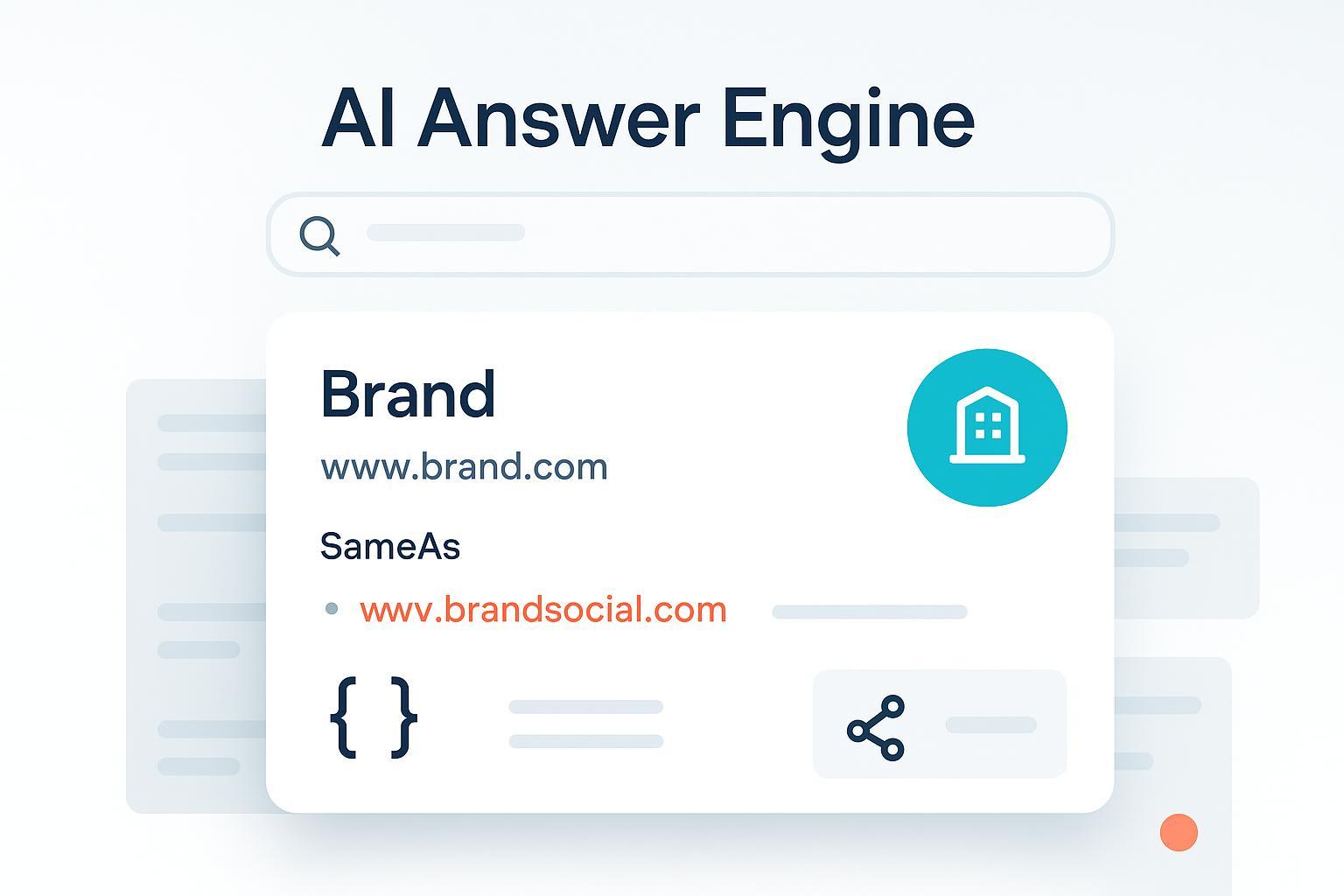
Modern search doesn’t stop at ten blue links. AI answer engines summarize, synthesize, and—when you earn it—cite brands directly in their responses. Treating AI visibility as “just more SEO” misses the point. The question isn’t only “How do we rank?” It’s “How do we become a reliable source that AI systems prefer to quote?”
This guide lays out a practical, source-backed playbook you can run in the next 30 days and refine quarterly.
1) How AI answer engines pick and cite sources
AI surfaces aren’t identical. Each has distinct retrieval, grounding, and attribution behaviors. Your strategy should map to how they select and display sources.
According to Google’s 2025 guidance for AI-powered search, success starts with crawlable, people-first content and clean technical hygiene, not gimmicks—see the official overview in Google’s own explanation of how to succeed in AI-powered search (2025). Microsoft emphasizes “grounding” answers in web results and showing in-line sources in Copilot Search—outlined in Introducing Copilot Search in Bing (April 2025).
| Platform | How it cites | What to optimize for |
|---|---|---|
| Google AI Overviews/AI Mode | Aggregated answer with a small set of linked sources visible beneath the summary. | People-first content; clear Q→A sections; robust entity and Organization schema; fast, indexable pages. |
| Bing Copilot Search | In-line citations and expandable sources; shows queries it generated. | Authoritative, well-structured pages; concise claims backed by sources; strong page presentation and structured data. |
| Perplexity | Prominent source cards; citation-first UI. | Clarity, succinctness, and credible third-party corroboration; technical compliance; layered bot controls if needed. |
| ChatGPT with browsing/search | Narrative answers with source links. | Comprehensive explainers and FAQs; ensure GPTBot/ChatGPT-User access if you want inclusion; clean HTML and clear author attribution. |
2) Build AI-readable content (so models can extract, summarize, and cite)
Think like a model and a reader. Models scan for crisp answers, supporting facts, and unambiguous signals of who said what.
- Use a Q→A→evidence layout on key pages. Lead with a 1–2 sentence answer, follow with a short explanation, then cite primary data or examples.
- Write subheadings as questions (H2/H3) that mirror how people ask. Keep paragraphs focused and skimmable.
- Keep facts machine-readable: dates as YYYY-MM-DD, prices with currency symbols, tables for comparable specs.
- Use semantic HTML. Proper H1–H3 hierarchy, descriptive alt text, captions, and transcripts for media. Models can’t reliably extract from messy, script-heavy layouts.
- Avoid bloated intros and filler. If a human would scroll, a model might skip it too.
If you’re new to the concept, start with a primer on what we mean by AI-focused brand exposure and why it’s different from SEO: see an overview of AI visibility.
3) Structured data and entity clarity (make your brand unambiguous)
Structured data helps engines (and models) tie content to the right entity. Priorities include Organization (name, URL, logo, sameAs links to authoritative profiles), Article/BlogPosting (with a real author and publisher metadata), Product (accurate commerce details), FAQPage (for concise Q&A), LocalBusiness (precise NAP and hours), and Breadcrumb (to clarify hierarchy). Validate with Google’s Rich Results tools, and keep JSON-LD updated as your site evolves. This aligns with Google’s current structured data documentation; you can find the official introduction and Organization schema guidance in Google’s structured data docs.
Two common pitfalls stand out. First, entity naming drifts across languages and domains—punctuation, legal suffixes, or nickname variants introduce ambiguity. Second, missing or thin author pages weaken trust. AI systems give more weight to content with clear authorship and publisher identity, so invest in proper author bios with links and corroborating profiles.
For terminology across the GEO/AI landscape, bookmark this quick explainer of GEO vs SEO terms.
4) Earn authority beyond your site (so models trust and cite you)
AI systems lean on sources that demonstrate credibility and original insight. You’ll want proof points off-site and assets that stand on their own. Publish primary research that others can quote—surveys, benchmarks, anonymized usage data—and host clean, crawlable artifacts like charts or PDFs that make attribution obvious. Contribute expert commentary to reputable publications and community hubs; even a well-placed quote can ripple through summaries. Favor formats that travel well, such as clear how-to frameworks and comparison tables, and avoid low-quality aggregators that add noise but rarely show up in AI citations.
5) Localization and disambiguation (be the right entity in the right market)
Operating across regions multiplies the risk of being mistaken for a different brand. Implement hreflang correctly with page-to-page mappings, and localize beyond translation—use local currency, examples, and regulatory context. Add LocalBusiness schema for each location, keep NAP consistent across directories, and reinforce identity with Organization schema’s sameAs pointing to authoritative profiles. Create localized Q→A sections that mirror how people in that market ask questions. Done well, you remove guesswork and reduce cross-market confusion.
6) Measurement & ROI (track citations, sentiment, and AI-driven referrals)
Here’s the deal: AI answers can reduce traditional clicks, but earning a citation mitigates that loss. In September 2025, Seer Interactive reported that CTR fell sharply on queries with AI Overviews, yet being cited increased organic CTR by meaningful margins; see their analysis of AI Overviews’ impact on CTR (Seer Interactive, 2025). And in July 2025, Pew Research found users exposed to AI summaries are less likely to click links, reinforcing the need to be among the few sources that are cited—review Pew’s 2025 finding on lower click propensity with AI summaries.
Prioritize KPIs you can actually move:
- Frequency of citations by platform and query theme
- AI-driven referrals (where referral parameters or patterns exist)
- Sentiment and correctness of mentions in AI answers
- Long-tail coverage growth for strategic questions
- Ratio of your owned sources vs. third-party sources used to describe your brand
Quick baseline checklist:
- Identify top 50–100 questions that matter to your brand and customers.
- Map current citations across Google AI Overviews/Mode, Bing Copilot, Perplexity, and ChatGPT.
- Tag pages that earn citations vs. near-misses; compare structure and evidence.
- Record referral patterns and sentiment; set monthly deltas.
7) Brand safety and controls (fix errors, decide what to allow)
Mistakes happen. Your job is to catch and correct them—and decide where to draw the line on access.
- Feedback loops: Use in-product reporting (thumbs-down/Report) on Google AI Overviews, Bing Copilot, Perplexity, and ChatGPT. Keep a log with screenshots, timestamps, and your proposed correction.
- Update your content with clear, cited corrections. The fastest fix is often your own page that models can quote.
- Crawler policies: If risk outweighs reward, you can block AI training or access agents such as GPTBot, Google-Extended, ClaudeBot, PerplexityBot, and CCBot via robots.txt. Note that compliance is voluntary.
- Layered controls for contested crawlers: Cloudflare alleged in August 2025 that Perplexity used undeclared crawlers that could bypass robots rules; consider WAF rules and rate limiting in addition to robots directives. See Cloudflare’s perspective in their 2025 write-up on stealth crawling claims.
8) A 30-day workflow you can run now
Week 1: Baseline and prioritization
- List your top customer questions by funnel stage. Audit 15–20 core pages for Q→A structure, authorship, and schema completeness.
- Validate crawlability (200s, canonicals, sitemaps), and check structured data for Organization and Article/FAQ.
Week 2: Content upgrades and entity clarity
- Rewrite 5 critical pages with Q→A→evidence sections and concise summaries up top. Add or fix author bios and Organization JSON-LD with sameAs.
- Publish one short original insight (e.g., a benchmark or mini-survey) with a downloadable chart.
Week 3: Authority signals and localization
- Pitch 3–5 expert quotes to reputable publications or community posts on topics you cover.
- Localize one high-impact page for a priority market with hreflang, LocalBusiness schema, and market-specific examples.
Week 4: Monitoring, safety, and iteration
- Build a simple dashboard for AI citations, sentiment, and referrals. Submit feedback for any harmful inaccuracies you find.
- Decide on crawler policies and implement robots/WAF updates if needed. Set a monthly review cadence.
Practical example for monitoring and iteration (disclosure: Geneo is our product.)
- In scenarios where teams need cross-platform tracking of where, how, and with what sentiment a brand is referenced in AI answers, you can centralize those signals and compare month-over-month progress. The goal isn’t just counting mentions; it’s correlating improvements to specific changes—like a new FAQ section or a published benchmark—and doubling down on what moved the needle.
What to do next
- Choose two product or solution pages and one educational article. Restructure them with Q→A→evidence, add missing JSON-LD, and tighten authorship signals.
- Publish a small piece of original data you can update quarterly. It’s the sort of atom that AI summaries love to pick up.
- Set your monitoring cadence and escalation playbook for inaccuracies. Don’t wait for a crisis.
If you want deeper background on the strategy side, start with our primer on AI visibility and keep a glossary handy with GEO vs SEO terms. If you operate as or with an agency, this page outlines collaboration patterns and reporting rhythms worth adopting: agency workflows.
References for further reading
- Google’s overview of what helps brands succeed in AI-powered search in 2025: Search Central’s AI-powered search guidance
- Microsoft’s introduction to Copilot Search and how results are grounded and cited: Introducing Copilot Search in Bing (2025)
- Evidence on behavior shifts when AI summaries appear: Pew Research’s 2025 analysis of lower clicks with AI summaries
- CTR impact and mitigation by being cited: Seer Interactive’s September 2025 update on AIO and CTR
- Brand safety note on crawler compliance: Cloudflare’s 2025 post on alleged stealth crawling