
Understanding AI Ranking Signals Behind the Scenes
Explore AI ranking signals: see how Google AI Overviews, ChatGPT, and Perplexity choose, cite, and rank sources. Practical tips for visibility.
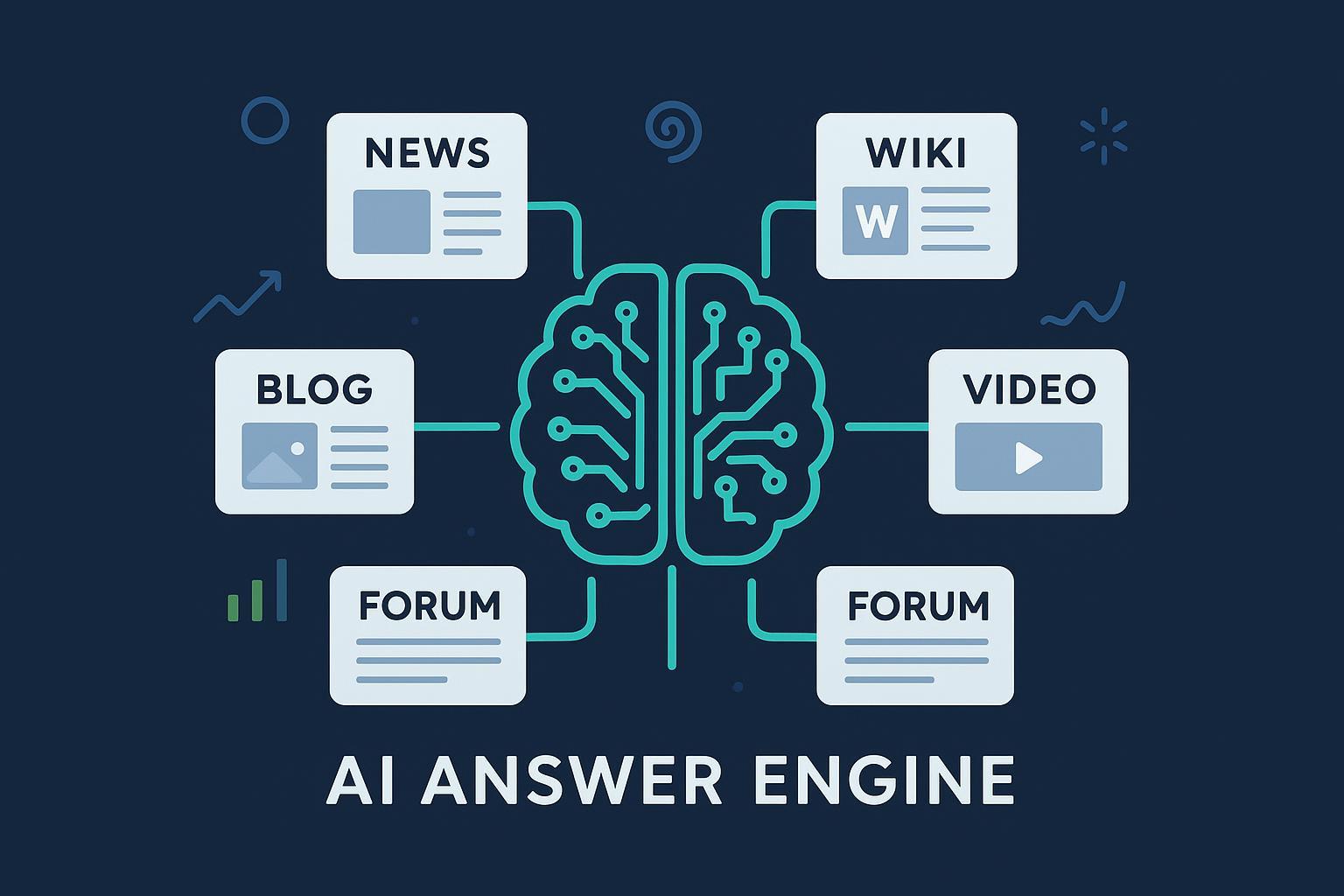
What makes an AI answer engine choose your page for a citation—and skip another that looks similar? That decision is driven by AI ranking signals: the observable and inferred factors systems like Google AI Overviews, ChatGPT Search, and Perplexity use to select, order, and attribute sources in generated responses.
In classic SEO, ranking usually means a linear list of pages. In AI search, ranking signals govern which sources are chosen for synthesis, how many are cited, how they’re displayed, and how freshness and diversity are balanced. If your team cares about AI visibility, treat these signals like dials you can tune—authoritativeness, relevance to intent, freshness, structure, and source diversity support.
For clarity, here’s a quick contrast.
| Dimension | Classic SEO rankings | AI ranking signals in answer engines |
|---|---|---|
| Primary output | Ordered list of webpages (blue links) | Synthesized answer with supporting citations |
| Selection basis | Page authority, relevance, links, technical health | Authority/E‑E‑A‑T, semantic intent coverage, freshness, source diversity, extractability |
| Citation behavior | Implicit (position = endorsement) | Explicit links in‑line or in modules; multiple sources per answer |
| Freshness handling | Varies by query; periodic re‑indexing | Strong emphasis on up‑to‑date grounding and recency where helpful |
| Structure sensitivity | Helpful but indirect (e.g., snippets) | High: clear headings, FAQs, tables aid extraction and citation |
| Feedback loops | Clicks, dwell, user behavior | User feedback on answer quality; model updates; reliability initiatives |
What AI ranking signals look like by platform
Google AI Overviews
Google’s AI Overviews synthesize responses from its index and cite multiple supporting sources inline or in dedicated link modules. Official guidance and announcements emphasize connecting people to a wider range of high‑quality sites and keeping answers grounded in current information. According to Google’s May 2024 rollout note, the system uses generative AI to summarize and link out to helpful resources across the web, with an aim to highlight reputable and diverse sources in Search results (Google’s generative AI rollout for Search, May 2024).
For publishers, the most directly actionable signals are familiar yet more stringent:
- Authority and E‑E‑A‑T: Demonstrate experience, expertise, authoritativeness, and trustworthiness; prioritize original, helpful content.
- Semantic relevance to intent: Cover the core query and adjacent subtopics the system might fan out to when forming an overview.
- Freshness: Ensure dates are visible and content is updated where timeliness matters.
- Source diversity: Encourage a balanced citation ecosystem by including credible references and data within your content.
- Structure and extractability: Use scannable headings, concise summaries, FAQs, and tables.
Publisher controls are standard Search mechanisms—robots.txt, snippet settings (nosnippet, data‑nosnippet, max‑snippet), and noindex—documented in Google’s guidance for AI features (Search Central: “AI features and your website”).
ChatGPT Search/Browse (OpenAI)
ChatGPT Search is powered by a fine‑tuned GPT‑4o that blends partner web search with summarization, showing transparent citations and a Sources sidebar when answers draw from the web. OpenAI’s announcement frames the system around timely, trustworthy sources, with clear attribution inside the answer and in the sidebar (OpenAI: “Introducing ChatGPT Search”). Ongoing release notes highlight improvements in accuracy, formatting, and shopping intent detection, reflecting active feedback loops (ChatGPT release notes).
Observed signals in practice include:
- Relevance and intent specificity: ChatGPT often refines or expands queries via search partners to capture subtopics.
- Source type preferences: Balanced mix of reputable news, encyclopedic references, and official documentation when available.
- Citation presentation: Inline citations and a Sources view make transparent attribution a core behavior.
- Freshness when beneficial: Web search engagement is triggered when recency adds value.
For optimization, ensure your pages clearly cover the query’s “why” and “how,” cite reputable sources, and present short, quotable summaries that are easy to attribute.
Perplexity
Perplexity operates as an AI answer engine with live web access and conspicuously transparent citations. Industry coverage highlights its tendency to present clickable citations prominently and, in many query classes, to reflect a mix of expert sources and community content (e.g., Reddit, YouTube) alongside authoritative sites. For an overview of how different engines generate and cite answers—and where Perplexity stands—see Search Engine Land’s comparison of answer engines and their citation behaviors (Search Engine Land’s answer engine overview).
Signals that tend to matter:
- Structure/FAQ friendliness: Perplexity frequently lifts concise answers and FAQs.
- Authority and topic depth: Expert pages with clear credentials and detailed coverage fare better.
- Source diversity and transparency: Citations are always visible; users can inspect them easily.
- Query class effects: Buying guides and product questions may surface reviews and videos; academic focus can elevate scholarly sources.
If your content is comprehensive, well‑structured, and clearly sourced—with short, extractable nuggets—you increase the odds of appearing in Perplexity’s citation set.
Universal optimization levers you can tune
- Authoritativeness: Use bylines, credentials, transparent sourcing, and original analysis to signal trust.
- Relevance and intent coverage: Map content to the query’s core intent and adjacent subtopics; include concise summaries and FAQs.
- Freshness: Update pages regularly; surface dates and version notes where helpful.
- Structure and extractability: Use clear headings, bullet summaries, and tables to make attribution easy.
- Source diversity support: Link out to reputable references and include evidence tables when appropriate.
- Safety/compliance: For YMYL topics (health, finance, safety), add disclaimers and cite standards and official documentation.
Measurement decision‑makers can trust
AI search visibility is measurable. The trick is choosing KPIs that reflect the way answer engines work—and monitoring them consistently across platforms. If you’re new to the concept of AI visibility, start with this primer on brand exposure in AI search (What Is AI Visibility?). Then align your dashboard around KPIs designed for AI citations:
- Citation Share of Voice across engines: What percent of answers for your target prompts cite your domain?
- Prompt coverage rate: How often do your priority prompts include your brand or domain?
- Sentiment distribution: Are the mentions positive, neutral, or negative in the synthesized answer?
- Freshness index: What’s the median age of content being cited for your brand?
- UGC vs. expert ratio: How frequently are you cited alongside community content versus expert or official sources?
To operationalize these, define a stable weekly prompt set, track citations and sentiment per engine, and compare movements over time. For frameworks and scorecards that teams can adopt, see Geneo’s guide to AI Search KPIs (AI Search KPI Frameworks for Visibility, Sentiment, Conversion) and its companion on evaluating AI answers (LLLMO Metrics: Measuring Accuracy, Relevance, Personalization).
A quick reality check: AI answer modules are more volatile than classic organic rankings. Expect fluctuations as engines update models and adjust citation presentation. That’s why reproducible measurement—consistent prompts, time‑boxed comparisons, and clear annotations—matters.
Risks, compliance, and safeguards
AI engines are improving, but they’re not flawless. Investigations into AI search systems have documented fabricated or broken citations in certain contexts and high error rates for specific models. For example, Columbia Journalism Review’s Tow Center compared eight AI search engines and found widespread citation issues in news contexts in 2024–2025, a reminder to apply editorial oversight and verify sources before relying on AI summaries (CJR’s comparative study of AI search engines).
Compliance expectations also differ by query type. For YMYL (Your Money or Your Life) topics, Google’s quality systems set a higher bar for Experience, Expertise, Authoritativeness, and Trustworthiness. Publishers should emphasize credentials, use structured data where appropriate, and keep content updated. If you need to control exposure, standard Search mechanisms like snippet settings and noindex apply to AI features as documented in Google’s guidance referenced earlier.
Pragmatically, build safeguards into your workflow: monitor for misattributions, annotate risky queries, and avoid over‑reliance on summaries for decisions that affect health, finances, or safety. When answers pull heavily from UGC, consider adding expert reviews, official references, and clearer summaries to help engines balance the citation mix.
Practical workflow example (Disclosure: Geneo is our product)
If your team wants a single pane of glass to monitor AI citations across platforms, a neutral workflow looks like this. Disclosure: Geneo is our product.
- Set up weekly monitoring across Google AI Overviews, ChatGPT Search, and Perplexity for a defined prompt list. Log cited domains, citation positions, and sentiment; flag YMYL queries.
- Build dashboards for Citation Share of Voice, Prompt Coverage, Sentiment Distribution, Freshness Index, and UGC vs. expert ratio. Compare week‑over‑week and note model updates.
- Troubleshoot drops by auditing freshness (dates, updates), structure (headings, FAQs, tables), and E‑E‑A‑T cues (bylines, credentials, references). Review newly cited competitors and whether engines shifted toward UGC for this query class.
- Iterate with small, reversible changes: add an FAQ, update summaries, publish a comparison table, or bolster references. Confirm movement in AI citations over 2–4 weeks before scaling.
Geneo can be used to support this workflow by tracking multi‑engine citations, sentiment, and prompt coverage, and by surfacing optimization suggestions tied to your content inventory. It’s an objective way to see whether the signals you’re tuning actually move the needle.
Next steps
Here’s the deal: AI ranking signals are actionable when you measure them. Start with a compact prompt set, tune authoritativeness, relevance, freshness, and structure, and hold yourself to weekly reviews. If you want a faster path to a working dashboard, explore Geneo’s KPI frameworks and metrics resources linked above, and consider trialing a multi‑engine monitoring setup to validate improvements in your Share of Voice.
Have a question your team can’t answer yet—like which prompts cite you most often or where UGC crowds out experts? That’s your first measurement sprint. Let’s dig in.