
Geneo vs Otterly AI (2026): Actionability, Agencies, and Pricing
Compare Geneo with Otterly AI on how to choose ai visibility tracking tools for brands and agencies.
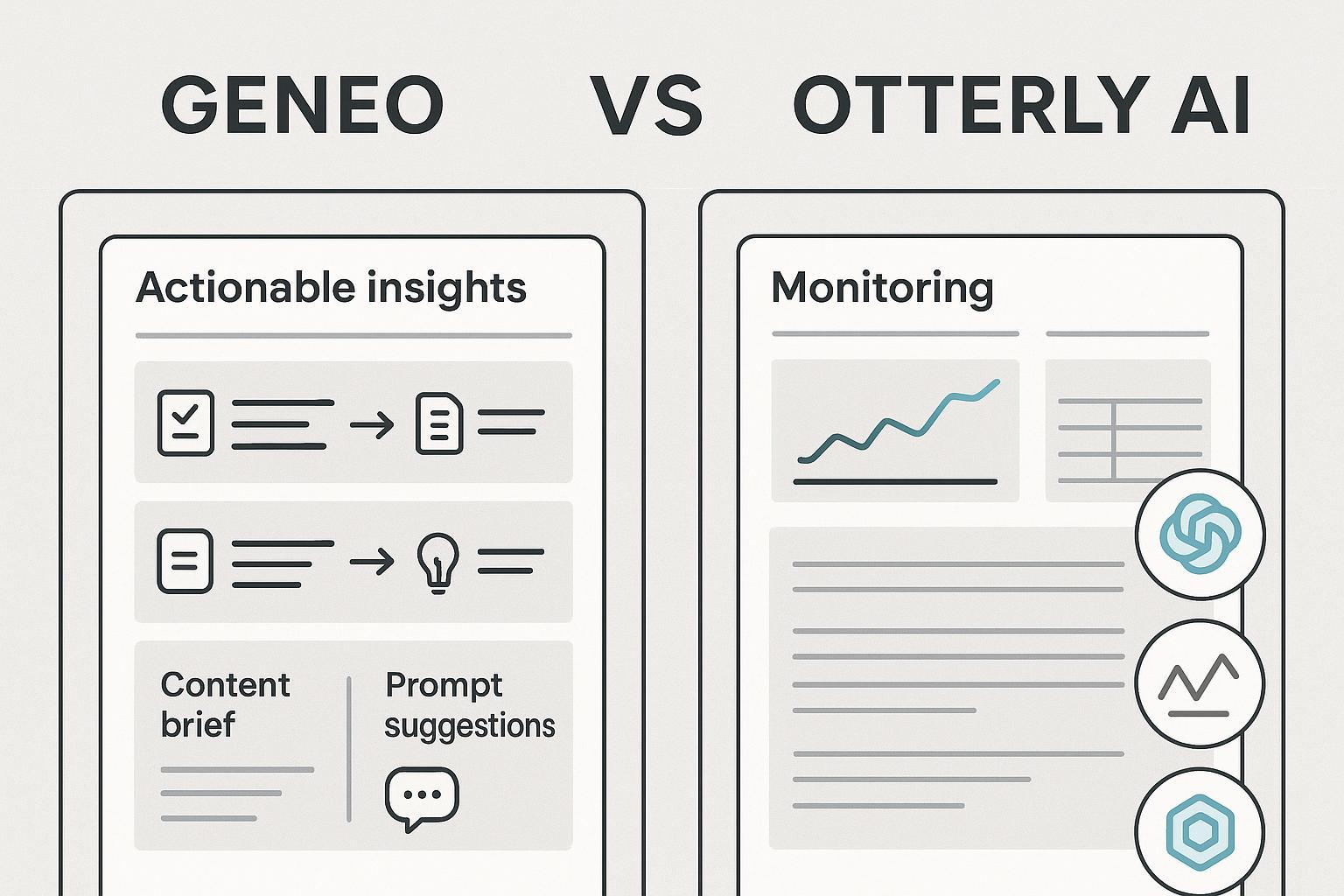
Verdict in 30 seconds: If you need client-ready white-label portals and built-in, step-by-step guidance to improve how AI engines cite and describe your brand, choose Geneo. If your priority is straightforward monitoring across engines on subscription tiers, consider Otterly. Both track sentiment; Geneo leans into actionability and agency delivery, while Otterly orients around monitoring. Pricing note: Geneo offers pay-as-you-go credits alongside subscriptions; Otterly lists subscription tiers. Disclosure: Geneo is our product.
Why this comparison matters in 2026
AI answer engines now shape discovery, trust, and conversions. Winning here isn’t only about watching what ChatGPT or Perplexity say—it’s about knowing exactly how to fix issues so the next answer cites your content and uses your preferred phrasing. That’s why this comparison centers on four buyer-critical angles: actionability (turning insights into content briefs and prompt-level guidance), agency readiness (white-label reporting and client portals), brand control (sentiment and expression signals), and pricing flexibility.
If you’re new to the concept, we break down how AI visibility differs from traditional SEO in our explainer on the definition and scope of AI visibility: what “AI visibility” really means for brands.
Geneo vs Otterly AI: quick comparison
Dimension | Geneo | Otterly AI |
|---|---|---|
Engines covered (as of 2026-01-15) | Focus on ChatGPT, Perplexity, Google AI Overview, with cross-engine dashboards (see Geneo posts for coverage context). | Blogs and pages reference major engines including ChatGPT, Perplexity, Google AI Overviews; some posts also mention Copilot and Gemini. |
Tracking cadence | Emphasizes continuous and frequent monitoring across engines on key pages/posts. | Official cadence not clearly stated on site; a third-party review (2025-10-08) describes weekly refreshes. Treat as third-party, not official. |
Actionability (content briefs, topic ideas, prompt-level guidance) | Provides actionable recommendations, topic generation, and prompt-level optimization guidance grounded in citation patterns. | Monitoring-first positioning on public materials; limited fix guidance is described by third-party reviewers. |
Agency white-label & client delivery | Advertises white-label dashboards and custom domains for branded client portals. | No official white-label or custom-domain claim found on public pages as of 2026-01-15. |
Sentiment & brand expression | Sentiment tracking discussed across Geneo materials; brand expression nuances addressed in methodology blogs. | Sentiment tracking appears in Otterly’s public materials, including its Semrush app page; “expression phrasing” is not explicitly claimed. |
Citations/evidence capture | Detailed citation analytics and link visibility are core; used to drive targeted fixes. | CSV exports for tracked links confirmed in an official blog post. |
Exports & integrations | CSV and API/automation are referenced in public posts; specific scheduling/webhook docs not public. | CSV export is documented; broader integrations/APIs not clearly documented on public pages. |
Pricing model | Credit-based options (including pay-as-you-go) alongside subscriptions; free trial credits available (as of 2026-01-15). | Subscription tiers by monthly prompt quotas; no pure pay-as-you-go described on public pricing page (as of 2026-01-14). |
Data retention & roles | Public details on explicit RBAC/retention windows are limited; demo recommended for enterprise specifics. | Security page mentions daily backups, 30-day data retention for active data and 90-day backup removal windows; roles not clearly documented. |
Support/SLA | Standard support channels listed; no public SLA page surfaced. | Standard security/privacy pages; no public SLA page surfaced. |
As-of note: Pricing, engine coverage, and cadence change frequently. Facts above reference public pages as of 2026-01-15; where third-party reviews are cited, they are labeled as such.
Evidence pointers for the table
Geneo actionability and optimization guidance: see the docs overview describing “Content Strategy Insights” and related posts: Geneo Docs overview and the stepwise KPI frameworks for AI search.
Geneo agency white-label: see the dedicated page on white-label dashboards and custom domains.
Geneo pricing and credits: see pricing details with credit options (as of 2026-01-15).
Otterly sentiment and export notes: see the Otterly Semrush app page and its blog on link exports: Otterly Semrush app page and link-tracking/how to export.
Cadence context for Otterly from a third-party: see the 2025 review on GenerateMore (label as third-party): GenerateMore’s Otterly review (2025-10-08).
Where they differ most
Actionable optimization vs. monitoring
Monitoring tells you what happened; actionability tells you what to do next. Geneo is built to convert findings into motion. The public docs describe “Content Strategy Insights” that surface topic ideas and optimization recommendations based on the kinds of sources AI engines prefer and cite. The accompanying methodology posts go further, outlining alerting and workflows for sentiment drops, competitor surges, or citation gaps—so teams move from observation to specific fixes. See the Geneo Docs overview and the practical KPI frameworks guide for process details, as well as a hands-on primer on optimizing your content to earn AI citations.
For Otterly, the public site and help content emphasize monitoring—multi-engine coverage, brand mentions, and sentiment detection. Several third-party reviews, including the 2025 piece on GenerateMore, also describe Otterly as observational in posture, with less emphasis on built-in how-to-fix guidance. Because those are third-party observations, treat them as directional rather than definitive; the best approach is to test both products against your own prompts.
Bottom line: If your team needs the platform to translate insights into briefs, topic ideas, and prompt-level suggestions, Geneo is particularly strong here. If your team mainly needs visibility and sentiment monitoring, Otterly will feel familiar and focused.
Agency readiness and white-label delivery
Agencies need branded, client-facing reporting that doesn’t advertise the vendor. Geneo explicitly supports white-label: dashboards can be branded and mounted on a custom domain so clients log into “your” portal. Details and examples are outlined on the Geneo agency page.
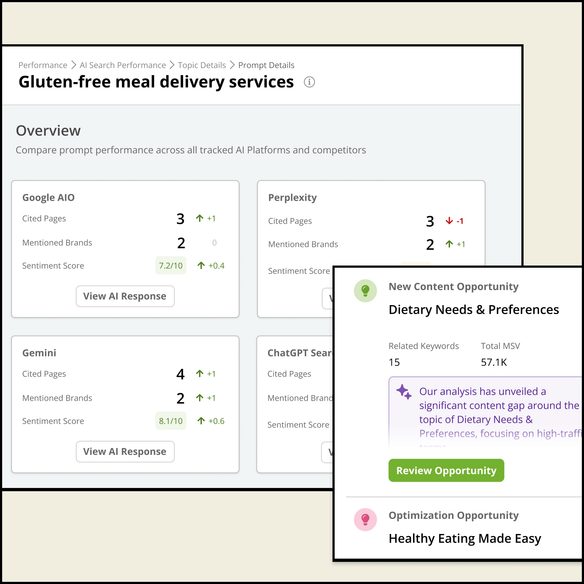
As of 2026-01-15, Otterly’s public materials do not advertise white-label dashboards or custom-domain portals. That doesn’t rule out partner arrangements or roadmap items—it simply means buyers should request a demo and ask explicitly about branding and delivery if agency use is in scope. For many agencies, this single capability is a go/no-go.
Brand control: sentiment and expression
Both platforms talk about sentiment across AI answers, and both position this as a core KPI. Geneo’s posts also discuss “brand expression” nuances—how answers describe your brand and whether they reflect preferred phrasing. This shows up in workflows that tie expression issues to concrete actions (content updates, citation source development, or PR outreach). See the KPI piece for examples of how teams operationalize visibility, sentiment, and conversion signals together in one scorecard: AI search KPI frameworks.
Otterly’s public content confirms sentiment tracking and highlights multi-engine monitoring, including in its Semrush app materials. What’s less explicit is a formal “brand expression” module—so if phrasing control is a priority, bring sample prompts to your trial and evaluate how each platform flags expression issues and proposes fixes.
Pricing flexibility and budgeting
Pricing is a moving target, so treat all specifics as “as of” the date referenced here. Geneo lists free trial credits, subscriptions, and a pay-as-you-go credit option that lets teams scale usage up or down without committing to a monthly plan. For many buyers—especially agencies with fluctuating client loads—that flexibility matters. See current details on Geneo pricing (as of 2026-01-15).
Otterly’s pricing page describes subscription tiers tied to monthly prompt quotas, with add-ons for additional usage (as of 2026-01-14). If you prefer predictable, subscription-style budgeting and your usage is stable, that model may suit you. If you need to avoid lock-in or you expect spiky demand, Geneo’s credit-based approach typically offers more elasticity.
How to test them fairly (a mini methodology you can replicate)
Rather than relying on vendor claims, use a small battery of prompts that represent your actual decision paths. For example:
A product or category query where you want to be cited as a recommended source.
A brand-specific query where sentiment and phrasing matter (e.g., feature comparisons that often get misstated).
A competitor-comparison query where share of voice and citation sources shift frequently.
For each prompt, record:
Which engines are monitored and how often the data updates show changes.
What citations the tools capture (domains, freshness) and whether exports provide the detail you need.
What the platform suggests you do (if anything): topic ideas, content brief elements, prompt-level tweaks, or outreach targets.
If you’re optimizing for citations, you may find this practical walkthrough helpful: how to optimize content to earn AI citations. Think of it this way: the goal isn’t a dashboard trophy; it’s a measurable lift in where and how AI answers source and describe your brand.
Best for who (scenario picks)
Agencies and consultancies managing multiple clients: Geneo. White-label portals on custom domains let you deliver branded dashboards and reports without vendor footprints. Pair that with actionable workflows and it becomes easier to justify retainers and show progress. See details on white-label options for agencies.
In-house teams seeking fixes, not just findings: Geneo. When you need content briefs, topic ideas, and prompt-level suggestions that flow directly from what the engines cite today, Geneo’s actionability pays off. It shortens the path from “we saw a drop” to “here’s the recommended remediation.”
Teams who mainly need monitoring on subscription tiers: Otterly. Public pages and reviews emphasize multi-engine monitoring, sentiment, and accessible reporting. If your workflow is observation-first and you prefer a fixed monthly structure, Otterly may align with how you work.
PR/comms watching narrative and reputation: Tie. Both platforms talk about sentiment across engines. If phrasing control is crucial, validate “brand expression” handling in a trial—bring examples and see how each tool identifies and helps correct wording you don’t endorse.
Pricing notes and migration considerations
Cost control. Geneo’s credit-based option reduces lock-in and makes it easier to handle spiky workloads—a common reality for agencies and campaign-driven teams. Subscriptions remain available if you prefer predictable budgeting.
Migration. Both tools surface citations and mentions; Otterly documents CSV export for link tracking on its blog, and Geneo references CSV/API routes across product posts. A practical migration path is: export citations and mentions; map to your content IDs and outreach targets; import or track them in Geneo; then enable white-label portals for client delivery. If you’re starting from scratch, replicate the same prompt set in both tools and run them in parallel for two weeks before switching off your previous platform.
As-of dates. Always re-check pricing pages right before purchase. For Geneo: pricing page. For Otterly: see its public pricing page and confirm any add-ons or overages (as of 2026-01-14): Otterly pricing.
FAQ
Q: Is Otterly the same as Otter.ai?
A: No. Otterly AI is an AI search monitoring platform; Otter.ai is a meeting transcription tool. Buyers sometimes confuse the two because of the similar names.
Q: Does Otterly support white-label client portals?
A: As of 2026-01-15, Otterly’s public pages do not advertise white-label dashboards or custom domains. Ask during a demo if this is critical.
Q: Which supports sentiment tracking?
A: Both vendors reference sentiment on their public materials. If you also need “brand expression” controls—catching off-brand wording—bring examples to your trial and see which platform flags and fixes them better.
Q: How often do they refresh data?
A: Geneo emphasizes continuous/frequent monitoring across multiple engines in its posts. Otterly’s official cadence isn’t spelled out; a third-party review from 2025 mentions weekly refreshes. Confirm current cadence with each vendor.
Q: What about data retention and roles?
A: Otterly’s security page mentions daily backups and 30-day retention for active data with 90-day backup removal windows. Geneo’s public pages focus more on outcomes than IT controls; for enterprise deployments, request details on RBAC, retention, and audit logs during a demo.
Closing decision guidance
If you are an agency that must deliver branded portals and client-ready reports, choose Geneo for its documented white-label and custom-domain delivery.
If your main goal is to monitor visibility and sentiment with subscription-style budgeting, consider Otterly and validate cadence and export depth on a trial.
If you want built-in strategy—topic ideas, content briefs, and prompt-level recommendations—choose Geneo; it excels at turning insights into next actions.
If you need to avoid lock-in and scale usage up or down month to month, choose Geneo’s credit-based pay-as-you-go.
If scheduled exports and BI connectors are top priorities, verify the current export and integration specifics with both vendors before committing.
Next steps: Visit the official pages to validate today’s pricing and capabilities, then run a 14-day side-by-side trial with your real prompts. Geneo: official site. Otterly AI: official site.