7 Top Geospatial & GEOINT Certifications to Pursue in 2025
Discover 7 essential geospatial and GEOINT certifications for 2025. Compare requirements, best-fit careers, and current rules. Chart your certification path now!

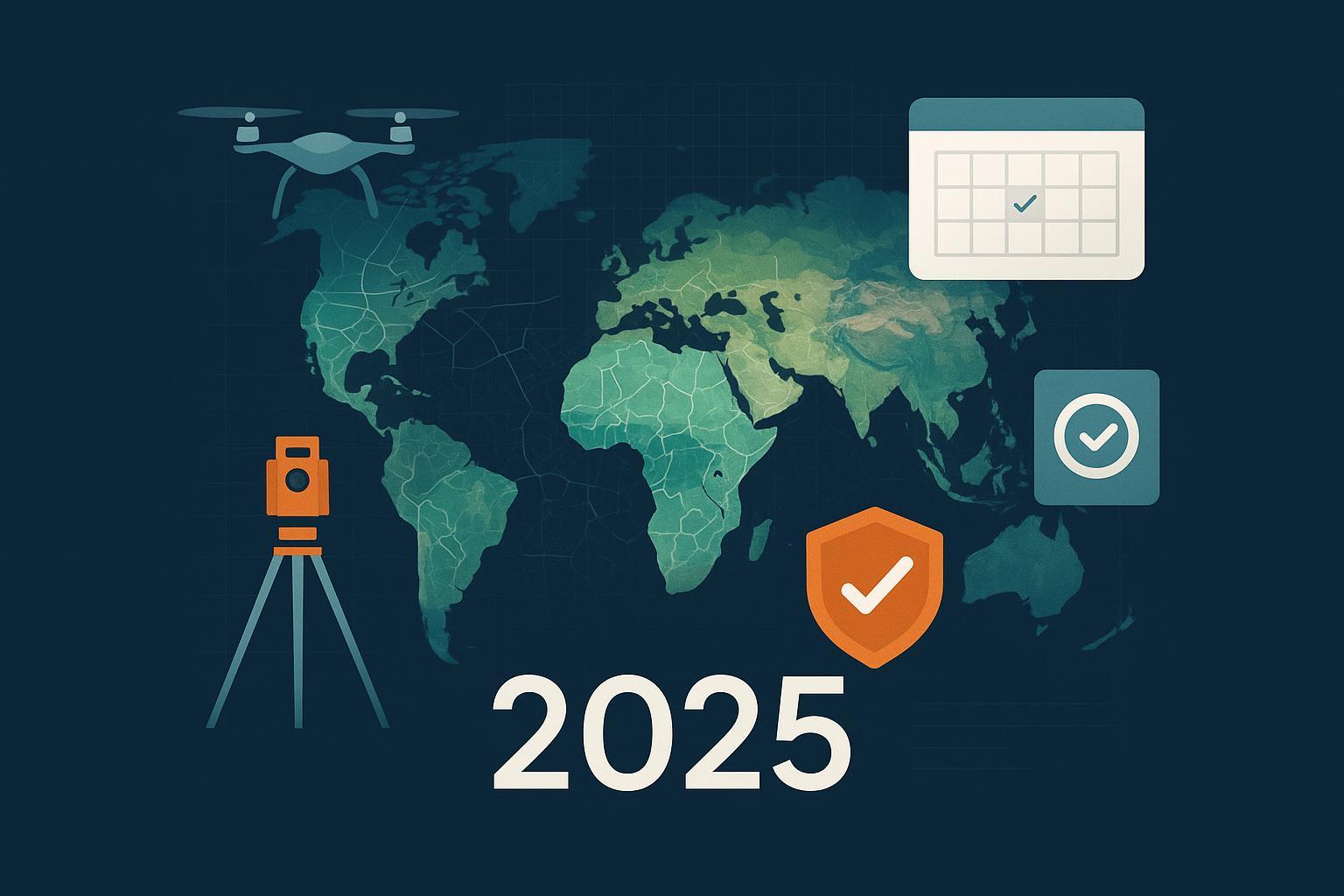
If your work touches maps, imagery, drones, or location intelligence, the right credential can do two things at once: validate your skills and help hiring managers read your profile at a glance. In this guide, “GEO” refers to geospatial/GIS and geospatial intelligence (GEOINT), not geotechnical or unrelated meanings. The focus is on recognized professional certifications—not generic course certificates—so you can choose a path that actually signals expertise to employers.
How we chose
We prioritized programs with clear employer recognition, transparent eligibility and renewal rules, and active testing operations. Our weighting favored: employer signal (25%), relevance to in‑demand roles (20%), clarity of official rules (20%), maintenance burden and transparency (15%), accessibility and cost (10%), and ecosystem fit (10%). Where fees or fine print change often, we note “subject to change” and point you to the issuing body’s official page.
1) GISCI — GISP (Geographic Information Systems Professional)
A vendor‑neutral professional benchmark that combines a standardized exam with a portfolio showing education, experience, and contributions. Employers use “GISP” as shorthand for broad geospatial competence.
- Eligibility: Typically four years of full‑time geospatial experience plus an ethics commitment and a portfolio across education/experience/contributions. Details are outlined on the GISCI’s official FAQ page: see the GISCI’s own guidance in the GISCI Certification FAQs.
- Exam and scheduling: The Geospatial Core Technical Knowledge Exam is administered at Pearson VUE test centers during defined windows each year; check upcoming windows via GISCI’s exam pages and Pearson VUE.
- Validity and renewal: GISP is valid for three years; recertification is portfolio‑based (continuing education and contributions). Policies can change—verify timing and any grace provisions on the GISCI site.
- Best for: Mid‑career GIS analysts, specialists, and team leads seeking a vendor‑neutral credential.
- Not for: Purely Esri‑stack validation (see Esri’s program below) or roles that require regulatory authorization (see FAA Part 107).
2) GISCI — GISP‑E / PreGISP (Early‑career pathway)
An early‑career credential that signals you’ve passed a foundational exam while you accumulate the experience required for full GISP.
- Eligibility and exam: Designed for students and emerging professionals who can pass a foundational, software‑agnostic exam; see the official overview at GISCI’s PreGISP/GISP‑E hub.
- Validity and renewal: Time‑limited (generally three years) and intended as a bridge; candidates later complete full GISP requirements. Confirm current timelines on GISCI’s page.
- Best for: Students, recent graduates, and career‑changers entering GIS roles.
- Not for: Those who already meet full GISP experience requirements.
3) Esri Technical Certifications (consolidated entry)
Esri issues role‑ and product‑specific exams that validate skills within the ArcGIS ecosystem—common in organizations standardized on Esri. Exams are versioned (e.g., “ArcGIS Pro Associate 2025”), and Esri publishes retirement timelines for each version. Explore the current catalog on the Esri Technical Certification program page. Exams are administered via Pearson VUE with defined retake rules per version. Esri indicates certifications do not expire; instead, new versions are released and older ones retire, so candidates often sit newer versions to show currency. Best for practitioners in Esri‑centric environments (enterprise admins, solution architects, power users, cartographers, analysts). Not ideal if you need a vendor‑neutral signal or a regulatory authorization.
4) USGIF — GEOINT Professional Certification (GPC) tracks
USGIF’s credentialing aligns with the GEOINT Essential Body of Knowledge (EBK), covering domains like GIS and analysis tools, remote sensing and imagery analysis, and geospatial data management. It’s well understood in defense, intelligence, and contractor hiring. See the official overview at USGIF Credentialing. Policies have historically used a multi‑year validity with continuing education for renewal; verify the current track list and maintenance rules on USGIF’s site before you register. Best for GEOINT analysts and defense/intel contractors; less relevant for teams outside the GEOINT mission space.
5) ASPRS — Professional Certifications (Photogrammetrist, Mapping Scientist—Remote Sensing/Lidar, UAS)
These specialist credentials cover imagery, lidar, photogrammetry, and UAS mapping workflows and are frequently referenced by agencies and DOTs. Eligibility typically combines degree credentials with domain‑specific experience, references, and documentation; find handbooks and requirements at the ASPRS Certification portal. Each specialty has a written exam, and certifications generally run on a three‑year cycle with continuing education requirements—confirm the CEU model and renewal documentation on ASPRS’s site. Best for senior imagery analysts, lidar specialists, and photogrammetrists working on advanced mapping projects; less suited to generalist GIS roles where vendor‑neutral breadth is the goal.
6) FAA — Part 107 Remote Pilot (Small UAS)
In the United States, commercial small UAS operations generally require a Remote Pilot Certificate under 14 CFR Part 107. The FAA explains the process end‑to‑end on its official page: FAA — Become a Drone Pilot. You must be at least 16, proficient in English, medically fit to operate a UAS, and pass the Unmanned Aircraft General — Small (UAG) knowledge test at an approved testing center. To keep your privileges current, complete recurrent training every 24 calendar months (the FAA offers online recurrent training at no charge). Best for anyone doing commercial drone work in the U.S.; not applicable to non‑U.S. operations or those seeking a professional mapping science credential.
7) NSPS — Certified Survey Technician (CST I–IV)
A progressive technician pathway used by employers and transportation agencies to benchmark field and office surveying skills. The official program overview is at the NSPS CST program page. There are four levels (I–IV) with distinct field and office competencies, each assessed via level‑specific exams. NSPS has introduced continuing education unit (CEU) requirements by level and an annual renewal model—check the latest CE targets and timelines on the CST site. Best for survey techs and UAS mapping technicians supporting survey crews; less relevant for generalist GIS practitioners.
Quick comparison table
| Certification | Issuer | Eligibility snapshot | Exam delivery | Validity/renewal |
|---|---|---|---|---|
| GISP | GISCI | 4 years’ experience + ethics + documented portfolio; exam required | Pearson VUE exam in scheduled windows | 3 years; portfolio‑based recertification |
| GISP‑E / PreGISP | GISCI | Early‑career exam; stepping‑stone to full GISP | Pearson VUE exam | Time‑limited; bridge to full GISP |
| Esri Technical Certifications | Esri | Role/product‑specific skills in ArcGIS | Pearson VUE; versioned exams | No stated expiration; new versions replace retired ones |
| USGIF GPC tracks | USGIF | GEOINT domain alignment (GIS, imagery, data) | Per USGIF program | Multi‑year cycle; CE options (confirm current) |
| ASPRS specialties | ASPRS | Degree + domain experience; references | Written specialty exam | 3‑year cycle with CEU requirements |
| FAA Part 107 | FAA | Age/English/fitness + pass UAG knowledge test | FAA Knowledge Testing Center | Recurrent training every 24 months |
| NSPS CST I–IV | NSPS | Progressive technician competencies | Level‑specific exams | Annual renewal; CEUs by level |
Which path fits your role?
- GIS analyst or coordinator in a mixed‑tool stack: Start with GISP‑E (if early career), then pursue GISP once you hit the experience threshold. Add one Esri exam if your team is ArcGIS‑centric.
- Esri‑centric enterprise practitioner or admin: Prioritize Esri’s Associate/Professional exams that match your daily responsibilities; consider GISP for a vendor‑neutral layer of credibility.
- GEOINT analyst or defense/intel contractor: Map your role to USGIF GPC tracks aligned to the EBK; if you also manage enterprise GIS, layer relevant Esri exams.
- Imagery, lidar, or photogrammetry specialist: Target ASPRS credentials in your specialty; if you operate drones for data collection in the U.S., add FAA Part 107.
- Survey/UAS technician: Use NSPS CST to structure career progression; add Part 107 for U.S. drone operations.
Practical prep tips
- Read the blueprint first: Understand domains, weightings, and sample tasks for your chosen exam.
- Align practice to workflows: Build study reps around the software, sensors, and data you actually use day to day.
- Schedule realistically: Book your test when your project load dips and give yourself a week for last‑mile review.
- Track continuing education: Set a calendar reminder for CE or recurrent training milestones so you don’t scramble near renewal.
- Budget smartly: Fees and policies change—always confirm the latest costs on the official program page before you register.
Final word and next steps
Certifications won’t replace a solid portfolio, but they help employers calibrate your capabilities quickly. Pick one path that matches your current role, then add a complementary credential when your responsibilities expand. If you work across regulated domains (like U.S. drone ops), keep an eye on recurrent requirements so your permissions stay current.
If your team also cares about how your brand shows up across AI search and answers, consider a visibility check with Geneo. Disclosure: Geneo is our product.